What We Don't See Keeps Us Alive
First published in Sanctuary Asia,
Vol. 46
No. 10,
October 2026
By Nitin Chandra, and the OM SYSTEM India Team
Imagine walking into a supermarket where some of the familiar foods have disappeared. The apples are gone. So are the strawberries. Almonds are scarce. Coffee and chocolate are harder to find. It sounds unlikely. But it points towards a question we rarely ask: how much of our food depends on creatures we barely notice?
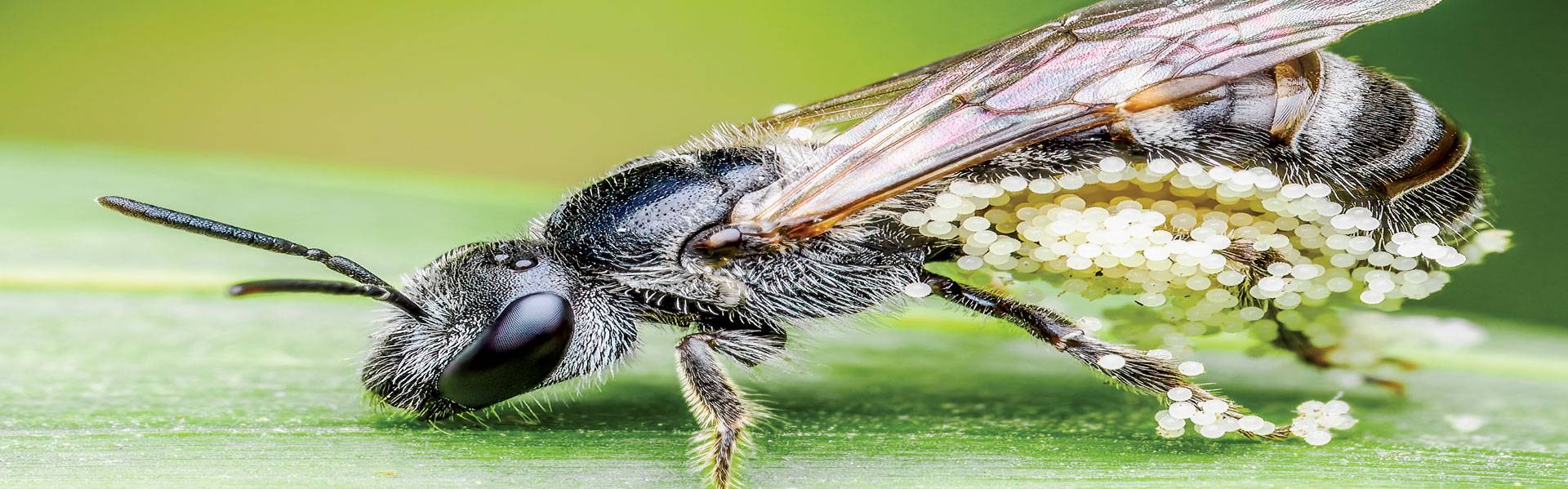
Bees are among nature's most important pollinators. A single bee may visit between 2,000 and 5,000 flowers in a day, quietly carrying pollen from one bloom to another. More than 20,000 species of bees are known worldwide, each adapted to different habitats and the flowers they depend on. Their work may be easy to overlook, but its consequences reach far beyond the flowers they visit. Their work supports wild plants as well as crops, connecting the smallest insects to the landscapes and food systems on which we depend. For most of us, a bee is just another small, fuzzy insect moving from flower to flower. Magnify it, and that familiar impression begins to fall apart. Fine hair become individual structures. Pollen grains become visible. The face becomes a landscape of textures and adaptations.
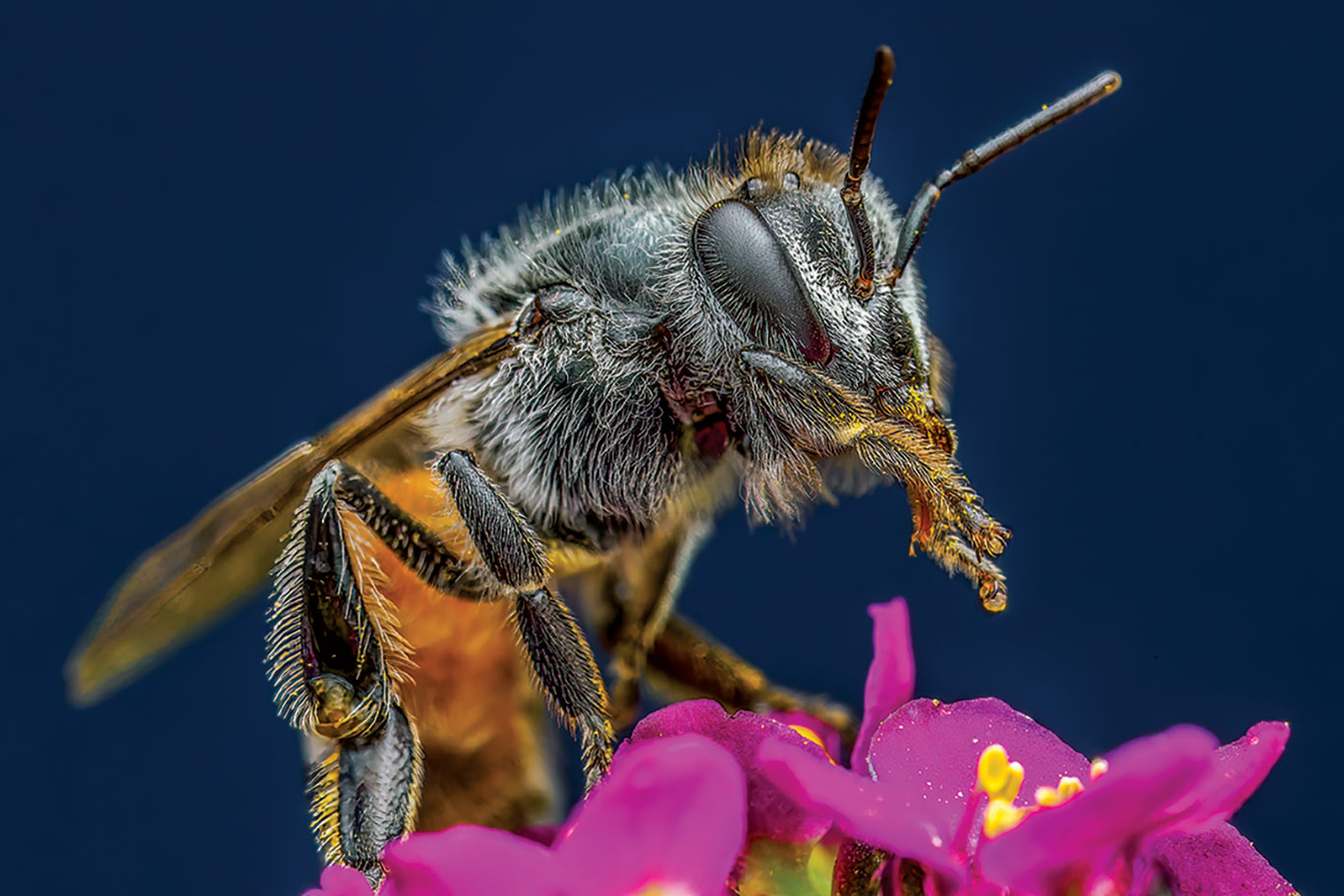
Red dwarf honey bee Apis florea.
This hidden network depends on a visible landscape: flowering plants, nesting spaces and healthy habitats. As those habitats change, so does the world available to pollinators. Protecting bees therefore means protecting more than the insects themselves.
We naturally look towards tigers, elephants, rhinos and great hornbills. They capture our imagination because their presence is immediate and visible. But look closer and their survival is often connected to creatures far less celebrated. Consider birds such as the Blue-bearded Bee-eater and countless other insect-eating species that raise their young in our forests. Their diets can include bees, wasps and other insects, linking their lives to the abundance of insect prey around them. That abundance is influenced by flowering plants, grasses, habitat and seasonal rhythms. A seemingly small creature can therefore become one link in a much larger web connecting vegetation, insects and birdlife.
These connections are not limited to forests or distant landscapes. They exist much closer to home. A grain of pollen becomes a carrier of life. Fine hairs become part of a pollination system. And a bee becomes one small but essential link in the natural world around us.
To understand this tiny powerhouse, a good camera and lens can be a game changer. For example, using a OM-1 Mark II and M.Zuiko 90 mm. F3.5 Macro IS PRO with its in-camera focus stacking enables details across different planes to be brought into focus together, giving the image greater depth and definition. At higher magnification, up to 4x, details that would otherwise remain invisible begin to emerge.
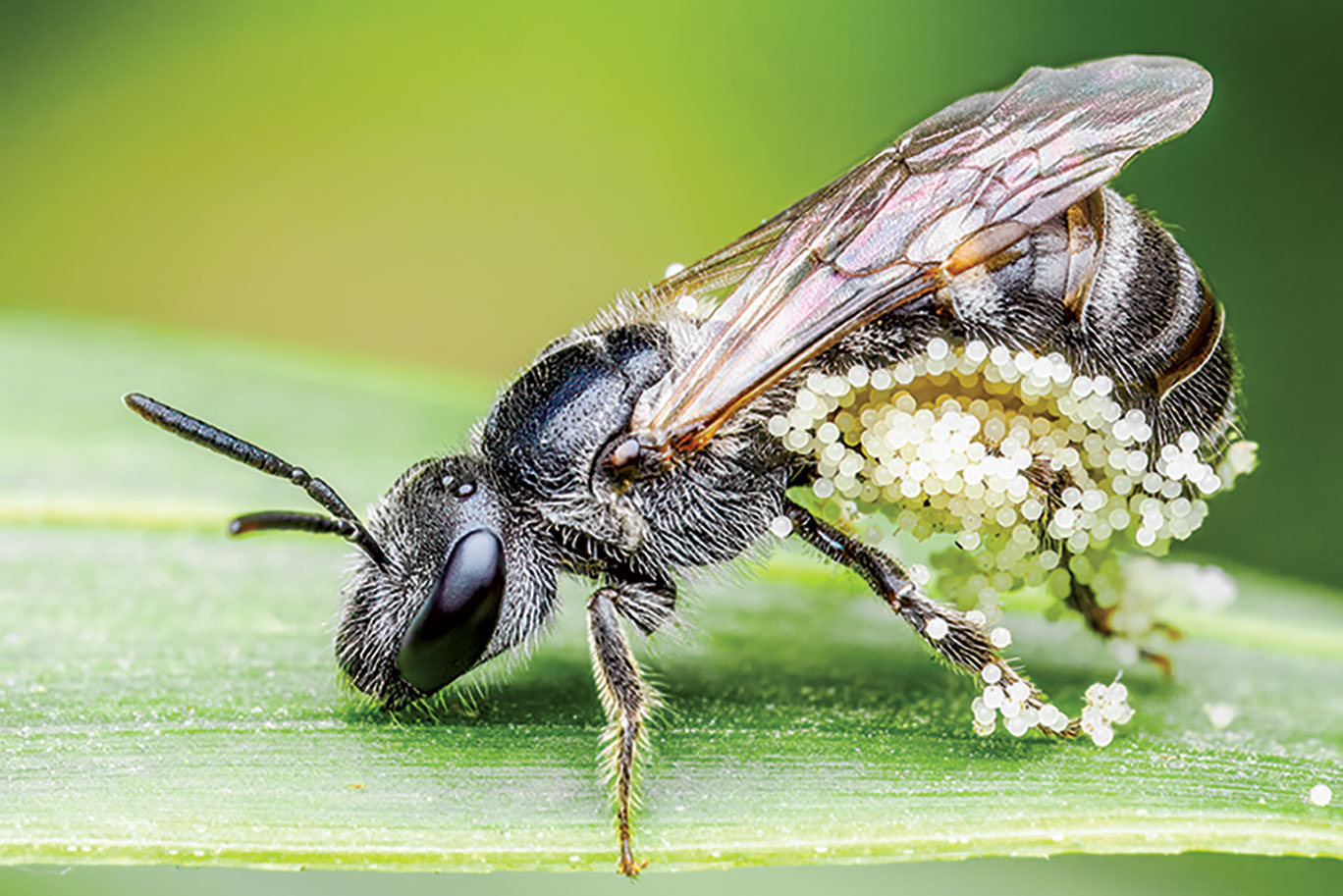
White-combed sweat bee Lasioglossum albescens.
The relationship between insect and flower takes on an entirely different character: structures that seemed insignificant become visible, turning a fleeting encounter into evidence of the complex work taking place between pollinator and plant. The next time a bee disappears into a flower, remember that much more is happening than meets the eye. Small, persistent and largely unseen, these creatures are helping shape what grows around us, what feeds us and what continues to bloom.
Equipment: OM-1 Mark II + M.Zuiko Digital ED 90 mm.
F3.5 Macro IS PRO + MC-20 by OM SYSTEM
Photographer: Nitin Chandra
Nitin Chandra is an OM System Brand Ambassador, and a full time IT professional. His photos have been published often in the Times, Mirror, magazine articles and books.