Updates From The Fields - KFT December 2025
First published in Sanctuary Asia,
Vol. 45
No. 12,
December 2025
The Classroom Catalyst
How Kids for Tigers' Workshops Ignite Educator Action and Environmental Literacy
By Preeti Takle
My association with Sanctuary Nature Foundations’s Kids for Tigers as a point teacher goes back to its inception and continues to date, but in a different avatar. What began as a focussed effort to create a future generation of Tiger Ambassadors has evolved into a movement deeply embedded in schools across India. At the heart of this enduring success are the Teachers' Workshops, a vital mechanism that transforms not just the educator’s knowledge but their entire approach to environmental teaching.
The workshops are carefully curated experiences where educators get the privilege of learning directly from some of the best minds in the fields of environment and conservation – for example, Dr. Deepak Apte, Dr. Parvish Pandya, Issac Kehimkar, and Dr. Anish Andheria among others. These sessions move beyond theoretical concepts, offering practical insights into ecological processes, wildlife biology and sustainable development. Teachers are equipped with the latest data and compelling narratives from the field, allowing them to bring the real world – the forests, rivers, and the incredible biodiversity, into their classrooms. This type of professional development ensures that environmental education remains relevant, accurate and deeply engaging.
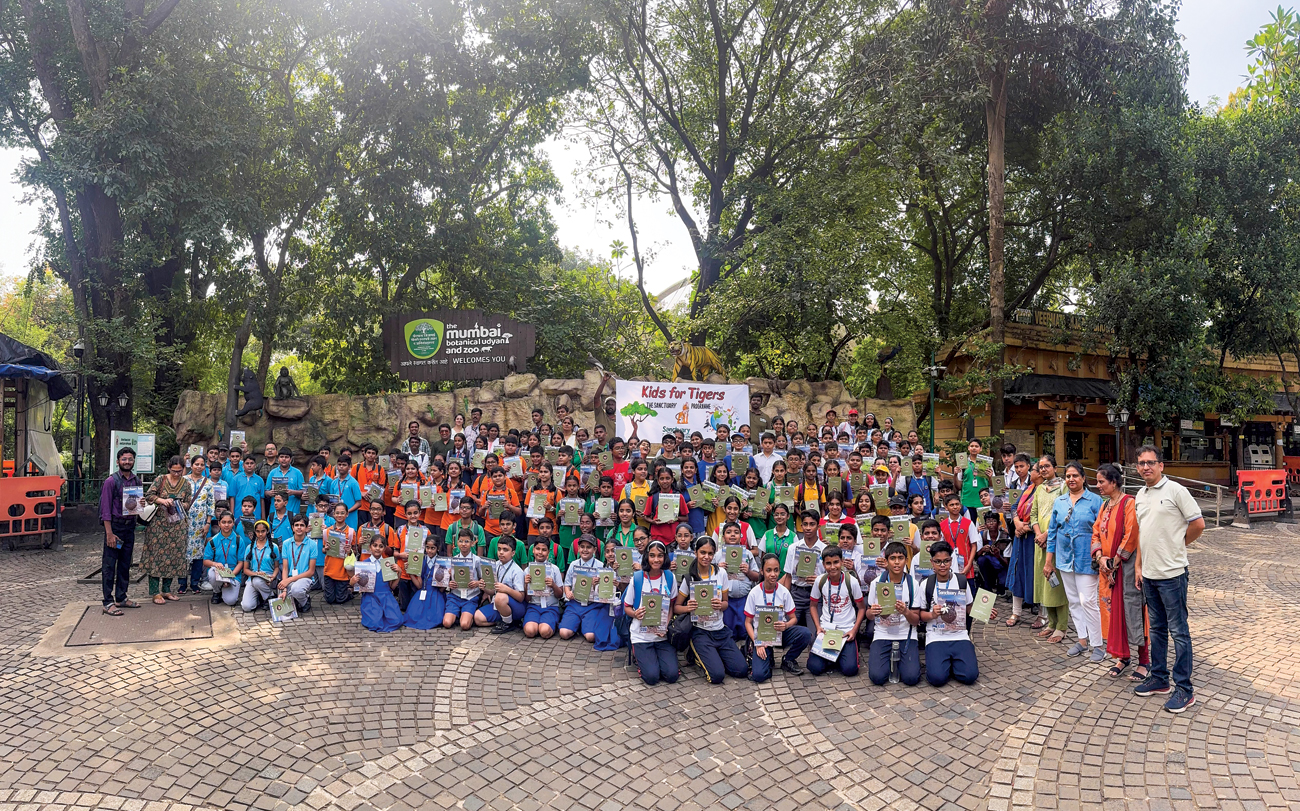
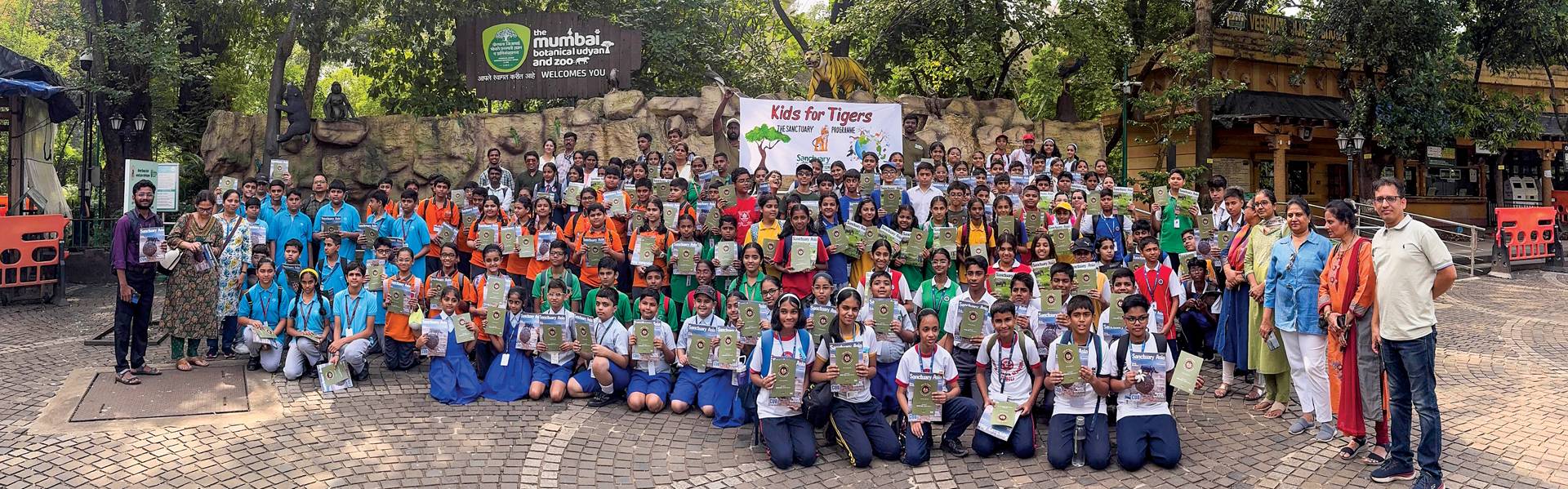
In Mumbai, a memorable Tree Walk was conducted at the Veermata Jijabai Bhosale Udyan (also known as Rani Bagh). Although it houses a zoo, none of the participants visited the animal enclosures, underscoring their conviction that wild animals belong in their natural habitats and not in captivity. Photo: Sanctuary Photolibrary.
Nurturing Hope
One of the most profound principles of the Kids for Tigers programme is its unwavering commitment to hope. Unlike many environmental narratives that focus on doomsday scenarios, these workshops deliberately pivot to solutions, actions and success stories. The emphasis is on the resilience of nature and the power of individual and collective effort. This positive framing is infectious; it gives teachers and students alike a sense of agency, motivating them to be active participants in conservation rather than passive spectators weighed down by guilt or fear. By focussing on what can be done, the programme fosters optimism, which is a far more powerful catalyst for change than despair.
Another important aspect of the workshop is understanding the teacher’s manual. This is not a supplementary text book but a comprehensive and practical guide that helps educators seamlessly integrate the environment into all subjects and their daily lessons. For instance in mathematics, students calculate forest cover loss or population dynamics. While studying languages, they write poems and essays championing wildlife. In geography, they trace river paths and study habitats of keystone species such as the tiger.
This integration ensures that environmental responsibility is not treated as an isolated, optional subject, but as a core value woven into all aspects of a student’s education. This shift normalises conservation as an essential part of informed citizenship, a way of life.
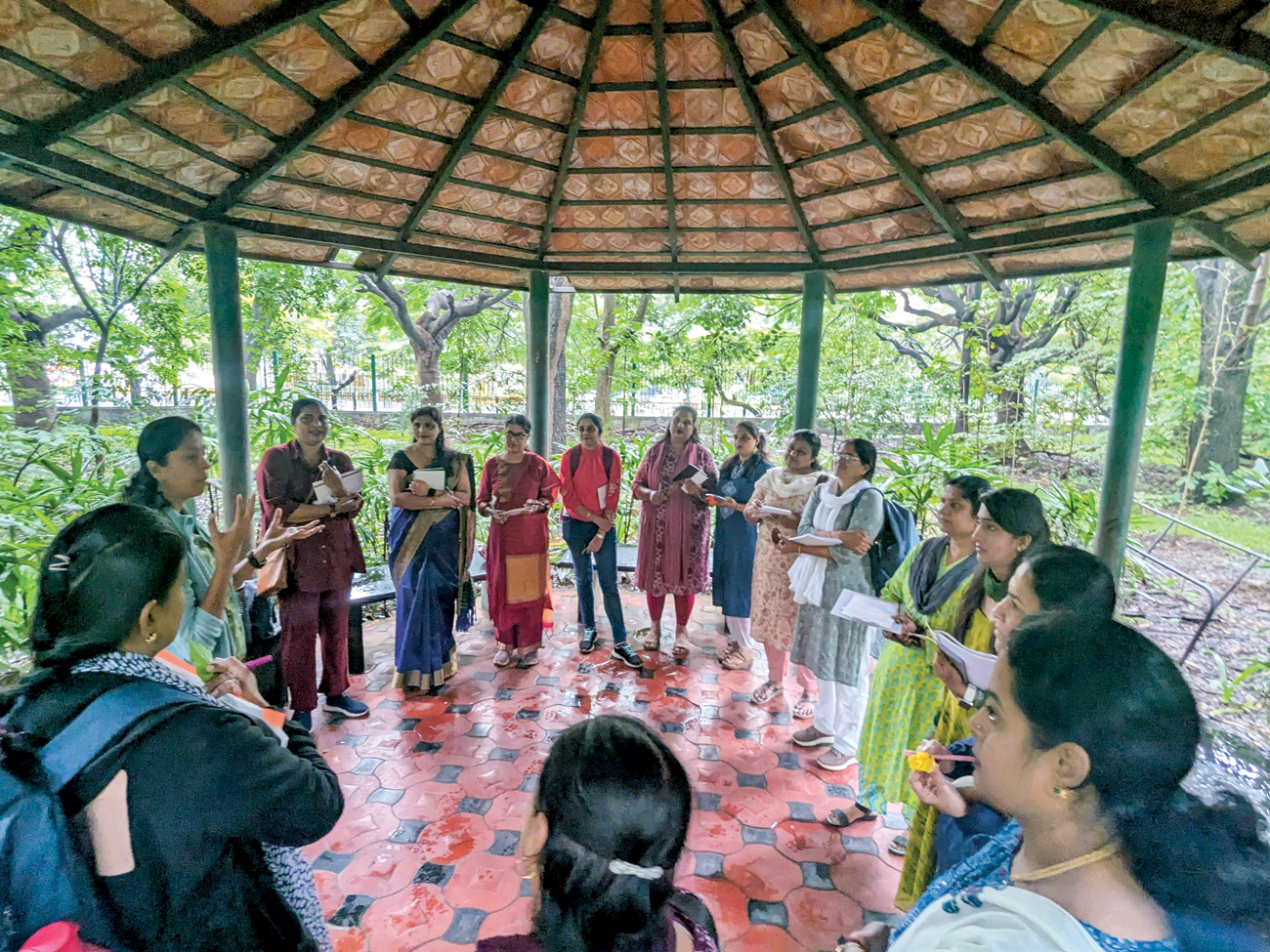
In Bengaluru, a lively Teachers’ Workshop held in collaboration with Early Bird introduced educators to creative ways of weaving environmental learning into daily lessons. Through such hands-on, nature-based sessions, Kids for Tigers engages hundreds of teachers, equipping them to inspire the next generation. Photo: Sanctuary Photolibrary.
Kids For Tigers Activities (October-November 2025)
Over the past two months, Kids for Tigers, Sanctuary Nature Foundation’s conservation education programme, reached hundreds of students and teachers through a series of hands-on, nature-based activities held across Bengaluru, Delhi, and Mumbai.
In Bengaluru, a lively Teachers’ Workshop was conducted in collaboration with Early Bird, introducing educators to creative ways of weaving environmental learning into daily lessons. As part of the Kids for Tigers initiative, students went outdoors for a Nature Trail, where they spotted birds, identified trees and insects, and discovered the wonders of biodiversity – a reminder that time in nature is the best classroom.
In Delhi, Kids for Tigers organised another Teachers’ Workshop at Springdale’s Pusa Road School on September 9, 2025, followed by an energetic Tiger Fest on October 16, 2025, at the Mahavir Senior Secondary School. The event brought together schools from across the city, where students showcased their passion for wildlife through songs, skits, and art – all celebrating the tiger as a symbol of India’s wild heritage.
In Mumbai, a memorable Tree Walk at the Veermata Jijabai Bhosale Udyan was led by Save Rani Bagh members Katie Bagli and Hutokshi Rustomfram, botanists Sweddle Cerejo and Gauri Gurav, retired St. Xavier’s College principal Dr. Rajendra Shinde, and Byculla Zoo’s biologist Dr. Abhishek Satam and Assistant Biologist Umesh Avadhoota. Although Rani Bagh houses a zoo, none of the participants visited the animal enclosures, underscoring their conviction that wild animals belong in their natural habitats and not in captivity.
For more details about the programme, write to amandeep@sanctuaryasia.com.
The GreenKarbon Programme
A flagship initiative of the Sanctuary Nature Foundation supported by Morningstar India Pvt. Ltd., the GreenKarbon programme continues to strengthen ecological resilience and community well-being around the Ranthambhore National Park. Focused on soil health, plastic reduction, ecosystem restoration, and renewable energy integration, the programme advances climate action through locally adapted solutions.
Key achievements this quarter include the launch of a pilot grassland restoration project in Zone 9, using native grass species to improve habitat quality and soil stability. The ‘Plastic-Free Village’ campaign expanded to Kuthalpura Maliyan, with community awareness drives and structured waste collection systems in place. Plastic cleanup efforts at Lakhanpur and Amreshwar mobilised local women, who collected over 200 kg. of waste, demonstrating strong community participation.
Morningstar India supported local education by donating 1,500 school bags and 300 solar-powered lamps to rural students, bridging gaps in learning access. Additionally, a three-day ‘Wildlife Guide Training Programme’ for 98 new guides, conducted jointly with the Forest Department, deepened local conservation knowledge and interpretation skills.
Through integrated conservation, education, and community engagement, GreenKarbon is helping Ranthambhore’s people and landscapes adapt to a changing climate, while fostering long-term stewardship of natural resources.
For more details about the programme, write to parvish@sanctuaryasia.com.
Teachers As Changemakers
The workshops also instil a critical lesson in advocacy: that effective protest and activism must be rooted in understanding and respect. The teachers and students learn to use facts, compassion and articulate arguments to influence policy and public opinion. This approach models responsible engagement, creating young citizens who are not only passionate advocates, but also respectful, informed communicators who truly understand the issues they champion.
The lasting impact on the school is exponential because the Kids for Tigers programme places immense trust and value on the educator. Above all, there is deep respect for the teachers, as they hold the key to shaping tomorrow's children and how they will shape the world. Teachers are not merely transmitters of information but are seen as primary architects of character and worldview. By investing in their training, respecting their time, and providing them with quality resources, the programme empowers them to execute their crucial role. This respect is reciprocated in the teachers’ dedication, which ultimately cascades down to nurture students who are not only academically proficient but also ethically and environmentally conscious – the true custodians of a sustainable future.
A teacher by profession, Preeti Takle is also a gardener who believes in growing as many food plants as possible. An avid trekker, she finds her rhythm in the mountains.