The Living Plateaus Of The Sahyadris
First published in Sanctuary Asia,
Vol. 46
No. 4,
April 2026
By Kedar Gore
In the early 1980s, I had my first glimpse of Konkan, a land of extraordinary natural beauty, biodiversity and culture. Forested hills rose behind Dorle, my maternal native village, while streams trickled down to meet creeks edged with dense mangroves. Scattered across the landscape were rocky, flat-topped plateaus locally known as sadas, ancient lateritic formations formed millions of years ago through volcanic activity and tropical weathering. These stark yet beautiful plateaus supported a unique ecosystem, one that harboured a remarkable variety of life, especially birds. During the dry months, the grasses covering the plateau turned a soft ochre-yellow, and across this open expanse, the Paddyfield Pipit Anthus rufulus, Malabar Lark Galerida malabarica, Rufous-tailed Lark Ammomanes phoenicura, Ashy-crowned Sparrow-lark Eremopterix griseus, Indian Robin Copsychus fulicatus, and Pied Bushchat Saxicola caprata were a common sight. Armed with a bamboo stick and guided by my uncle, a keen naturalist par excellence – the late Manohar Harchekar, I spent hours wandering across the plateau turning over stones and peering into crevices. Beneath the rocks, we often found geckos, skinks, spiders, and the occasional scorpion, each discovery revealing a hidden layer of life thriving in the lateritic world. In the cool of early mornings, fan-throated lizards basked on the warm rocks and occasionally, we stumbled upon saw-scaled vipers Echis carinatus, which quickly curled into their typical s-shaped defensive posture.
More than four decades have passed since, yet those memories, experiencing nature at Dorle, remain vivid. It was my uncle who nudged me onto the path of exploring the wilderness, opening my eyes to the natural world around us.
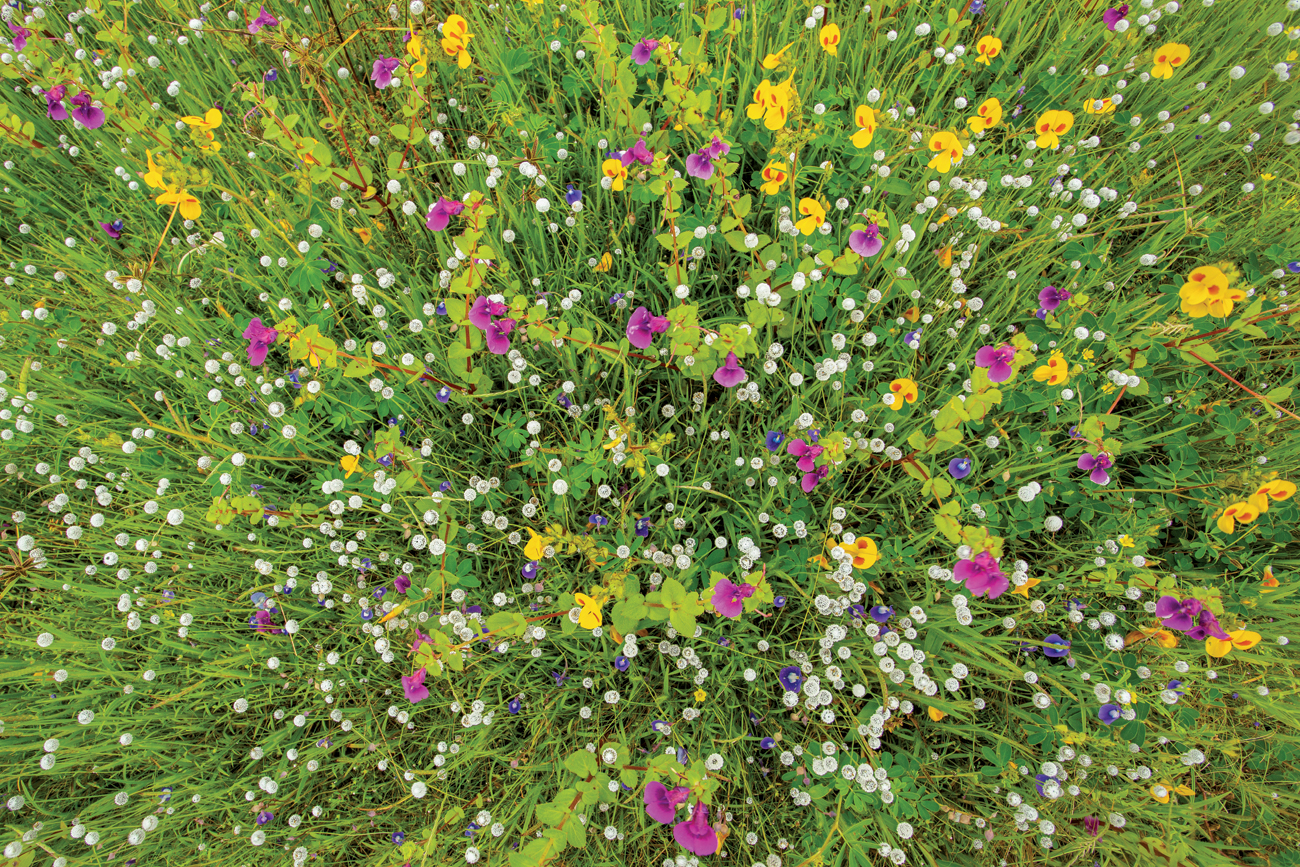
The Kaas Plateau in Maharashtra bursts into riotous colours each monsoon. Similar seasonal blooms occur across several plateaus throughout the Konkan and Sahyadri hills with up to 450 plant species recorded here. Photo: Pushkar Achyute/Sanctuary Photolibrary.
A Dramatic Transformation
For much of the year, sada ecosystems scattered across the Konkan landscape appear dry and desolate. But as the southwest monsoon arrives in June, the entire landscape undergoes an overnight transformation from an almost lifeless plateau into a biodiversity treasure house with lush green grasslands, vibrant mosaics of seasonal wildflower meadows, carnivorous herbs and ephemeral wetlands. The entire landscape comes alive with lifeforms adapted to this challenging environment. What appeared in summer as a dry fallow land to my then untrained eyes was one of the most fascinating and least understood and overlooked biodiversity treasures: the lateritic plateaus of the Northern Western Ghats.
As the rainwater fills the shallow rock depressions to become temporary wetlands, it gives rise to multiple food webs – bees hovering around flowers, carnivorous plants trapping unsuspecting insects, amphibians breeding in temporary pools, and snakes lurking around to catch unsuspecting frogs, insects and lizards. In the next few weeks, hundreds of plants bloom in a spectacular riot of colours – yellow, pink, purple, blue and white, putting up a display that is characteristic of the lateritic plateaus of the northern Western Ghats.
This show of dazzling colours is best seen at Kaas Plateau (see Vol. XXXIII No. 2, April 2013), a UNESCO-recognised biodiversity hotspot, popularly described as the ‘Valley of Flowers of Maharashtra’. But similar seasonal blooms occur across several dozens of plateaus throughout the Konkan and Sahyadri hills – as the northern Western Ghats are more popularly known. These monsoon meadows typically flower between July and October, depending on the local rainfall patterns, attracting nature lovers for whom these plateaus represent a living laboratory of adaptation and evolution.
A Botanical Paradise
There is an astonishing diversity of plants on laterite plateaus. A report published by the Bombay Environmental Action Group and The Habitats Trust in May 2025 documented up to 450 plant species, 169 bird species, 31 reptile species, 20 amphibian species and 37 mammal species from such rocky plateaus. Many species are endemic to the Western Ghats, and some occur only on specific plateaus. Renowned botanist Dr. Aparna Watve (see page 33 and Vol. XXV No. 3, June 2005) has extensively studied the rocky plateaus and recorded rich biodiversity and high endemicity, including more than 100 endemic to the Western Ghats and 24 endangered species of plants and animals. Unlike forest ecosystems where plants grow tall and compete for sunlight, plateau vegetation remains low and compact. The shallow soil cannot support large plants, so most species complete their life cycle during the monsoon. Within weeks of flowering, seeds disperse and plants wither, waiting for the next rains.
These plateaus sport an amazing variety of plants, including varied grasses (Glyphochloa forficulata, Indopoa paupercula, Dimeria spp., Tripogon bromoides, Ischaemum spp., Arundinella spp., Coelachne minuta) and other associated plants – sedges, orchids, aquatic herbs and carnivorous species. Endemic plants from the lateritic plateaus of northern Western Ghats include species of Ceropegia, Eriocaulon, Impatiens, Smithia, and a few others. Important examples are Ceropegia mahabalei, Ceropegia santapaui, Trithuria konkanensis, Eriocaulon ratnagiricus, Pogostemon deccanensis, Hubbardia diandra, Silentvalleya chandwadensis, Begonia concanensis, Aponogeton satarensis, Dipcadi concanense, Corynandra elegans, Curculigo konkanensis, Lepidagathis ushae and Utricularia albocaerulea. There are several other common herbs such as Smithia hirsute, Impatiens lawii, and Pleocaulus ritchiei, sporting beautiful flowers that bloom once in seven years, practically transforming the entire area purple. Terrestrial (ground) orchids are in abundance too with species of Habenaria, Pecteilis, Eulopia, Geodorum and Nervilia – all playing a critical role in this ecosystem.
Among the most fascinating inhabitants of these plateaus are carnivorous plants. In the nutrient-poor soils of the laterite crust, nitrogen is often scarce. To compensate, some plants have evolved the ability to trap insects and digest them. Species such as Drosera indica and Drosera burmannii, commonly called sundews, possess sticky glandular hair on their leaves that trap small insects. Another group, the bladderworts (Utricularia) (See Phytofocus, Vol. 45 No. 12, December 2025), uses tiny underwater suction traps to capture microscopic prey. These plants are tiny – often only a few centimetres tall – but they represent some of the most remarkable evolutionary adaptations among plateau flora. For four months, rocky plateaus exhibit a striking display of vibrant colours before these features fade as subtly as they emerged.
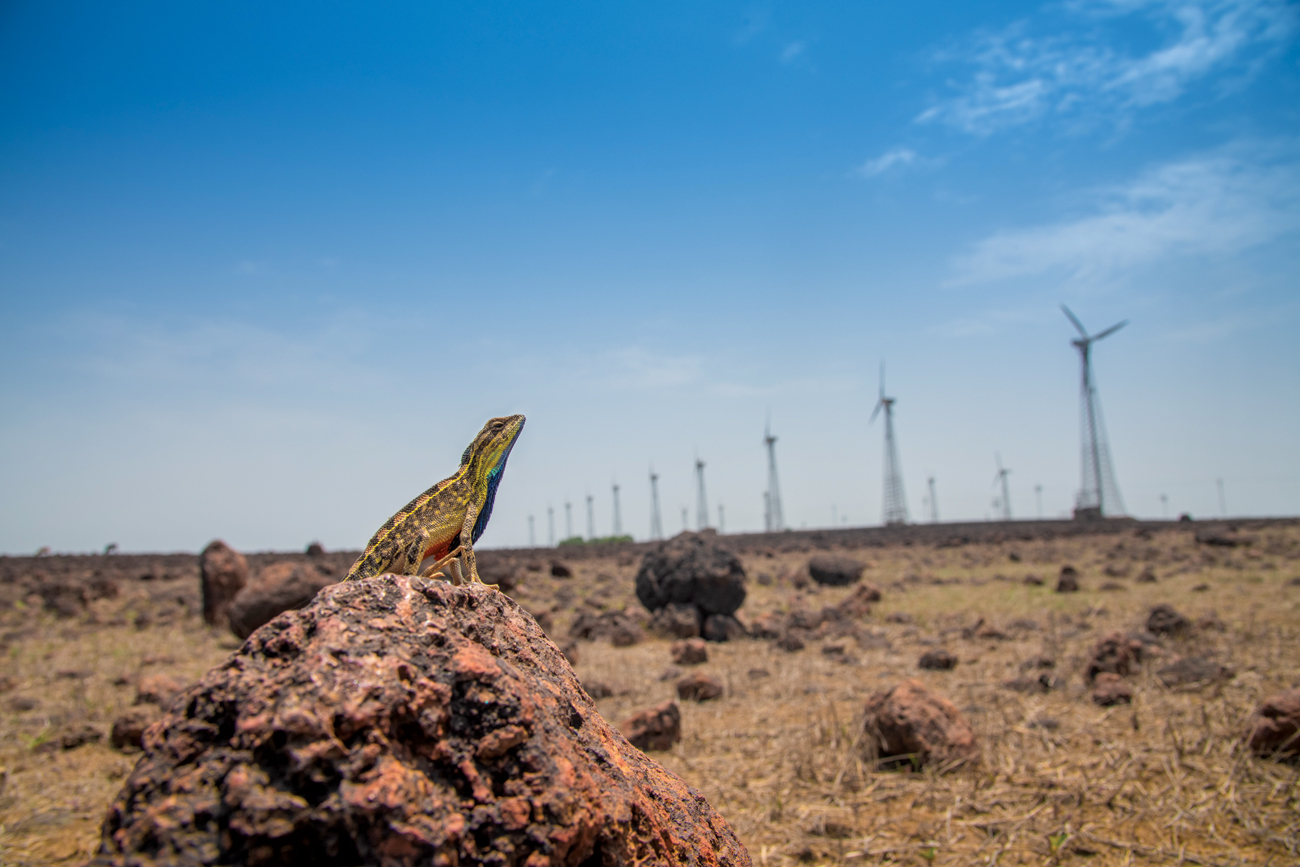
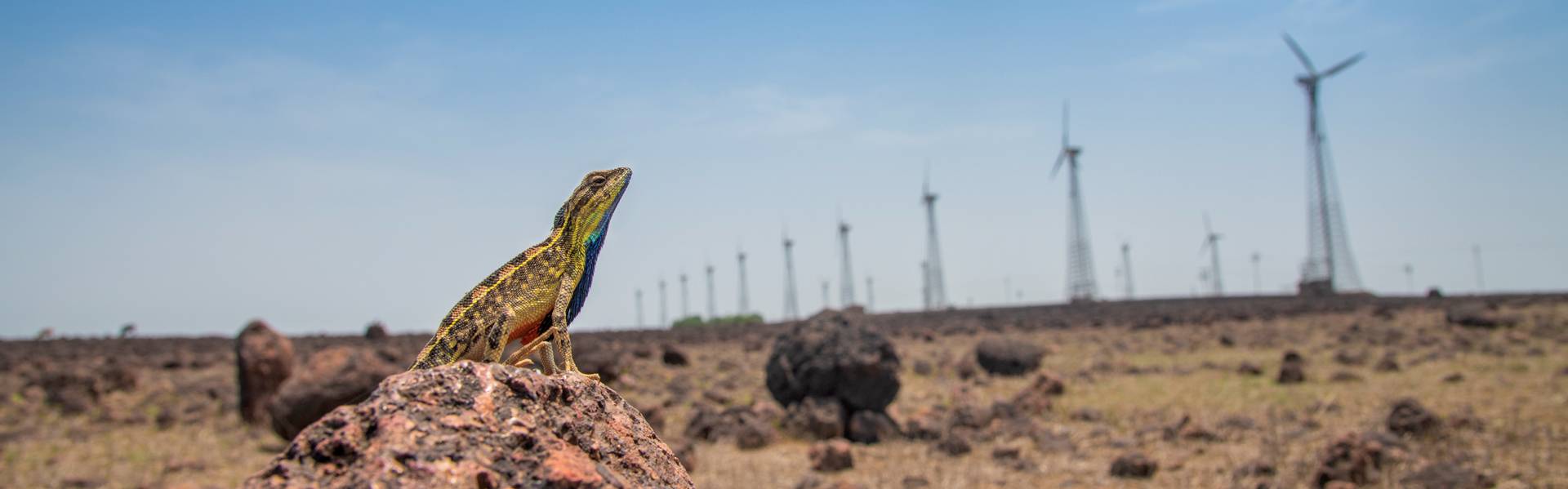
These lateritic plateaus teem with reptiles, including the fan-throated lizards of the genera Sitana and Sarada, whose males flaunt colourful throat fans during the breeding season. Yet the Wastelands Atlas of India (2010) labels them as 'barren rocky', which has paved the way for wind farms and other infrastructure. Photo: Anindita Datta Muhuri/Sanctuary Photolibrary.
Critters Galore
The ephemeral pools that form during the monsoon serve as critical breeding habitats for frogs and toads that have evolved incredible strategies to cope with the short lifespan of the pools. Their eggs hatch quickly and tadpoles develop rapidly before the water evaporates. Within the amphibian community, the cricket frog Minervarya spp., Indian bullfrog Hoplobatrachus tigerinus, and skittering frog Euphlyctis spp. use these areas as breeding sites during the rainy season. The genus Beduka serves as a pertinent example; it comprises only two species. The Koyna toad Beduka koynayensis is endemic to the plateaus of the Sahyadri Tiger Reserve in Sangli and Satara districts, while the Amboli toad B. tigerinus is confined to the plateaus near Amboli and Chowkul in Sindhudurg district. Both species depend only on the ephemeral waterbodies of these plateaus, underscoring the importance of protecting these areas. Gegeneophis valmiki, Indotyphlus maharashtraensis, Gegeneophis seshachari, and Ichthyophis bombayensis are unique amphibians called caecilians. These specialised and the least-studied animals lack limbs, making them well-suited to a fossorial life buried in the soil or beneath the rocks.
These rocky plateaus also abound in reptiles. Among the most charismatic are the fan-throated lizards of the genus Sitana and Sarada, whose males display colourful throat fans during the breeding season. The white-striped viper gecko Hemidactylus albofasciatus, first discovered in Dorle village, and Hemidactylus sataraensis, discovered from Chalkewadi plateau in Satara, are highly threatened owing to their restricted occurrence and sole dependence on the rocky plateaus. Dr. Varad Giri, a distinguished herpetologist, has extensively studied and guided several researchers to document the amphibians and reptiles of the rocky plateaus.
The invertebrate diversity of laterite plateaus remains poorly studied, yet available research indicates remarkable species richness. During the monsoon, flowering plants attract numerous pollinators such as butterflies, bees and beetles, while spiders and ants thrive in the grassland vegetation. Dragonflies and damselflies indicate healthy freshwater ecosystems, signifying clean, oxygenated water and minimal pollution. Akshay Dalavi, a researcher with an interest in studying these fascinating insects, has systematically documented multiple odonate species in the ephemeral pools of Chipi, Vimaleshwar, Tembavli, and Dhamapur within Sindhudurg district.
Insects emerging during the monsoon attract insectivorous birds that forage across the grasslands. In May 2025, a lone Lesser Florican Sypheotides indicus was seen at a lateritic plateau near Ratnagiri town, highlighting the immense ecological importance of these plateaus as a stopover site during the in-country nomadic movement of this critically endangered and endemic bird.
Several new colourful freshwater crab species, such as Ghatiana splendida, Ghatiana atropurpurea, and Gubernatoriana thackerayi, have been found in the rocky plateaus of the Western Ghats in Maharashtra near Amboli and Ratnagiri. A species of spider Tylorida sataraensis was discovered from Chalkewadi plateau in Satara. The work done by many researchers has proved beyond doubt the ecological significance of the lateritic plateaus.
Misunderstood Landscapes
As we see throughout this issue, official terminology often oddly labels any ecosystem without trees as a 'wasteland', a misclassification that originated during the British era. This anomaly, unfortunately, remains uncorrected till today. The Wastelands Atlas of India (2019) classifies large areas that are high biodiversity lateritic plateaus in Kolhapur, Pune, Satara, Ratnagiri and Sindhudurg districts as ‘barren rocky’. This classification has facilitated land use changes for mining, wind farms, mango, coconut and cashew plantations, townships and other urban infrastructure, leaving only a small portion of undisturbed plateaus, which are mainly in Protected Areas or remote regions. Several areas have already been compromised for setting up industrial belts. Laterite blocks are widely used as building material in Konkan architecture, leading to extensive quarrying of plateau surfaces. The proposed oil refinery project to be established in the Barsu-Solgav area of Sindhudurg district will create largescale destruction of these ecosystems. Over the years, the wasteland tag has been responsible for severe habitat and biodiversity loss of the sada ecosystems across Maharashtra and also parts of Goa and north Karnataka.
Although nature-based tourism can support livelihoods and conservation, unregulated tourism can contribute to habitat destruction and significant loss of biodiversity, as was seen at Kaas Plateau. Chalkewadi plateau has been threatened because of hundreds of wind mills. Roads passing through these plateaus fragment the habitat, posing a huge threat to biodiversity owing to road kills. In addition to these anthropogenic pressures, fluctuating rainfall patterns on account of climate change could affect the delicate seasonal cycles of plateau ecosystems. Recognising these ecosystems as specialised grasslands and ephemeral wetlands is vital for their conservation. While Kaas Plateau and a few others have some protection, most laterite plateaus lack safeguards and are vulnerable to land-use changes. Road infrastructure is essential, but it is crucial to include active mitigation strategies during the planning stage. This will only be possible if these plateaus are no longer labelled as wastelands. Effective conservation requires landscape-level approaches, thorough ecological surveys and legal protection – ideally as Conservation Reserves. Declaring these as Biodiversity Heritage Sites and including them in the Eco-Sensitive Area of the Western Ghats and various town planning acts would enhance their protection. Promoting community-led conservation through Biodiversity Management Committees and implementation of responsible tourism guidelines are crucial initiatives for the long-term preservation of these sites.
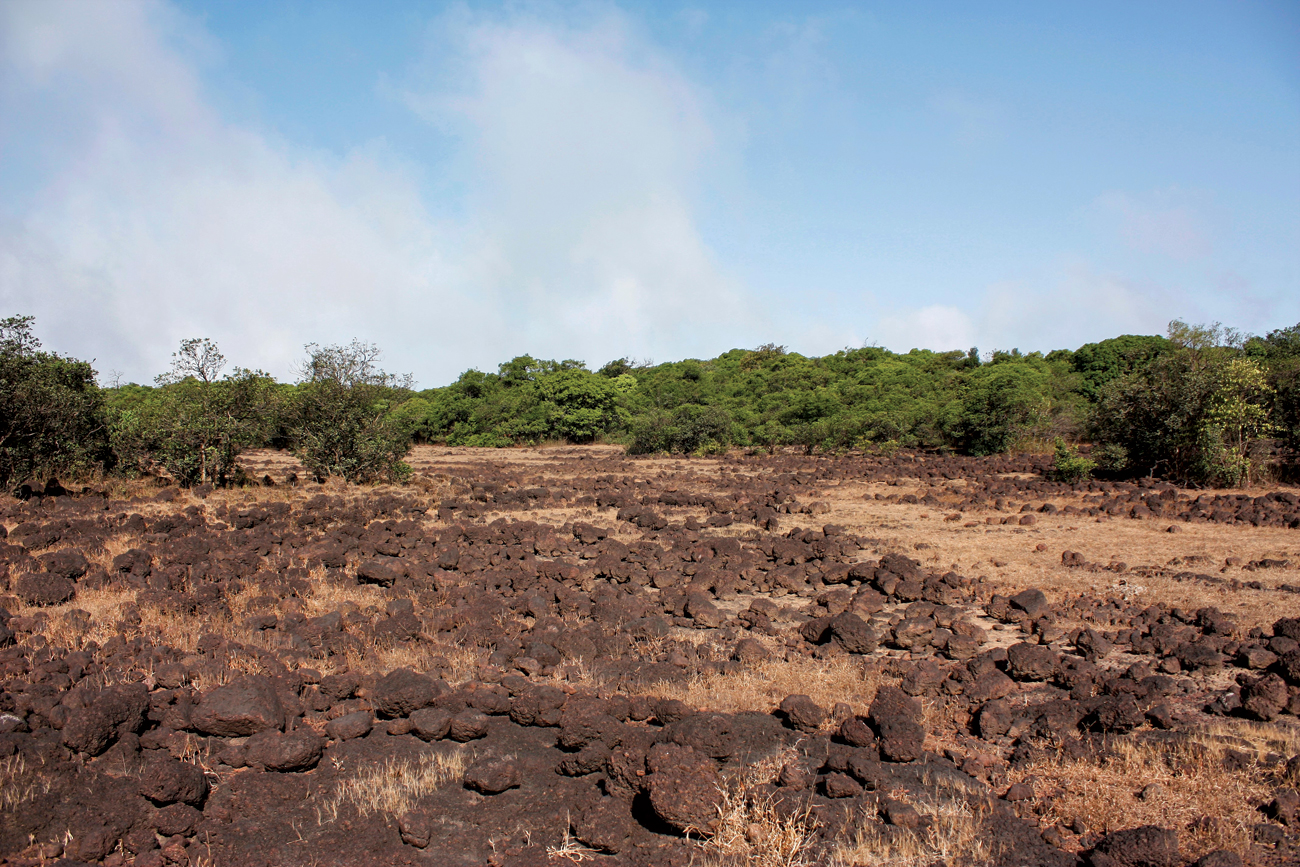
Photo: Priti Bangal/cc-by-sa-4.0.
A Geological Legacy Millions of Years Old
Laterite plateaus found between 700 to 1,200 m. above mean sea level in the northern Western Ghats were formed through prolonged geological processes. The Western Ghats originated from volcanic eruptions that created the Deccan Traps around 65 million years ago. Over time, tropical rainfall and weathering altered the basalt rock, leaching away minerals and forming laterite that is rich in iron and aluminum. The surface hardens under intense sunlight and most vegetation retreats underground as dormant tubers, seeds or bulbs.
Ephemeral Beauty, Enduring Value
The Konkan laterite plateaus remind us that nature’s most fascinating ecosystems are not always the most obvious and even the most unassuming landscapes can harbour extraordinary life. For much of the year these landscapes appear empty and desolate. But with the monsoon rains, they transform into vibrant mosaics of life, supporting species found nowhere else. Their beauty is fleeting – lasting only a few weeks each year – yet their ecological significance is profound. Safeguarding these hidden grasslands of the northern Western Ghats is not only about protecting rare plants or animals. It is about recognising and preserving one of India’s most remarkable seasonal ecological phenomena.
Kedar Gore is a naturalist, writer, and advocate for nature with three decades of experience in wildlife conservation. Currently, he works as the Director of The Corbett Foundation.