The Ecological Uplift: Rewilding The World's Grasslands
First published in Sanctuary Asia,
Vol. 46
No. 4,
April 2026
By Isaline Tihon and May Scott
From the steppes of Kazakhstan to the rangelands of Kenya, a global movement is bringing grasslands back to life - and discovering that wildlife and human prosperity are not in competition, but in partnership.
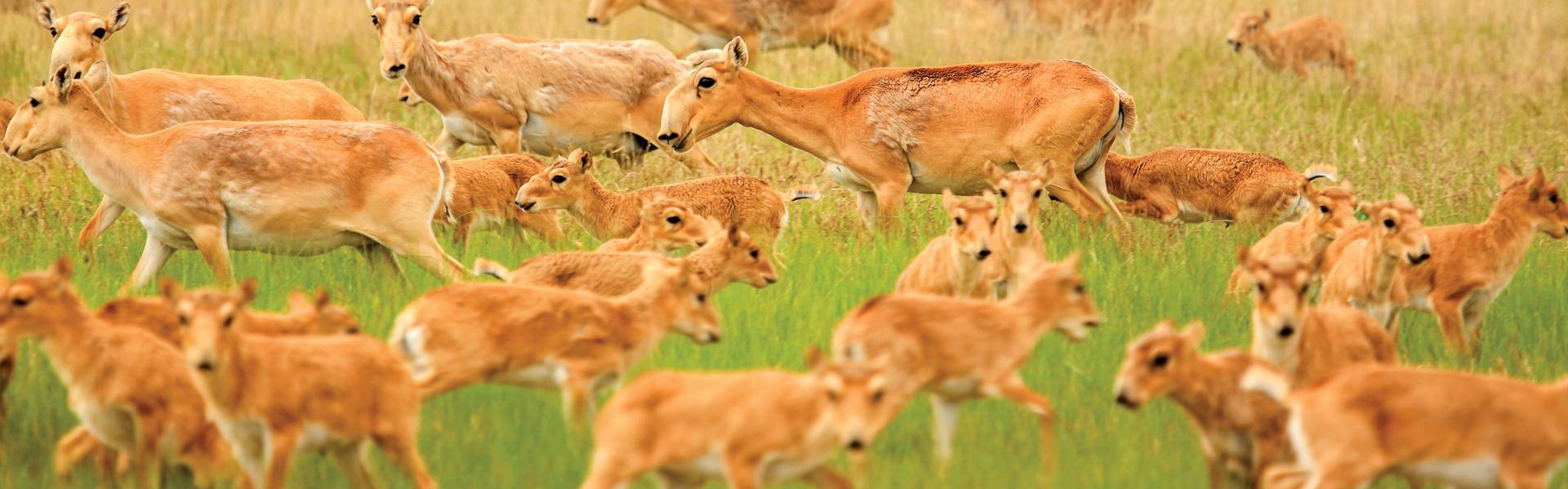
In the golden steppes of Kazakhstan, a vast grassland dotted with wetlands stretching thousands of kilometres in every direction, a remarkable species is making a comeback. With its distinctive bulbous nose that filters dust from dry air and ice from winter winds, the saiga antelope has roamed Central Asian grasslands since the Pleistocene. By 2003, only 40,000 individuals remained, a species on the edge of extinction.
Then, steadily, the tide began to turn. Thanks to the collaborative vision of the Altyn Dala Conservation Initiative, today over four million saiga thunder across their ancient migration routes once again. It is possibly the greatest mammal recovery the world has ever witnessed, a story of what is possible when nature is given the chance to heal. The animals' recovery has become woven into national identity itself. "It's become a species that people are really proud of," says Vera Voronova of the Association for the Conservation Biodiversity of Kazakhstan.
The saiga's return has not occurred in isolation. It is part of a growing, global movement to restore the living processes driven by herds of large herbivores, their predators, and the stewardship traditions of local communities that shape the world's rangelands. Grassland landscapes cover 40 per cent of the world's land area. Yet as much as half of them are degraded, their great migratory systems largely gone, and with them the ecosystem services we all depend on, lost primarily to overgrazing, agricultural conversion, and industrial development.
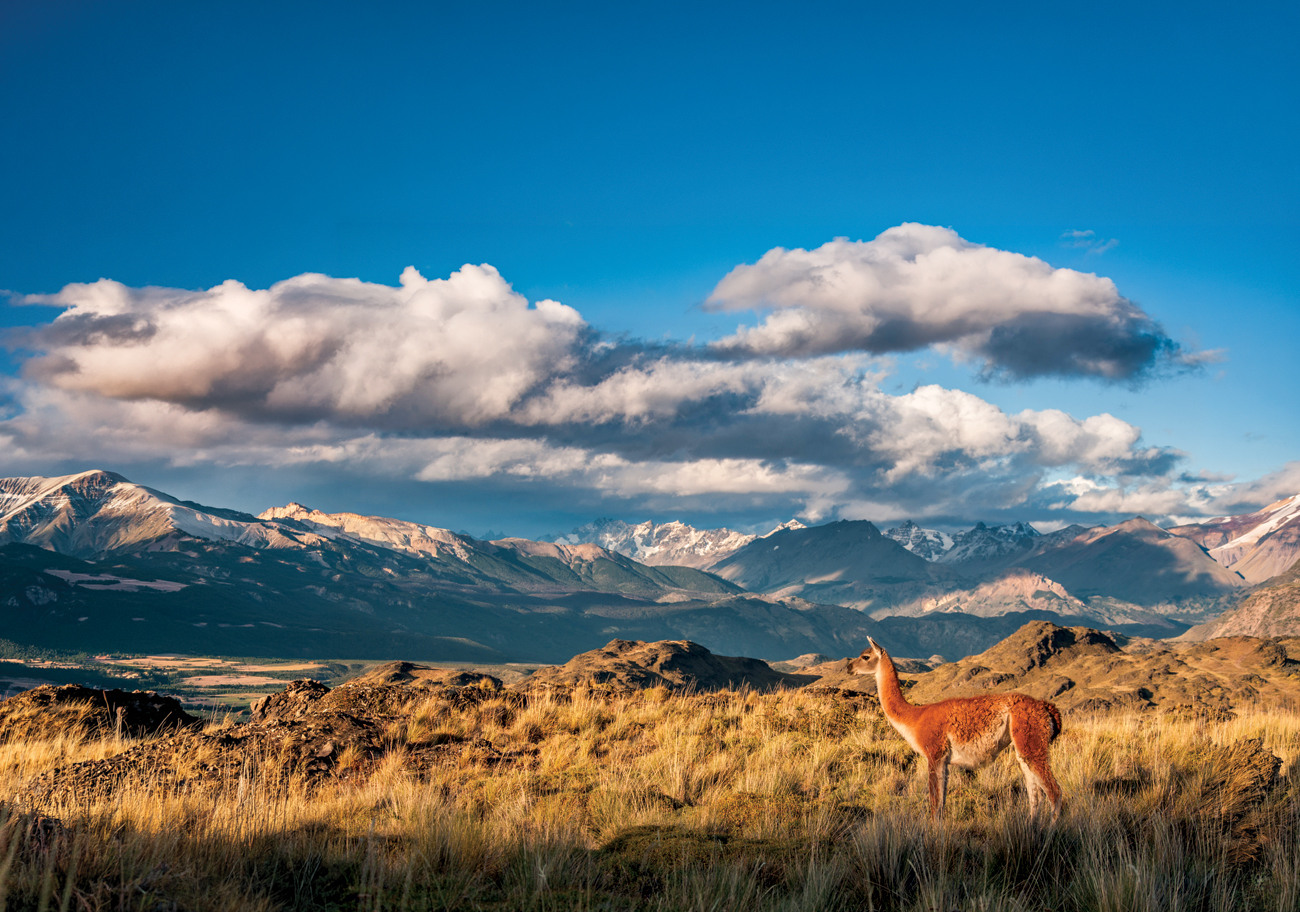
In Chile, Rewilding Chile has founded a chain of national parks together with the Chilean government. The Route of Parks of Patagonia looks to restore and protect keystone species such as guanacos (facing page), condors and pumas in complex, healthy ecosystems. Photo: Enonkishu Conservancy team in Kenya.
Wild Animals As Ecosystem Infrastructure
To understand what is lost when these animals vanish, consider the scimitar-horned oryx, now making its comeback in the Sahelian grasslands of North Africa under the care of Sahara Conservation. For thousands of years, this elegant antelope has traversed hundreds of kilometres across arid terrain, depositing nutrient-rich dung as it goes, halting desertification and seeding new plant life. A study on the closely related Arabian oryx found that acacia seeds passing through the animal's gut were 250 times more likely to germinate than those that had not. The oryx is the engineer of the ecosystem.
Keystone species in sufficiently large numbers are essential to the functionality of ecosystems. Their presence maintains health and resilience, and with it, the ability to provide what humans need for survival, wellbeing and prosperity: food, fibre, and clean water, as well as carbon sequestration, protection from floods and droughts, and cultural identity. Wild animals can be regarded as 'ecosystem infrastructure', as important to the living world as roads and hospitals are to modern civilisation.
Re-Animating The Carbon Cycle
The climate implications of rebuilding wildlife populations hold potential at a global scale. Grasslands alone store roughly 34 per cent of all terrestrial carbon on Earth. When American bison are returned to prairie grasslands not otherwise grazed by cattle, models suggest they could sequester 595 million tonnes of COâ‚‚ annually - equivalent to over 18 per cent of India's total annual fossil fuel and industry emissions in 2024.
Wild herbivores graze, trample, and fertilise in ways that foster the deep-rooted, carbon-rich grasses that lock carbon into the soil. Their presence creates a cascade of effects - healthier soils, better water retention, richer biodiversity - that industrial solutions can only dream of replicating. Known as 'Re-Animating the Carbon Cycle', this mechanism, is reshaping how we think about climate solutions.
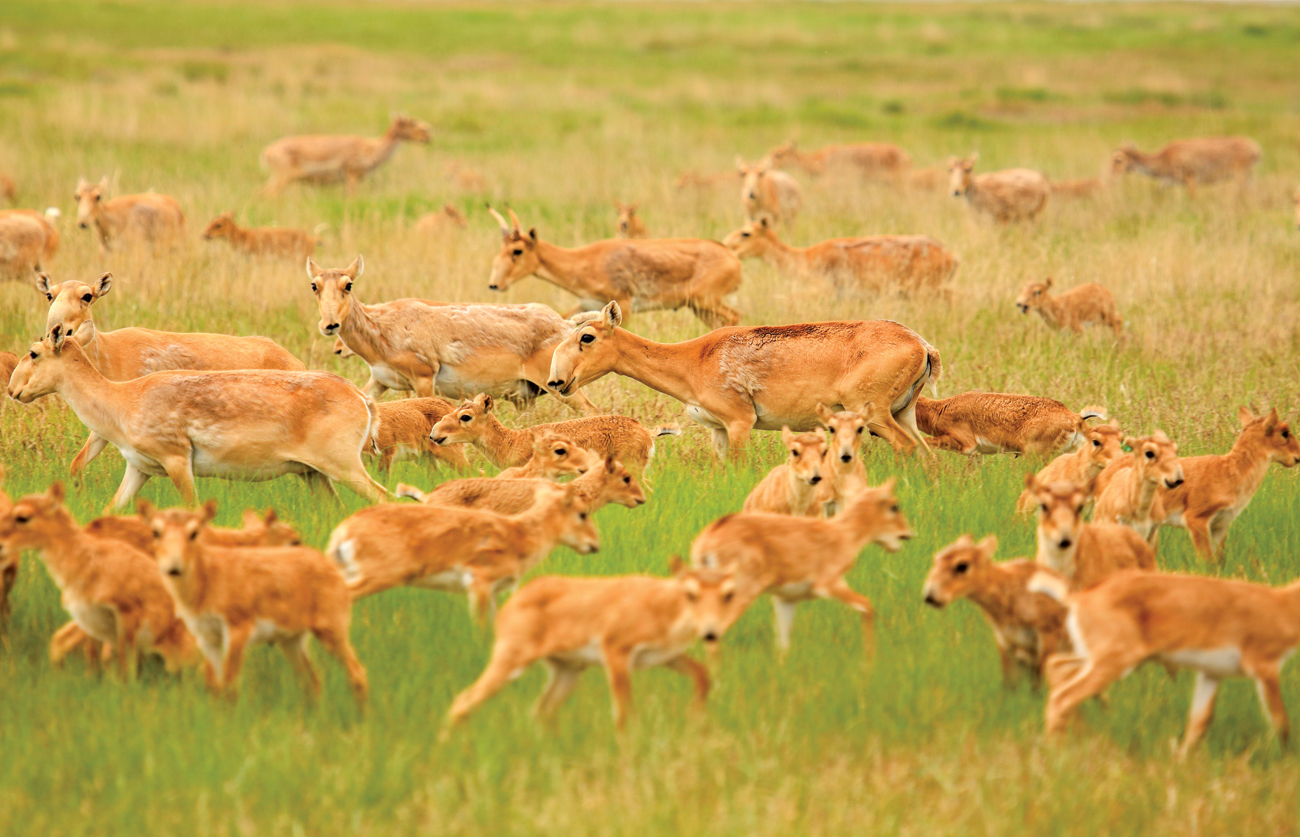
Once on the brink, the saiga antelope has made a remarkable comeback in Kazakhstan's grasslands. Sustained conservation efforts to restore their habitat have allowed their populations to rebound dramatically, offering one of the most hopeful wildlife recovery stories. Photo: Altyn Dala Conservation Initiative, Albert Salemgareyev.
Rewilding As A Scalable Solution
In Kenya's Enonkishu Conservancy, Maasai communities are pioneering a replicable, scalable model in practice. By applying holistic grazing management, such as using bomas to move livestock in patterns that mimic the natural behaviour of wild herds, they have created a rich mosaic of wild and domesticated life. Through sustainable livestock management and eco-tourism, direct income is generated for local families, the landscape itself becoming the engine of long-term economic prosperity. The results are extraordinary: conservancies of this sort now boast a greater density and diversity of wildlife than many national parks.
The rewilding vision is being put into action across continents. In Chile, Rewilding Chile has founded a chain of national parks together with the Chilean government. The Route of Parks of Patagonia looks to restore and protect keystone species such as guanacos, condors and pumas in complex, healthy ecosystems. In North America, American Prairie is stitching together fragmented temperate grasslands, rebuilding connectivity for bison across millions of hectares. Across southern and eastern Africa, the Peace Parks Foundation is supporting the relationship between rangelands and pastoralist communities. Its 'Herding for Health' programme, launched in 2017, has created over 2,000 jobs and generated more than six million US dollars in revenue for 5,533 farmers to date.
Rewilding offers a clear path towards restoring ecological functionality at scale. Moving forward requires openness, shared learning, and practical collaboration across sectors and traditions.
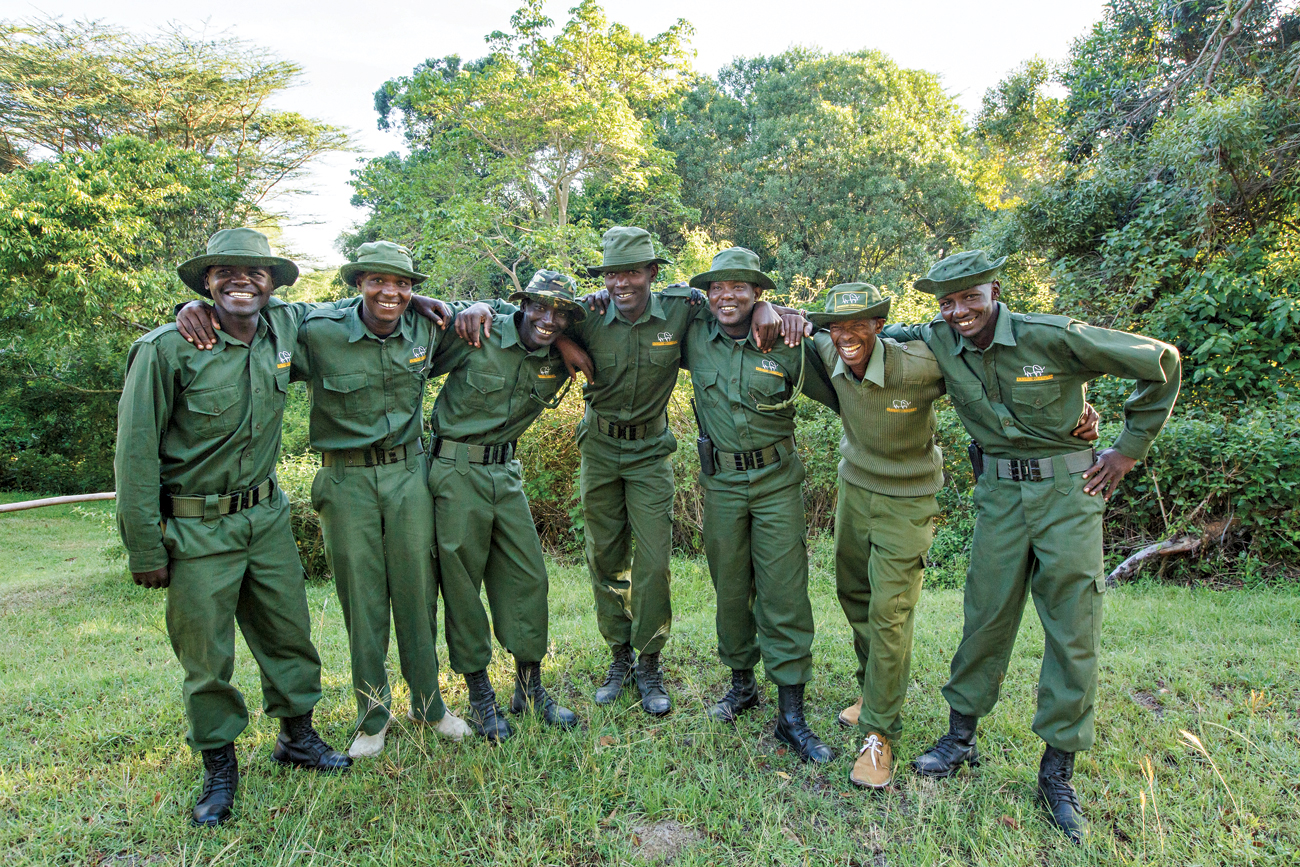
The smiling faces of the Enonkishu Conservancy team who work with ecosystems on the edge of the Mara Serengeti Ecosystem, a vast grassland and savanna landscape. The climate implications of rebuilding wildlife populations hold potential at a global scale. Grasslands alone store roughly 34 per cent of all terrestrial carbon on Earth. Photo: Enonkishu Conservancy.
Wildlife And Human Prosperity Are Intertwined
As our Partners and other global organisations demonstrate, transforming rangelands globally requires a diversity of approaches. Grassland landscapes have long been shaped by grazing animals, both wild and domesticated, and the stewardship traditions of local human communities. The question rewilding practitioners are asking is subtle: are the ecological roles being filled? Are the limits of the land being respected?
The Rewilding Rangeland Initiative, convened by the Global Rewilding Alliance, is working to translate these replicable approaches into coordinated, global change; advancing shared vision, credible science, institutional alignment, and a connected global community so that recovery can happen across entire continents.
Wildlife rebounding within the living grassland systems of our Alliance Partners is making recovery visible and tangible - these are just a few examples from our growing movement. Imagine scaling these efforts to span our world's critical ecosystems where wildlife, livelihoods, and climate resilience coexist.
In the golden steppes of Kazakhstan, four million saiga are proof of that. Their return across ancient routes is a signal that recovery is possible. That the world's grasslands can vibrate with life again.