No Kings
First published in Sanctuary Cub,
Vol. 46
No. 5,
May 2026
Apex predators help shape ecosystems, but they are not rulers – just threads in a wider web. As many face threats from human pressures, their decline can ripple through food chains, reshaping the balance of nature. Text by Rithwik Sundar.
In the heavy silence of a forest, a leopard moves with quiet precision. With a sudden leap, it seizes a juvenile macaque from its troop and carries it up into a tree. A successful hunt for the spotted cat! Some may look at the leopard and see only cruelty, judging it as merciless. However, we must not apply such human perspectives of morality on nature.
Nature is simply a network of interactions shaped by evolution. In the drama of the wild, animals kill only to survive, and predation has consequences that ripple through the system beyond what meets the eye. For example, when you remove the so-called unruly cat, the balance of the system begins to collapse. In the following pages of this magazine, you will find several detailed examples of apex predators doing what they evolved to do – maintaining the balance of the ecosystem.
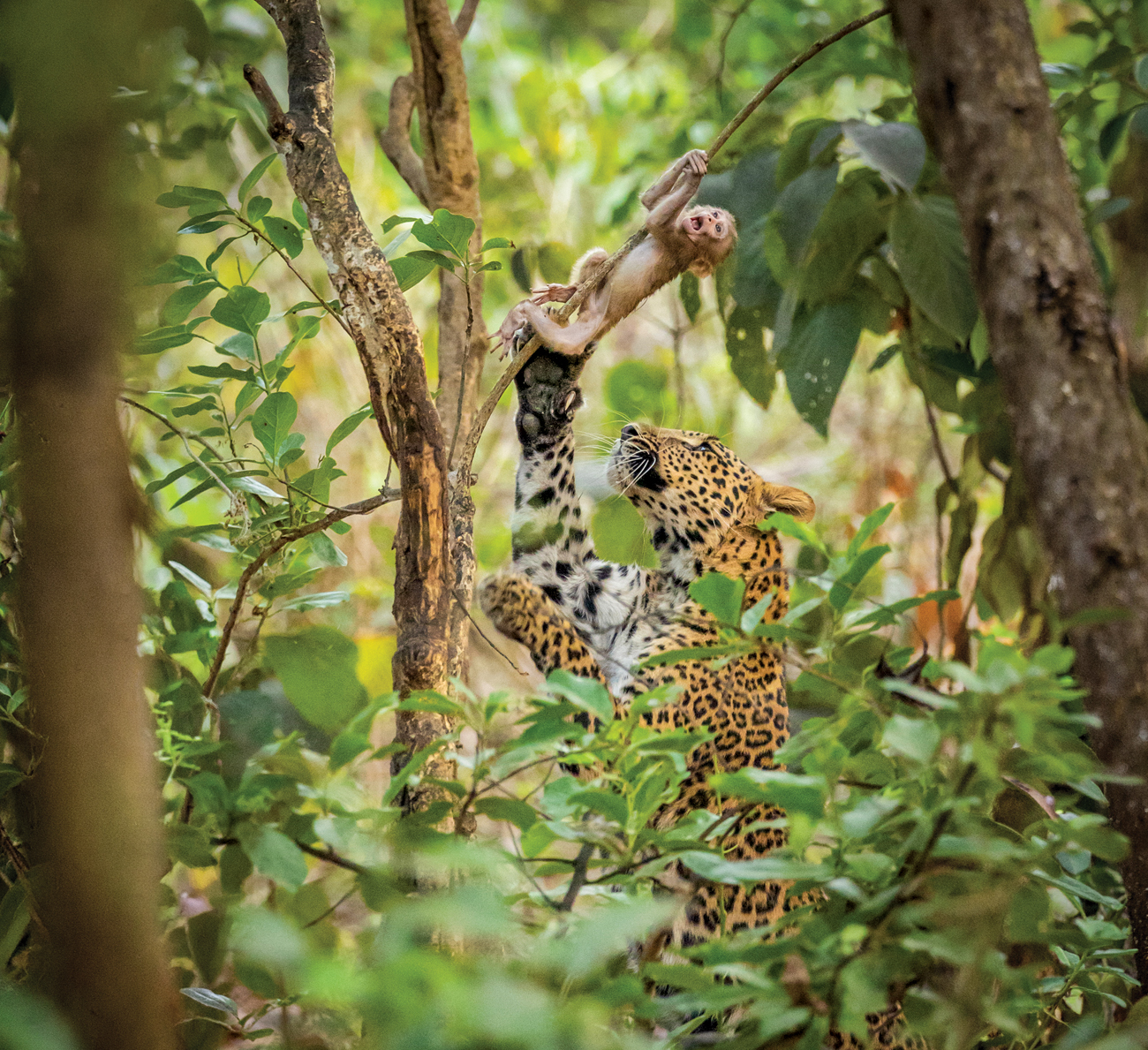
A hungry leopard reaches for an infant rhesus macaque clinging to a tree for safety. The leopard succeeds, revealing the raw drama of the jungle. Photo: Chandrashekhar Chauhan/Sanctuary Photolibrary.
Who Rules Earth?
In ecology, the ‘top of the food chain’ refers to apex predators, species with no natural predators. Human beings do not rely entirely on predation, as we cultivate crops and raise livestock. Nevertheless, humans often place themselves at the top of the food chain.
Meanwhile, it is insects, those tiny titans, that are responsible for the pollination of roughly 75 per cent of the world’s major food crop varieties (not volume) that we depend on. Facing multiple threats, most of them human-made, global insect populations are declining at an alarming rate, in some estimates by up to two per cent per year. This decline poses a serious risk to food security for us, as well as for the wider food chain, in which insects form a crucial source of sustenance for many animals.
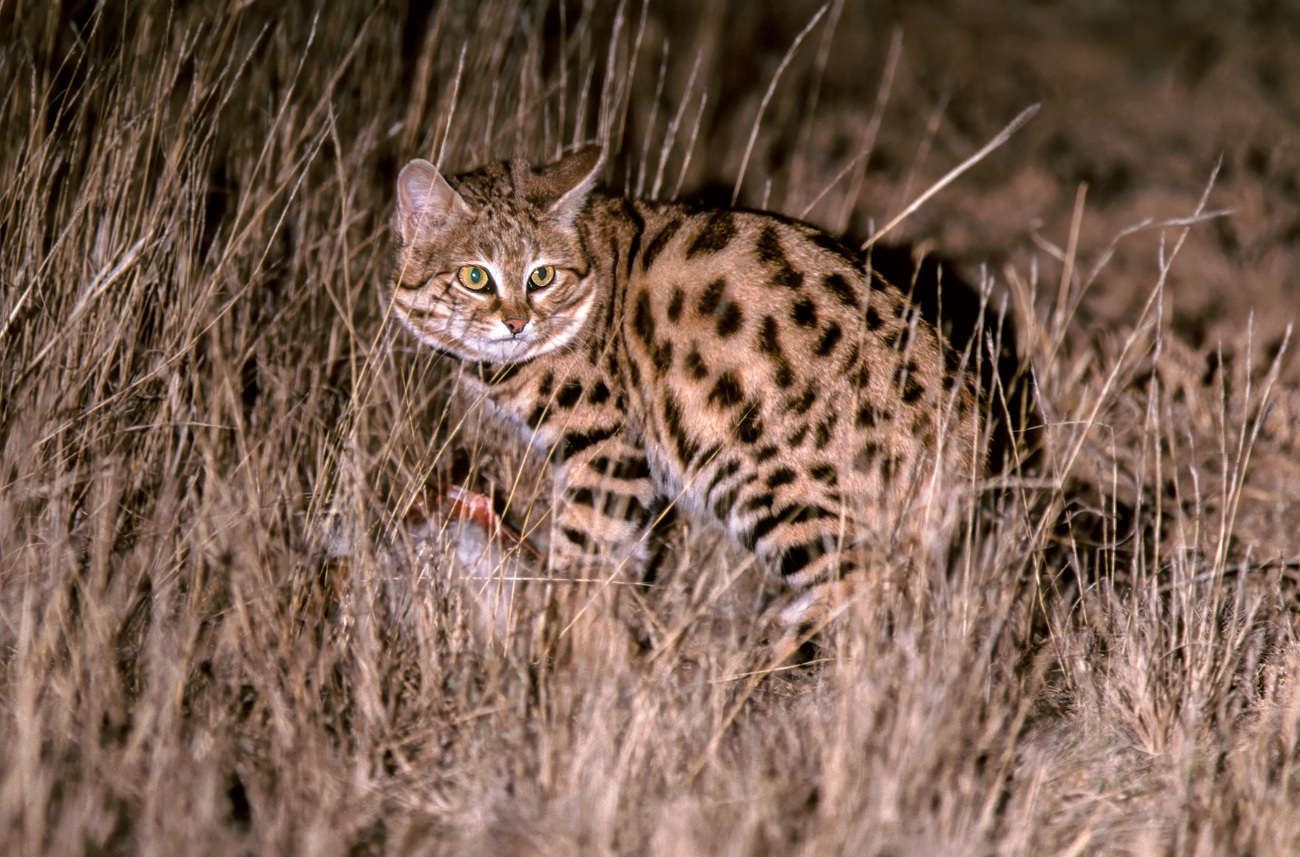
Black-footed cats have a high hunting success rate of 60 per cent. Photo: ©A. Sliwa.
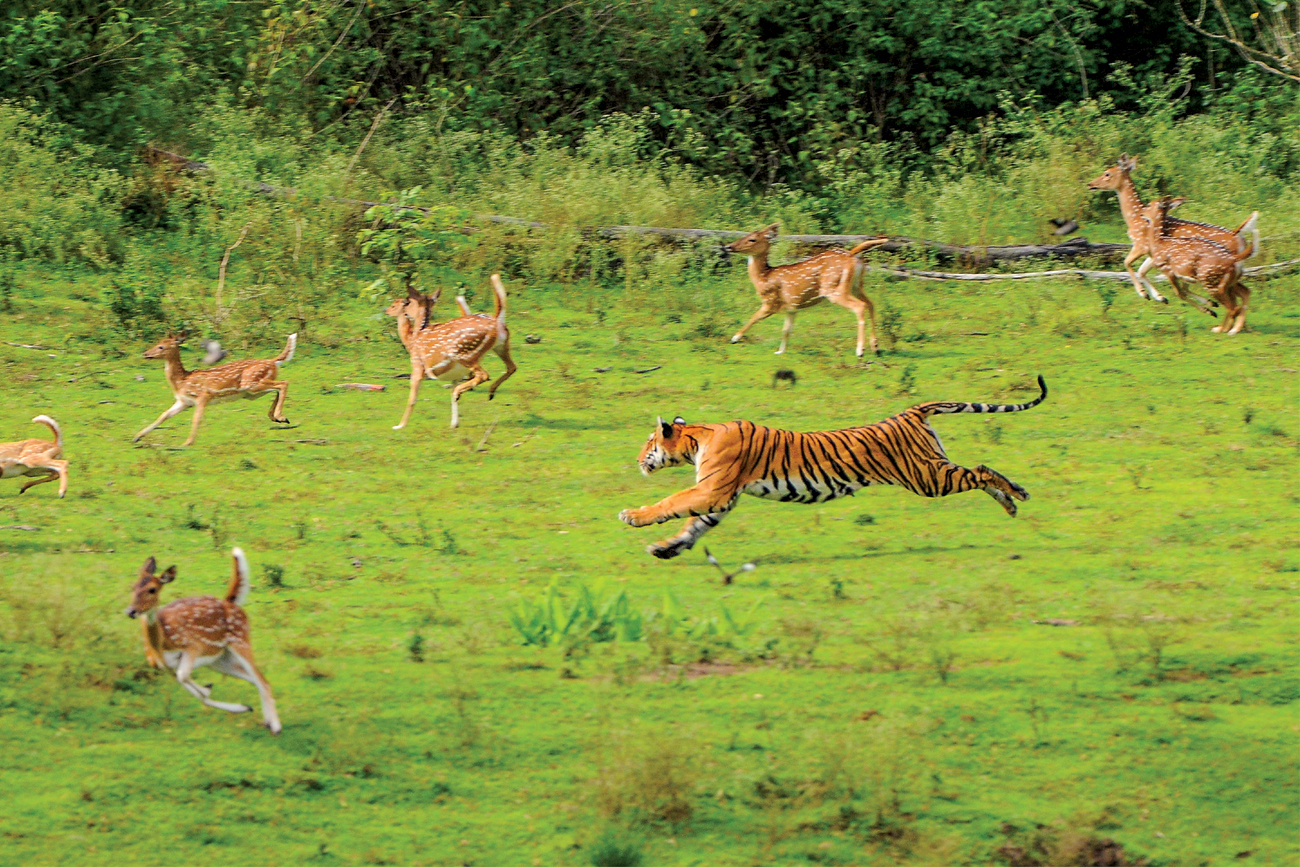
A healthy prey base is essential to support apex predators like the tiger. Photo: Madhusudhana S.R./Sanctuary Photolibrary.
Together We Live
While apex predators are crucial in maintaining checks on herbivore populations and supporting ecological balance, this is not to suggest that some animals are more important than others. Every creature has a role to play, whether predator or prey. Ecosystems function through interdependence, where each species makes its contribution. For example, in many landscapes where apex predators such as tigers or lions have vanished, they cannot simply be released in the habitat unless a stable prey base has been established first, such as sufficient populations of ungulates.
Without this foundation, conservation efforts are unlikely to succeed in the long-term. That said, apex predators do play a particularly influential role. By regulating prey populations and behaviour, they help shape vegetation patterns and overall biodiversity. Therefore, the world is not ruled by a hierarchy, but balanced by interdependencies. At the top of the food chain are apex predators, which are also, unfortunately, conservation-wise vulnerable, largely because they require large habitats, abundant prey, and tend to come into conflict with humans.

Barn Owls are essential for farmers, helping control rat populations. Photo: Madhusudhana S.R./Sanctuary Photolibrary.

A crab spider captures a bee, a small moment in nature’s delicate balance. Photo: Dhananjay Thakur/Sanctuary Photolibrary.
Project Tiger
The tiger sits at the top of the food chain in Indian forest ecosystems. India offered the world an inspiring example of conserving an apex predator through Project Tiger, launched in 1973. While the initiative is named after, and centred on, the iconic tiger, it was never about the species alone! It was about preserving the entire ecological structure required for an apex predator to survive.
Focusing on a charismatic species at the top level of the food web meant creating protected reserves, ensuring stable populations of prey species, and preventing habitat fragmentation caused by expanding infrastructure. In many ways, the presence of the tiger became a powerful symbol and rallying point for conservation, strengthening protection for entire landscapes. By rallying around the conservation of this apex predator, India also safeguarded forests, countless species, and vital river systems connected to these ecosystems. With rising tiger populations in some Protected Areas, tigers are dispersing in search of new territories, but often enter human-modified landscapes, leading to conflict. Protecting apex species also means protecting their habitats.
Predators Of Nicobar
~The Nicobar ecosystem is not dominated by a single apex predator like a tiger in forests.
~ The closest thing to an apex predator is the saltwater crocodile.
~ Sharks are apex of the seas; Nicobar Serpent-Eagles top the canopies.
Nature is not ruled by kings. But when apex predators vanish from wild landscapes, the cascading consequences can be severe, rippling through food webs and weakening ecosystem stability. Let us continue the work of conserving them, because in protecting them, we also help protect ourselves.
Rithwik Sundar is an Assistant Editor at Sanctuary Asia. He enjoys walking in nature, watching birds, and looking for fish in streams. Most days, he is planning his next adventure into the wild. Lately, he’s also gotten into watching anime.