Nature Tourism Does Not Turn Tigers Into Man-eaters
First published in Sanctuary Asia,
Vol. 46
No. 6,
June 2026
By Julian Matthews
Nature tourism in India is facing an existential threat. In recent times it has been accused of being the reason behind ‘man-eating’ tigers around Bandipur and Nagarahole Tiger Reserves. The result: shutting down of Karnataka’s Protected Areas for nearly three months in the 2025 safari season. In my 35 years working in wildlife conservation and nature tourism, I have never encountered a claim so misguided.
What we are witnessing is not the result of nature tourism, but the direct consequence of an extraordinary conservation success: the return of viable tiger populations to India’s forest heartlands. From historic lows to over 300 individuals, Karnataka’s PAs have one of the densest tiger populations in India today.
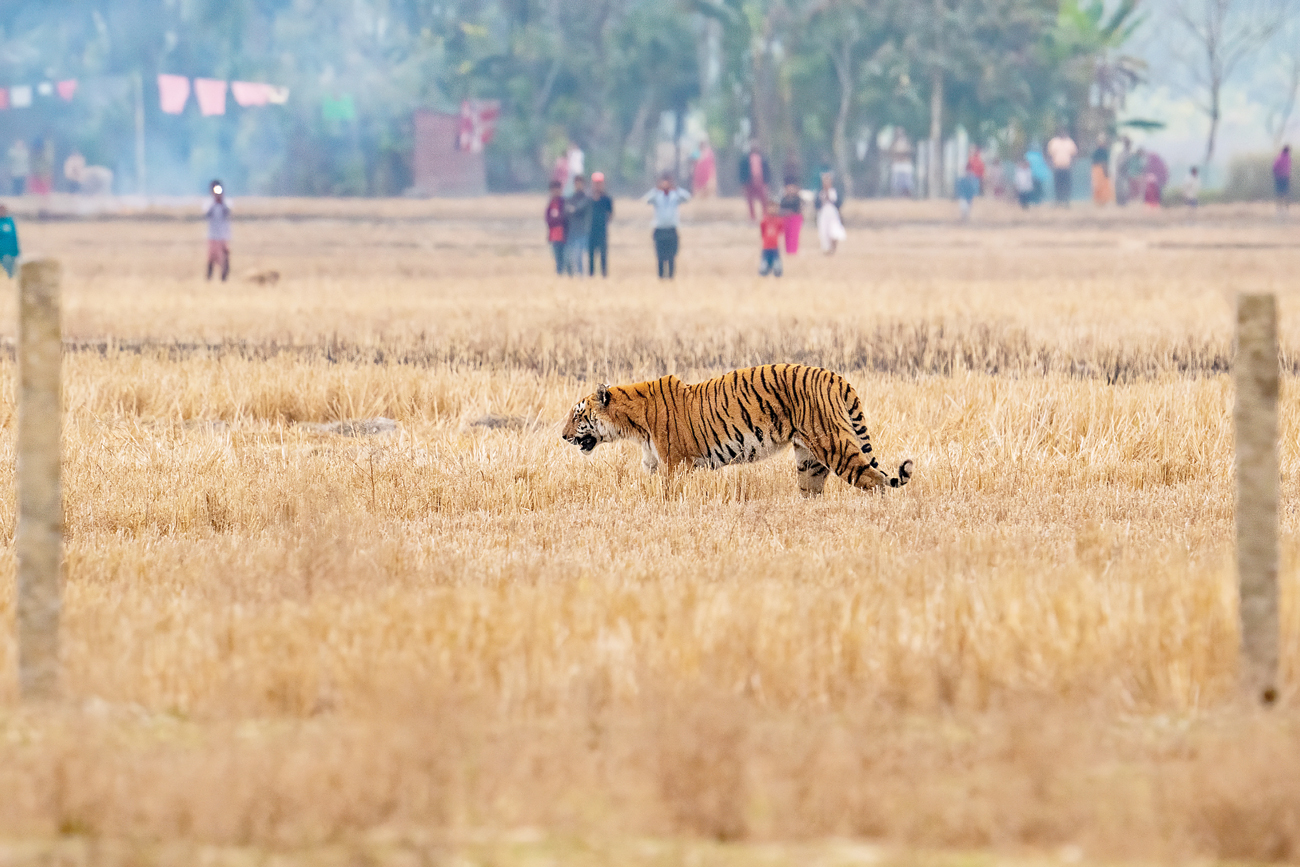
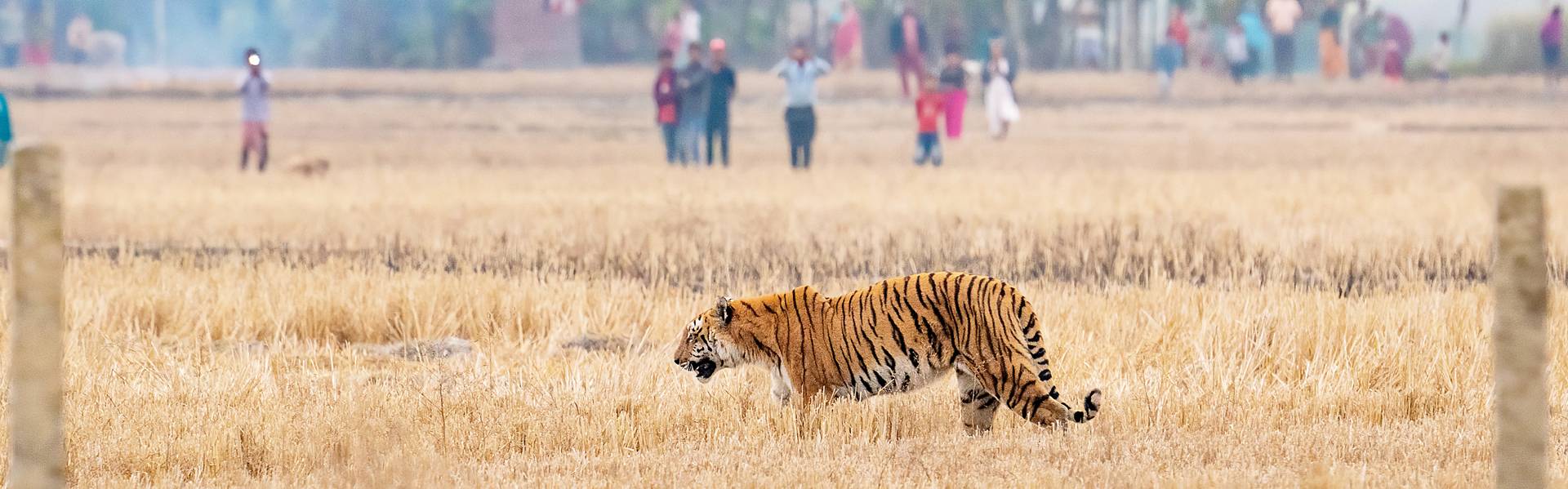
Older, injured, or displaced young tigers are forced beyond protected boundaries in search of territory and prey – often into buffer forests or farmlands stripped of wild prey and reliant on livestock. This is not tourism’s fault; it is the predictable outcome of conservation success. Photo: Nejib Ahmed/Sanctuary Photolibrary.
The Real Story Of Tiger Recovery
Over the past two decades, the rapid growth of nature tourism in Karnataka – mirroring developments across India – has been central to the recovery of the tiger from the brink of extinction. This recovery would not have happened without visitors: people who come to experience these landscapes, fall in love with wildlife, understand their ecological value, and pay for that privilege. That economic engine – what I call tigernomics – has helped secure the tiger’s future against relentless anthropogenic pressure.
Nature tourism is a conservation tool like no other. In just 20 years, it has transformed the tiger and its habitat from something once viewed as dangerous and dispensable into a powerful economic asset. In 2010, Travel Operators for Tigers (TOFT) calculated that a single tigress in Rajasthan generated Rs. 900 crore (US$101 million) for the rural economy over her lifetime. That figure would likely be the same, if not higher, today in Bandipur and Nagarahole, which attract tens of thousands of domestic and international visitors, generating nearly Rs. 60 crore per annum in park fees today, to mitigate conflict and support communities and park management.
To now blame tourism for tiger attacks – many of which occur miles outside designated tourism zones – ignores history and evidence. Human-tiger conflict has existed on the subcontinent for millennia, long before tourism. What has changed is tiger density, and a huge increase in the density of bordering human populations.
Many reserves today are effectively ‘full’. In places such as Bandipur and Nagarahole, tiger populations may now exceed ecological carrying capacity. As numbers increase, territorial disputes rise. Older, injured, or displaced young tigers are forced beyond protected boundaries in search of territory and prey – often into buffer forests or farmlands stripped of wild prey and reliant on livestock. This is not tourism’s fault; it is the predictable outcome of conservation success.
Tourism has, undeniably, made a small number of tigers within tourism zones more comfortable, or ‘habituated’, to vehicles. These tigers have become more diurnal, accustomed to safari traffic within the roughly 20 percent of park areas where tourism is permitted under NTCA guidelines. But these individuals represent a small fraction of any reserve’s population and there is zero evidence that they become problem animals.
In reality, all tigers today are increasingly exposed to human activity: forest patrols, vehicles, machinery, weddings, music, and expanding villages whose populations have doubled or tripled over the past 30 years. Rising conflict, therefore, is hardly surprising – and statistically is likely no greater than historic patterns would suggest. However, with increasing degraded habitats outside parks and shrinking prey bases, tigers and leopards are now far too dependent on livestock. This inevitably increases encounters with herders and forest users.
Tigers are not natural man-eaters. They avoid humans wherever possible. Step off a safari vehicle and the change in behaviour is immediate: a classic fight-or-flight response. Ninety-nine times out of a hundred, they flee. If this were not the case, humanity would not have survived alongside large predators for millennia.
Crucially, nature tourism in India (unlike Nepal) has never been formally recognised as a conservation tool. Unlike many wildlife-rich countries, it has been treated by forest bureaucracies as a problem to be controlled, not a partner to be engaged. Restrictions have replaced collaboration; community integration has been talked about, but rarely planned. The result is a nature tourism industry that India never strategically planned for or designed – and today many communities feel excluded from its potential benefits. Too often, park fees garnered from visitors, are dispersed with largesse as Forest Department funds with no correlation to their actual origin.
The safari industry is far from perfect. It should have been better planned, better legislated, and more inclusive. TOFT has campaigned for this for over two decades. Yet despite its flaws, tourism is working – and in many cases, working exceptionally well.
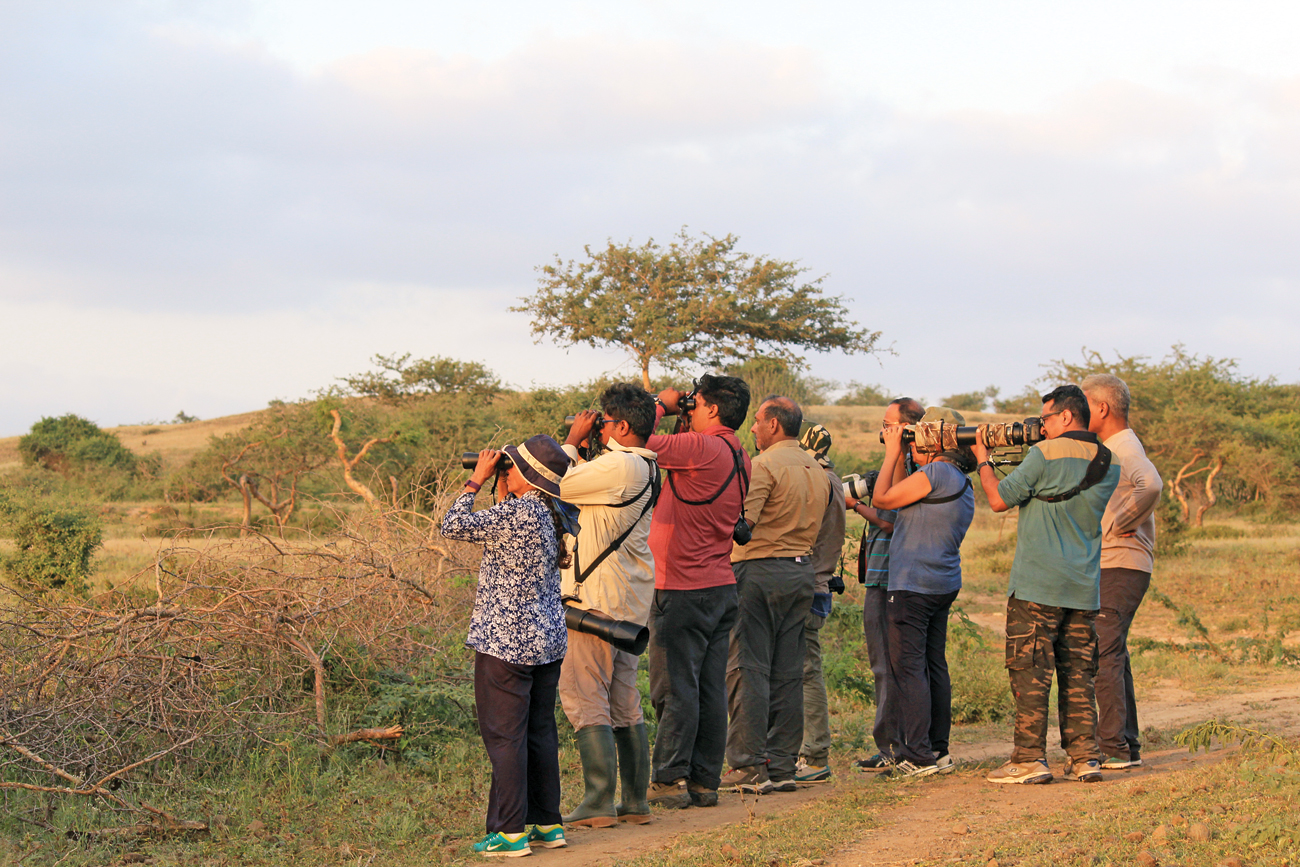
Tourism is not the villain in this story; lack of land use planning, inflexible governance, and a failure to manage lands outside Protected Areas are. If India wishes to preserve its globally celebrated tiger recovery, it must stop scapegoating nature tourism and start treating it as the indispensable conservation and rural development partner it can be. Photo: Prachi Galange.
What Must Change Now
So, what is the long-term solution to India’s growing abundance of tigers?
First, and most critically, India must restore more land to nature, in line with its own national and international biodiversity commitments. This must be coupled with far greater awareness, livelihood options, and genuine cooperation with communities living alongside forests, through nature tourism collaboration and participatory forest management.
Strategic land-use planning and carrying capacity limits to nature tourism is essential going forward, as is rigorous monitoring of all lodges for sustainability standards, ensuring local employment.
There must be greater private and community involvement in habitat restoration and rewilding, both on public land and on former private estates. Conflicts of interest – such as policymakers simultaneously acting also as tourism operators, as seen with wholly government-owned enterprises in Karnataka – must be removed. State wildlife boards should be led by experts in ecology, community development, and sustainable tourism, not dominated by political appointees.
None of this is radical. It is being done successfully in many wildlife-rich countries around the world. It simply needs to be done properly in India. Tourism is not the villain in this story; poor planning, single species design, inflexible governance, and a failure to manage success are. If India wishes to preserve its globally celebrated tiger recovery, it must stop scapegoating nature tourism and start treating it as the indispensable conservation and rural development partner it can be.
Julian Mathews is the Founder of Travel Operators for Tigers (TOFT).