Can COP29 Ensure Biodiversity And Climate Action Synergies?
First published in Sanctuary Asia,
Vol. 44
No. 12,
December 2024
By Shailendra Yashwant
Recognising that resilience in the face of climate impacts can only be achieved by jointly addressing the intertwined challenge of climate change and biodiversity loss, the Global Stocktake (GST) outcome of the Climate COP28 in Dubai, UAE, in November 2023, reaffirmed the importance of protecting and restoring ecosystems. The Conference of Parties (COP) is an annual meeting of all States that are Parties to the Convention. The overarching mandate is to assess progress in climate change mitigation and adaptation. The GST emphasised aligning UNFCCC action with the Convention on Biological Diversity (CBD) to accelerate efforts to halt and reverse deforestation and forest degradation by 2030. The COP28 Joint Statement on Climate, Nature and People had further underlined the need for integrated action.
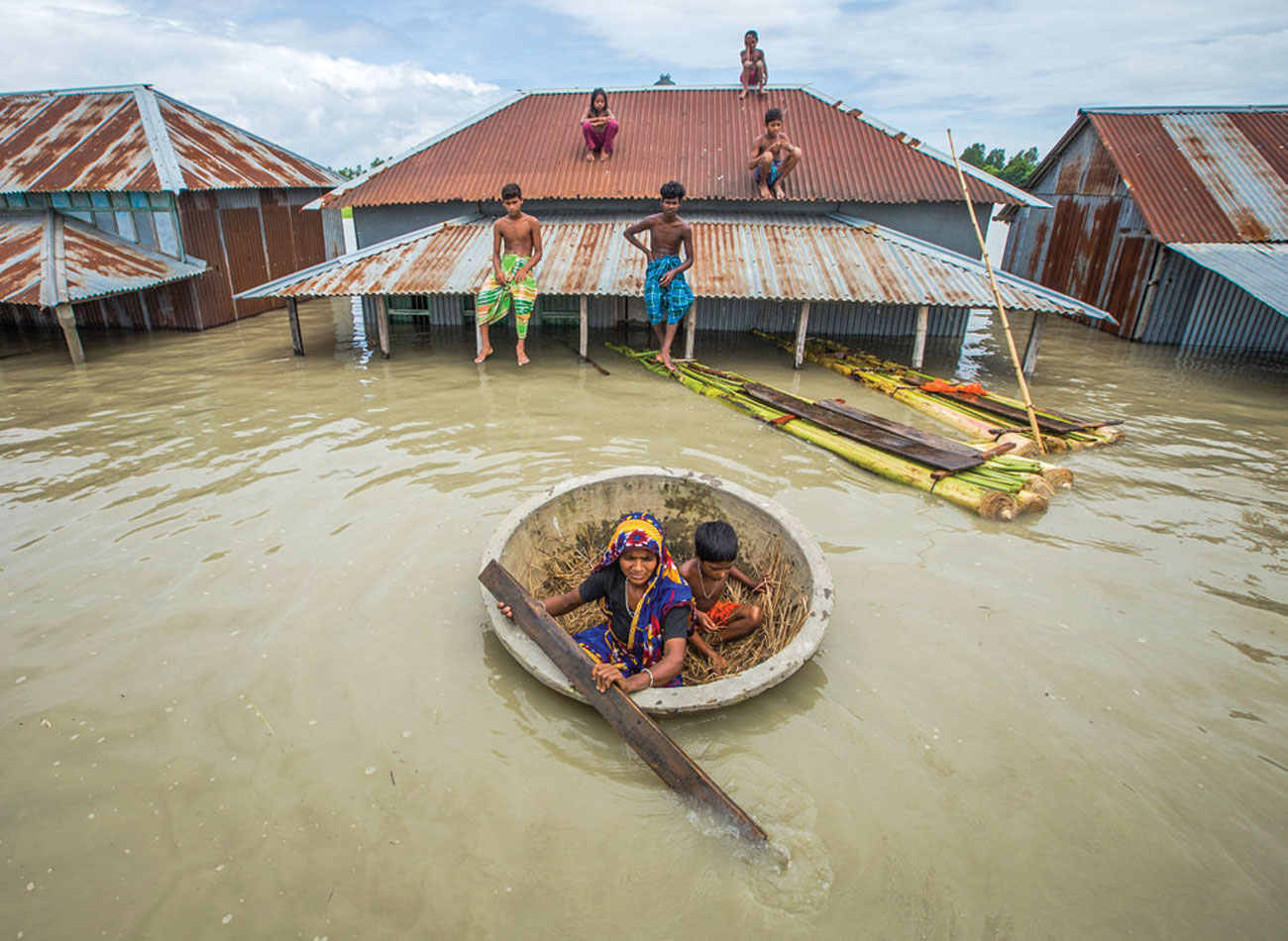
Houses were submerged owing to flooding in 2020 in Sirajganj, Bangladesh. Climate change will increase the incidence of extreme weather events. Photo: Moniruzzaman Sazal/Climate Visuals Countdown.
It was natural then that the CBD COP16 in Cali, Colombia in October 2024, adopted a crucial decision on biodiversity and climate change synergies, stressing ecological integrity as a basis for collaboration among international institutions on climate and biodiversity. All parties agreed that protecting our natural ecosystems – and the invaluable services they provide, such as carbon sequestration and storage – is key to surviving the climate crises. Countries agreed to expand the role of Indigenous Peoples and Local Communities in saving biodiversity. Additionally, in a groundbreaking move, they reached an agreement on the operationalisation of a new global mechanism to share benefits from digital sequence information from genetic resources.
Unfortunately, COP16 ran out of time to finalise critical decisions, including those on resource mobilisation and the CBD budget. The lack of progress on this matter, particularly the proposed $200 billion annual target for biodiversity by 2030, revealed deep divisions between developed and developing nations. Developing countries prioritised a new global biodiversity fund directly managed by COP to address governance and access issues with existing funding mechanisms. In contrast, many developed countries pushed for innovative private funding instead of grants from public funding, causing further friction.
Investing In The Future
At COP29 in Baku, Azerbaijan, climate finance took centre stage. Determining a new post-2025 annual climate finance mobilisation target – called the New Collective Quantified Goal (NCQG) – was the top priority of COP 29. In 2015, under the Paris Agreement, Parties had agreed to extend this goal out to 2025 and to set a new finance goal, from a floor of USD 100 billion per year, for after 2025, taking into account the needs and priorities of developing countries.
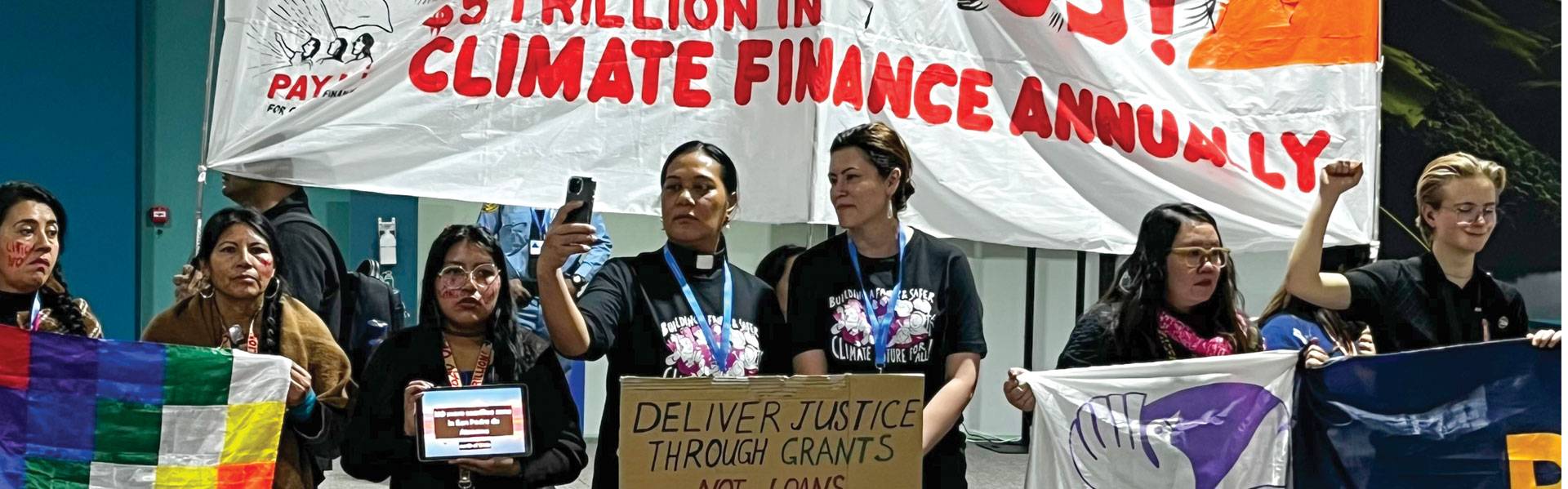
Most studies find that the overall investment needs for developing countries to implement the Paris Agreement are now in trillions of dollars per year. According to the United Nations’ Framework Convention on Climate Change’s (UNFCCC) own estimate, developing countries require about US$5.8-5.9 trillion up until 2030 in order to meet their climate goals. Civil society groups from around the world are calling on governments in the Global North to pay up US$5 trillion annually as a down payment towards their climate debt to the countries of the Global South, who are the least responsible for climate disaster but are the most affected.
The Kunming-Montreal Global Biodiversity Framework (GBF) was adopted during the fifteenth meeting of the Conference of the Parties (COP 15) to the Convention on Biological Diversity following a four-year consultation and negotiation process. This historic Framework, which supports the achievement of the Sustainable Development Goals and builds on the Convention’s previous Strategic Plans, sets out an ambitious pathway to reach the global vision of a world living in harmony with nature by 2050. Among the Framework’s key elements are four goals for 2050 and 23 targets for 2030.
What is required is a clear commitment to tackle the economic conditions, policies, and activities that drive emissions and biodiversity loss. This includes eliminating harmful financial incentives such as unsustainable agricultural and forestry subsidies, perverse subsidies to large-scale energy generation using forest biomass often misclassified as ‘renewable’ energy, and subsidies to the fossil fuel industry. It also requires reforming taxes, and ensuring debt justice. Any commitment must address the significant role developed countries play in driving unsustainable levels of commodity production in developing nations to meet demand.
In addition to financing for ecosystem-based climate mitigation and upholding the 50 per cent climate finance commitments to adaptation, it is crucial to secure and equitably disburse loss and damage funds to support developing countries and Indigenous communities enduring the loss of biodiversity, ecosystems, and cultural heritage.
It is important to ensure that climate finance does not harm biodiversity or violate human rights. To help ensure this, countries should prioritise non-market-based incentives, particularly debt-free public finance and direct funding for Indigenous Peoples and Traditional and Local Communities that encourage rights-based protection and restoration of carbon-rich ecosystems, in line with the KM-GBF.
It is now time to bring biodiversity and ecological expertise into the UNFCCC by establishing a Technical Expert Group. This group should develop clear guidelines, tools and recommendations for protecting long-term carbon storage in ecosystems, enhancing their resilience and preventing irreversible tipping-points. Its focus should be to protect and improve their ecological integrity.
The GST urged Parties to support “enhanced efforts toward halting and reversing deforestation and forest degradation by 2030” (paragraph 33, 1/CMA.5). This reflects the commitment in the COP26 Glasgow Leaders’ Declaration on Forests and Land Use as well as the goals of the Paris Agreement and the KMGBF. However, achieving this requires accountability and transparency to ensure implementation across all forest biomes (boreal, temperate and tropical). To avoid unintended outcomes, Parties must also have a set of robust accounting mechanisms and definitions for forests.
Finally, in all areas of the negotiations, it is critical that tackling the biodiversity and climate crises together does not result in greenwashing, dangerous distractions, false solutions, land dispossession, rights violations or the continued use of fossil fuels. Ambition for nature and ecosystems must be additional to, not instead of, an urgent fossil fuel phase out.
There is no doubt that nature can and will play a key role in climate ambition. Protecting standing forests, halting deforestation and forest degradation, promoting sustainable forest management, and restoring forest landscapes are also vital to the global economy.
However, without a clear resolution, trust and momentum at COP29, our planet’s future remains at risk. Failing to address these issues will not only perpetuate historical injustices but also weaken the very systems needed for a sustainable future.
Forests face a US$460 billion funding gap per year. There is an urgent need for transparent, traceable finance to be leveraged from all possible sources and tailored to the needs of forest nations. Drawing from COP16’s biodiversity insights, world leaders had a pivotal opportunity to implement the ecosystem goals of the Paris Agreement and Global Stocktake to boost climate ambition. By promoting nature-based solutions, nations can pursue policies that simultaneously advance conservation and climate resilience goals. However, the delivery of adequate climate finance is crucial to build trust among parties and ensuring the implementation of the GST decisions from COP28 as well as the commitments made at COP16 on biodiversity and climate change. This is essential for maintaining momentum and moving forward toward COP30. Regrettably, securing binding commitments from developed nations is still a challenge.
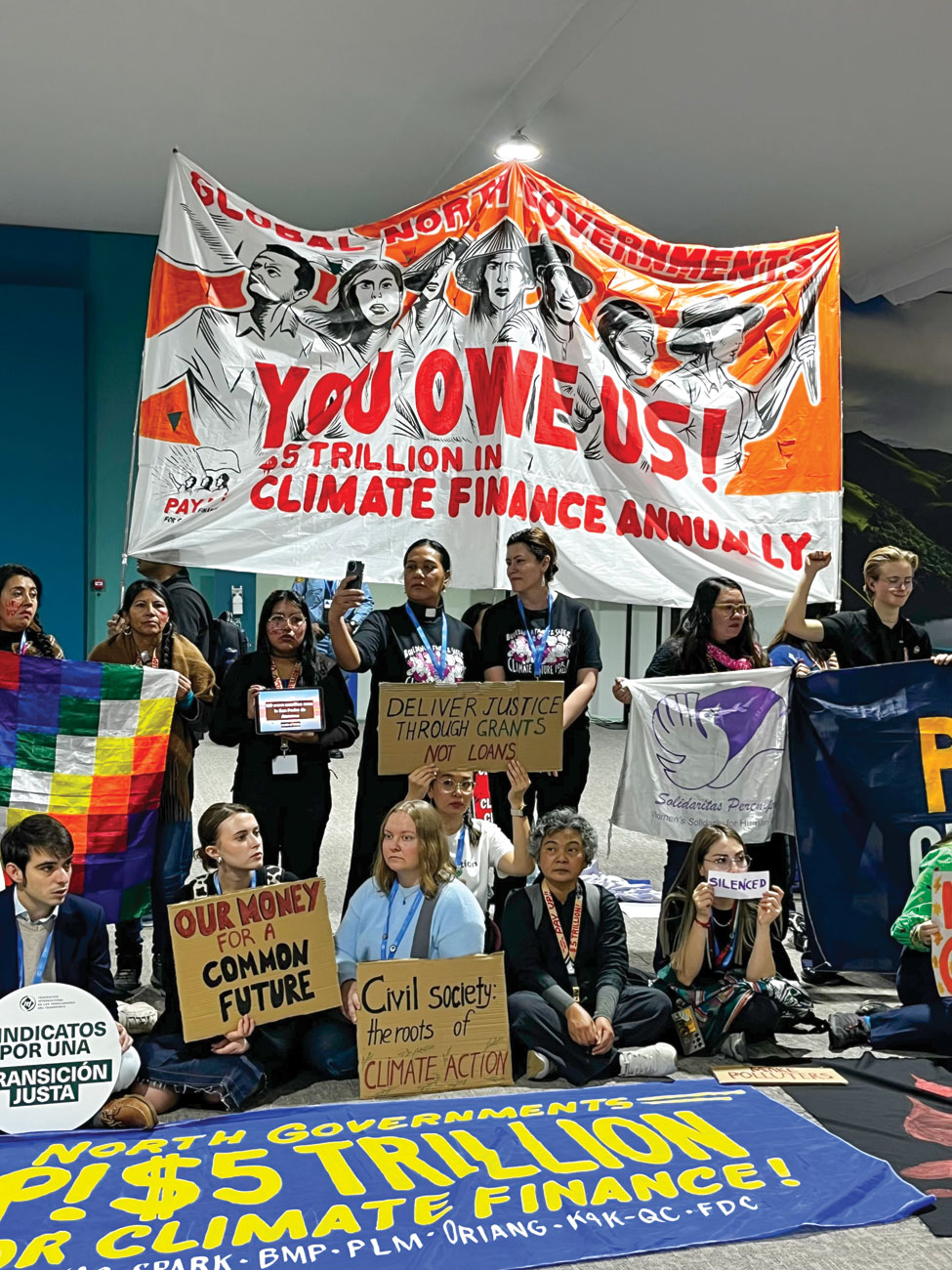
As world leaders deliberated on climate commitments, activists reminded them of the urgent need for equitable action and funding to combat the climate crisis. Protesters at COP29 also demanded climate justice, calling for $5 trillion annually in climate finance from the Global North. Photo: Shailendra Yashwant.
That said, a robust NCQG outcome and broader finance systems transformation are critical for delivering just transitions in the land sector that support both climate, biodiversity and social justice goals. Sadly, clear decisions were still not taken at COP29 to urge Parties to ensure that their Nationally Determined Contributions (NDCs) and National Adaptation Plans (NAPs) align with national plans under existing global agreements, such as NBSAPs (national biodiversity strategies and action plans) under the Kunming-Montreal Global Biodiversity Framework (KM-GBF).
India Dubs COP29 Outcome An “Optical Illusion”
Completely ignoring the demands of the developing nations for mobilisation of at least 1.3 trillion dollars a year in climate finance, the developed countries managed to force an agreement at the COP29 meeting in Baku, to put together just 300 billion dollars a year, that too from 2035 and through a “variety of sources, public and private, bilateral and multilateral, including alternative sources”, instead of grants or concessionary loans.
The COP29 outcome risks setting back climate action at just the moment when accelerating it is most critical. In a more controversial outcome, the government also agreed to adopt Article 6 of the Paris Agreement, opening doors to global carbon markets and geo-engineering, which are a serious threat to climate justice.
An independent photographer, writer and journalist, Shailendra Yashwant is currently a senior advisor to the Climate Action Network South Asia and steering committee member of the Pesticide Action Network India.