Reversing Extinction
First published on
April 01, 2026
By The Corbett Foundation
A Landmark Judgement by the Hon’ble Supreme Court of India
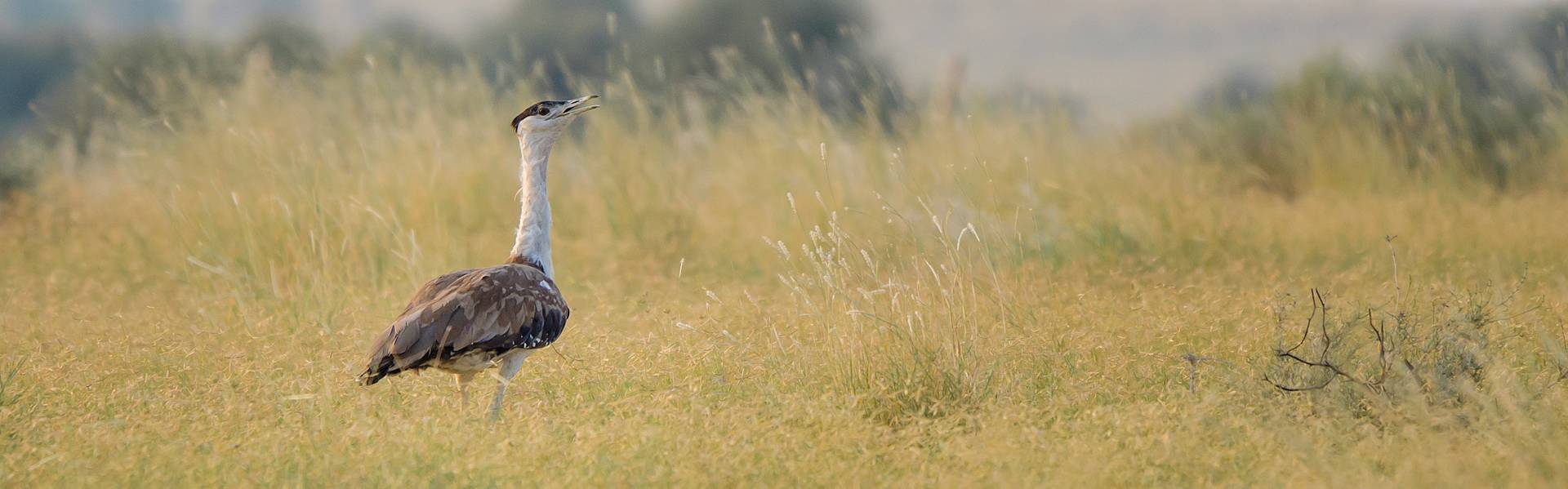
The Supreme Court of India issued a landmark judgment to protect the Great Indian Bustard (GIB) and the Lesser Florican, two of the country’s most endangered bird species, on December 19, 2025. Led by
Dr. M.K. Ranjitsinhji, The Corbett Foundation, and three other petitioners, the case highlighted the urgent need to safeguard these grassland species. Their advocacy was instrumental in achieving this significant conservation ruling.
The Supreme Court adopted a balanced, science-based approach by replacing earlier blanket restrictions, and instead created ‘Revised Priority Areas’ for focussed conservation. These areas cover approximately 14,013 sq. km. in Rajasthan and 740 sq. km. in Gujarat, representing the most critical habitats for these species. This targeted strategy ensures that conservation measures are both practical and effective.
The judgment addresses the significant threat of overhead power lines, a leading cause of bustard mortality. Owing to their size and limited frontal vision, these birds are prone to collisions. The Court ordered that high-risk power lines be placed underground, with about 250 km. to be buried within a set timeframe. Other lines must be rerouted away from key habitats or aligned within designated powerline corridors. This approach reduces landscape fragmentation and lowers collision risks.
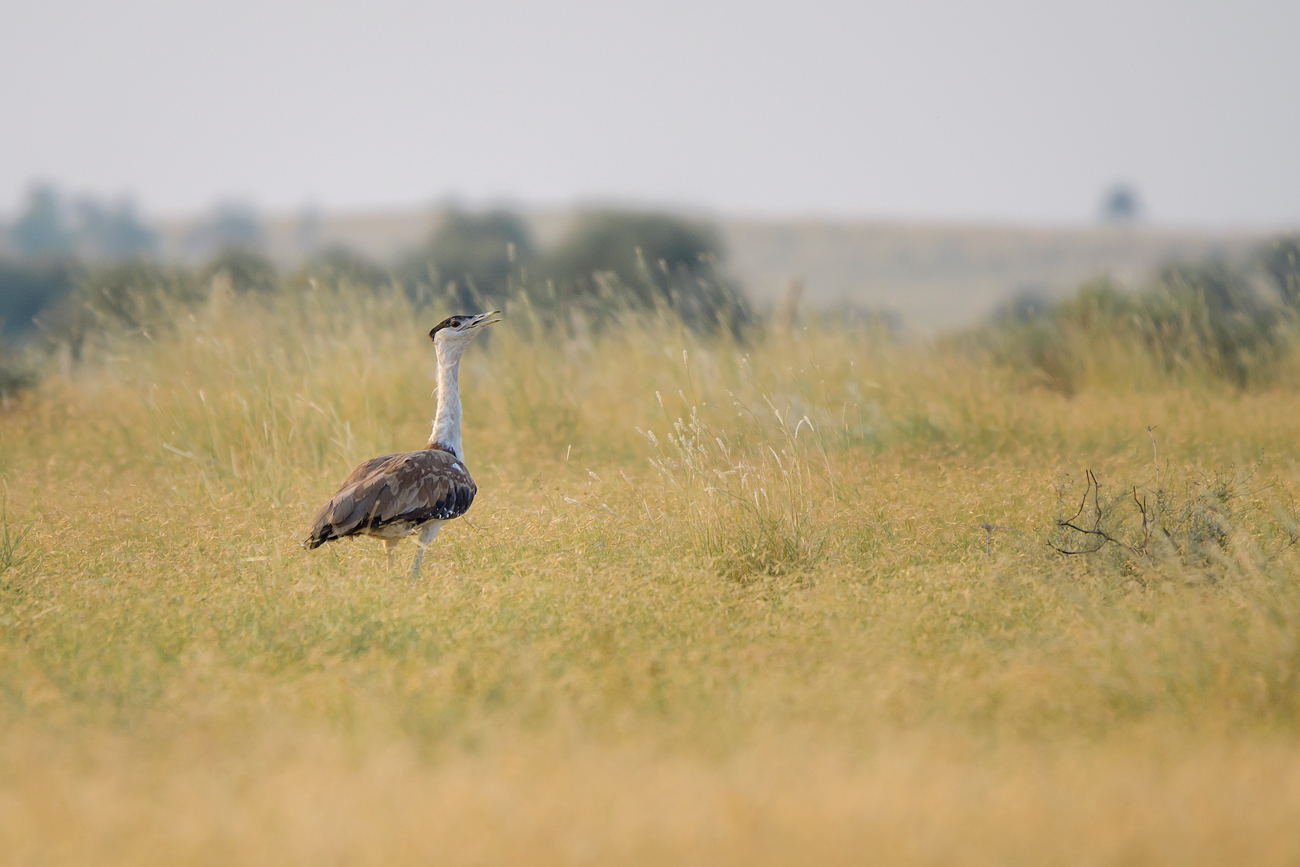
Photo: Saurabh Sawant.
The Court also imposed strict controls on renewable energy infrastructure in these sensitive ecosystems. While recognising the importance of solar and wind energy for India’s climate goals, it emphasised that conservation must not be compromised. Within revised priority areas, new wind turbines and large solar projects over 2 MW are prohibited, and existing projects cannot be expanded. Only small-scale, decentralised solar installations for local needs are permitted, balancing development with ecological protection.
The judgment also prioritises habitat restoration and in-situ conservation. Grasslands, often misclassified as wastelands, are recognised as ecologically valuable. The Court directed the removal of invasive species such as Neltuma juliflora, restoration of native grasses, predator management, and creation of protected breeding enclosures. Community participation is encouraged, acknowledging the importance of local stewardship for long-term success.
The judgment highlights the importance of long-term monitoring and research, including tracking bird populations, studying habitat changes, and assessing climate change impacts. This approach ensures conservation efforts remain adaptive and science-based.
Recognising ecological protection as essential to community well-being, the Supreme Court clarified that Corporate Social Responsibility (CSR) must include environmental responsibility. Companies have a legal and constitutional duty to support conservation, especially when their activities affect ecosystems. CSR funds should be directed toward in-situ and ex-situ conservation, ensuring corporate involvement in preventing extinction and restoring ecological balance.
The ruling underscores the value of scientific expertise and field-based insights. Dr. Devesh Gadhavi, a member of the Supreme Court-appointed Expert Committee, contributed significantly by applying his extensive experience in western India’s grasslands. His inputs helped develop practical, region-specific conservation strategies, particularly for Gujarat, and highlight the need to connect research, field knowledge, and policy in conservation.
The Court has endorsed active recovery strategies in addition to protecting existing populations. Initiatives such as Project Great Indian Bustard are expanding efforts such as conservation breeding and releasing captive-bred birds into the wild. In Gujarat, ‘jump-start’, an innovative approach that introduces fertile eggs from Rajasthan into wild nests containing infertile eggs, has been recommended to accelerate recovery. This combined in-situ and ex-situ strategy reflects a modern, proactive approach to species conservation.
What You Can Do
. Write to the Environment Minister at MoEFCC, urging prompt action to follow the Hon’ble Court’s directives in the ‘Revised Priority Areas’ in Rajasthan and Gujarat, at mefcc@gov.in.
. If you are a student or researcher, explore long-term monitoring and research options to contribute to GIB conservation.
. You can also raise awareness by sharing credible information on social media, especially the idea that these ecosystems are not wastelands.
. Encourage policymakers to recognise Open Natural Ecosystems (ONEs) in official land-use classifications and conservation plans, ensuring they receive the same protection as forests.
. Connect with The Corbett Foundation and other organisations to contribute CSR for in-situ and ex-situ GIB and Lesser Florican conservation. You can write to TCF at info@corbettfoundation.org.
This ruling is notable for its broad ecological vision. The Great Indian Bustard serves as a flagship species for India’s arid grasslands. By protecting it, the Court is also safeguarding entire ecosystems that support many other threatened species. These landscapes in Rajasthan and Gujarat are among the most fragile and least protected in India.
This judgment marks a shift toward an ecocentric approach, viewing development and conservation as complementary goals. If effectively implemented, it will help save the Great Indian Bustard and Lesser Florican from extinction and secure the future of India’s grasslands, ensuring these ecosystems thrive for generations.
For over 30 years, The Corbett Foundation has been dedicated to wildlife conservation and empowering local communities. TCF works in tiger habitats and semi-arid regions and grasslands, in 850 villages across India.