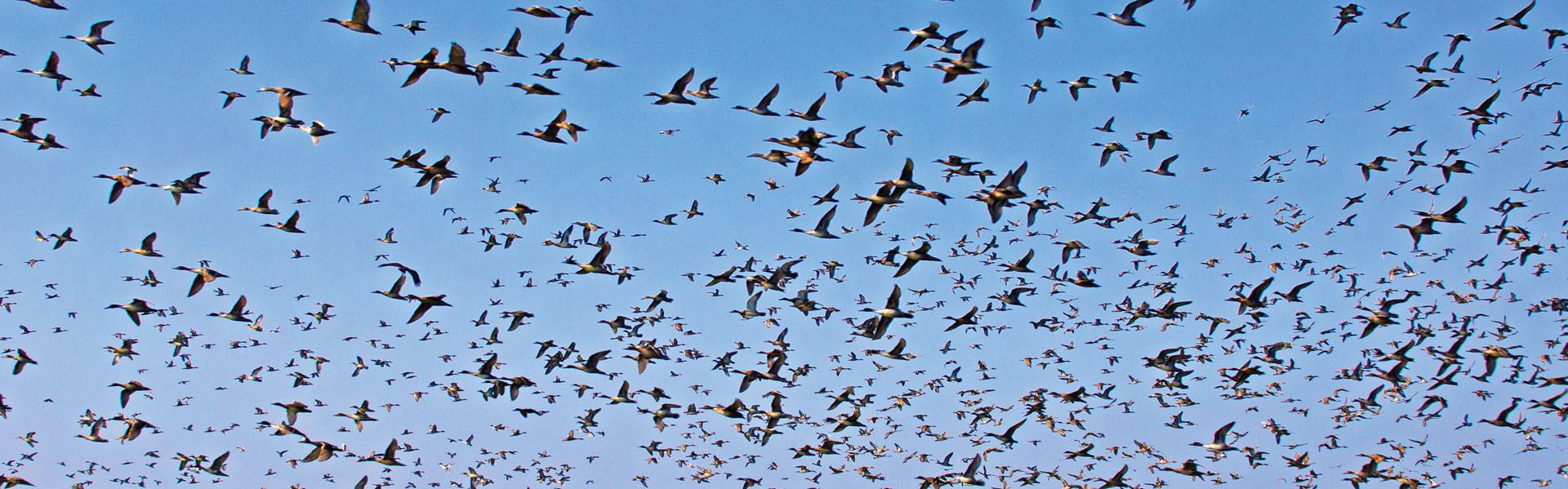
When Silence Becomes Normal: Amnesia And the Vanishing Wild
First published in Sanctuary Asia,
Vol. 46
No. 10,
October 2026
By Kashif Farooq
When I was young, my curiosity piqued when my grandfather mentioned the ‘voddur’. He described it as an animal that lives near water and catches fish. At the time, I had never heard of any such animal. Years later, I learned that ‘voddur’ is the Kashmiri name for the otter! What surprised me more was that he recalled seeing ‘voddur’ in the river, almost half a kilometre from the boundaries of Dachigam National Park. Today, they have disappeared entirely from Dachigam, and hardly anyone from my generation knows about it.
Where did they go? The question has stayed with me. Not because they have vanished but mainly because of what this disappearance reveals about us. Somewhere between my grandfather's time and mine, a species faded away in silence, unnoticed. Perhaps this is how species extinction becomes the norm, how species are lost quietly, generation after generation. This phenomenon is generational amnesia: a new generation inherits a degraded environment without realising what it has lost.
Dr. Asad Rahmani, India’s renowned ornithologist reiterates: “There is a maxim, ‘change is the only constant in Nature’. But now changes are taking place so fast that every decade or so, we have to amend our baseline. A youngster today has not seen the numbers his grandfather has seen. That is why keeping long-term systematic data on bird numbers is so essential. Only by keeping long-term data, we will know which species is still ‘common’ and which has declined.”
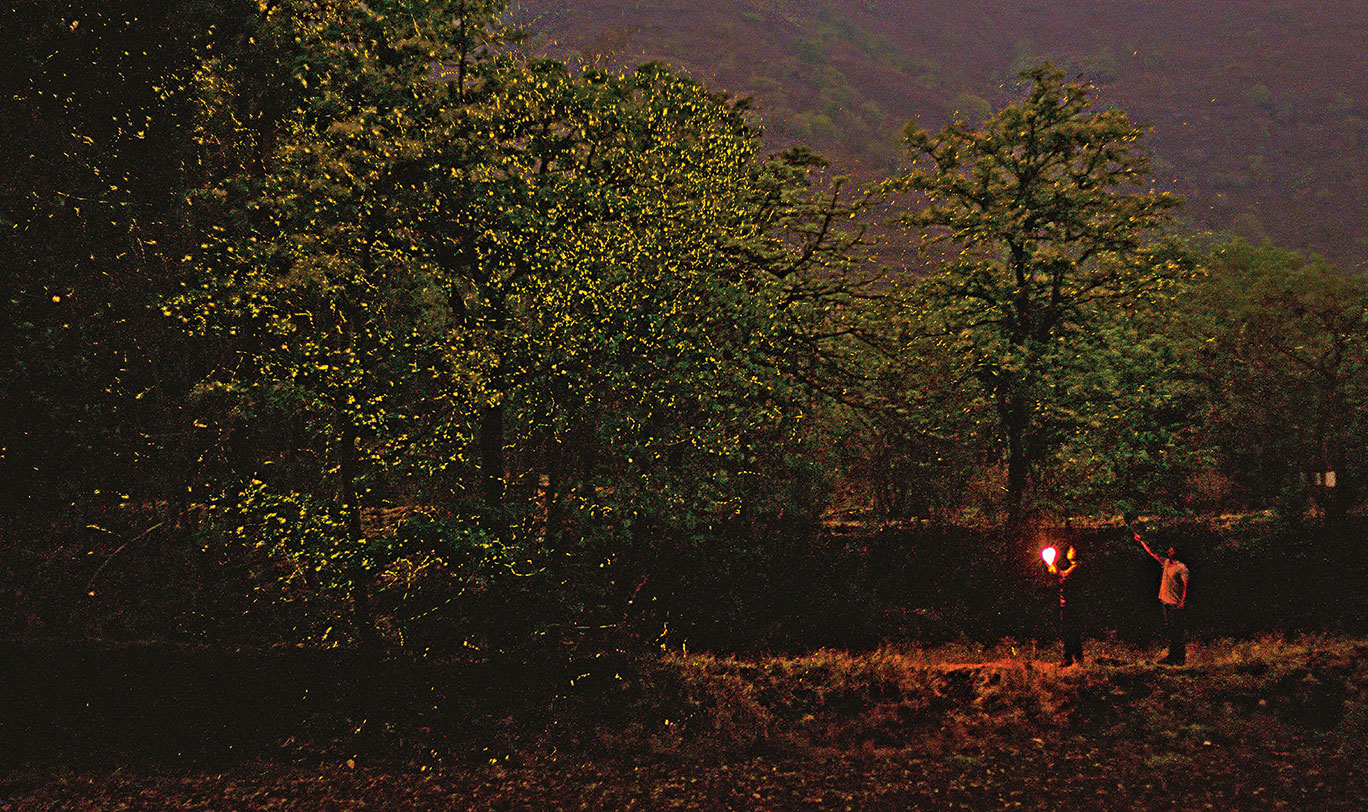
Children who grew up without witnessing fireflies will never understand what real abundance is, and will never question their disappearance. This is why stories matter, to help shape better conservation strategies for the present and future. Photo: Prasad Navale/Sanctuary Photolibrary.
The Gradual Loss
When we converse with an elderly person about nature during their youth, we will find that they often describe places and landscapes that are difficult to imagine now. They remember rivers flowing much higher and deeper, carrying more fish, orchards bustling with varied insects, and lawns full of chirping sparrows. They recollect how wetlands thronged with winged visitors. They speak of a time when life in its various forms unfolded all around them, when coexistence was part of everyday life.
As children, many of us still experienced a part of that abundance. I remember, in the early 2000s, seeing fireflies almost everywhere, glimmering in the darkness of night. Today, even one firefly feels like a discovery in the landscape. This is not just the story of Kashmir – as a child, fireflies were so common that they would be inside her room, shared Dr. Oishimaya Sen, a wildlife storyteller from Kolkata. But now, she hasn’t seen even one in the city in years. This decline did not occur overnight; it happened gradually over the years, but we never paid attention to this loss.
Each generation accepts the environment it inherits. Ecological memory is measured by personal memory rather than by what once existed. Wildlife in a quiet forest, which significantly depleted over the years, can still appear diverse enough. A polluted stream, once pure and crystal clear, continues to please our eyes. Wetlands and migratory birds are celebrated because they continue to arrive in winter, but both the ecology of the wetlands and the number of birds have declined over the decades. Over time, all these things begin to define what we expect.
To me, this gradual loss is probably one of the most dangerous aspects of ecological decline. We silently accept the loss and absence of species, and no longer find them shocking, because we never tried to understand what abundance means or what it looks like.
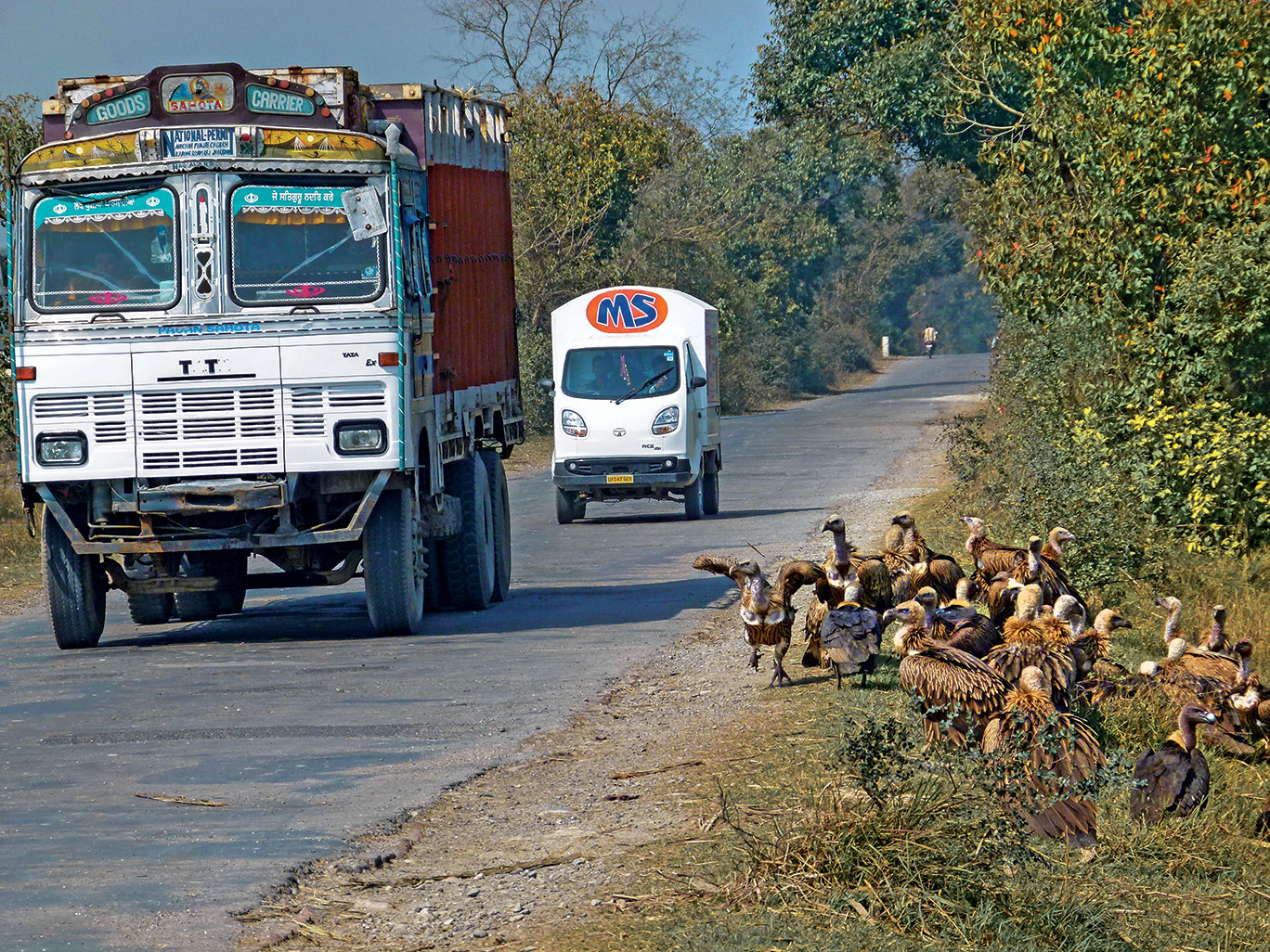
Vultures gather along the roadside in Uttar Pradesh. The real danger is that people begin to accept the reduced biodiversity around them. The urgency to address these challenges through natural rewilding is far greater than we realise. Photo: Fazlur Rehman.
We No Longer Notice
Humans respond instantly when they hear of a sudden destructive event such as a forest fire or hunting, simply because it is visible. However, the gradual decline of species over the years escapes the emotional attention it needs. We notice a large animal’s end more easily than the gradual disappearance of birds, insects, reptiles, amphibians, or even critical habitats such as wetlands and grasslands. This silence is now becoming noticeable everywhere.
According to a report published by BirdLife International, almost half of the world’s bird species are now in decline. One in eight species is on the brink. Since 1970, three billion birds are estimated to have been lost in North America alone. The same is true in India: according to the State of India’s Birds, 60 per cent of assessed species are declining in the long term. Species living in open ecosystems such as grasslands have plummeted by up to 50 per cent. Other species face similar dire circumstances. They are vanishing from our ecosystems, yet no one pays attention. Our relationship with wildlife has changed completely.
This reminds me of a conversation with Dr. Asad Rahmani. He told me that when Dr. Sálim Ali and he visited the Keoladeo National Park in Bharatpur, Rajasthan, Dr. Ali remarked that bird numbers had declined compared to what he had seen earlier. What struck me was that, to Dr. Rahmani at that time, the park still appeared extraordinarily rich in birdlife. Then I remembered my visit to Keoladeo in 2024. To me, the wetlands felt so alive with birds, calling from all directions. Yet, if the park looked diminished to Dr. Ali and abundant to future generations, then what would it have been in its prime? The question itself has an uncomfortable answer for those who think.
This is not just a story of Keoladeo, but also of the wetlands of Jammu and Kashmir, where the sky used to be filled with migratory birds above wetlands such as Hokersar and Shallabugh. I remember hearing stories of these wetlands and the abundance of migratory birds that once arrived there. Today, the story is different, and yet people are silently accepting this ecological loss.
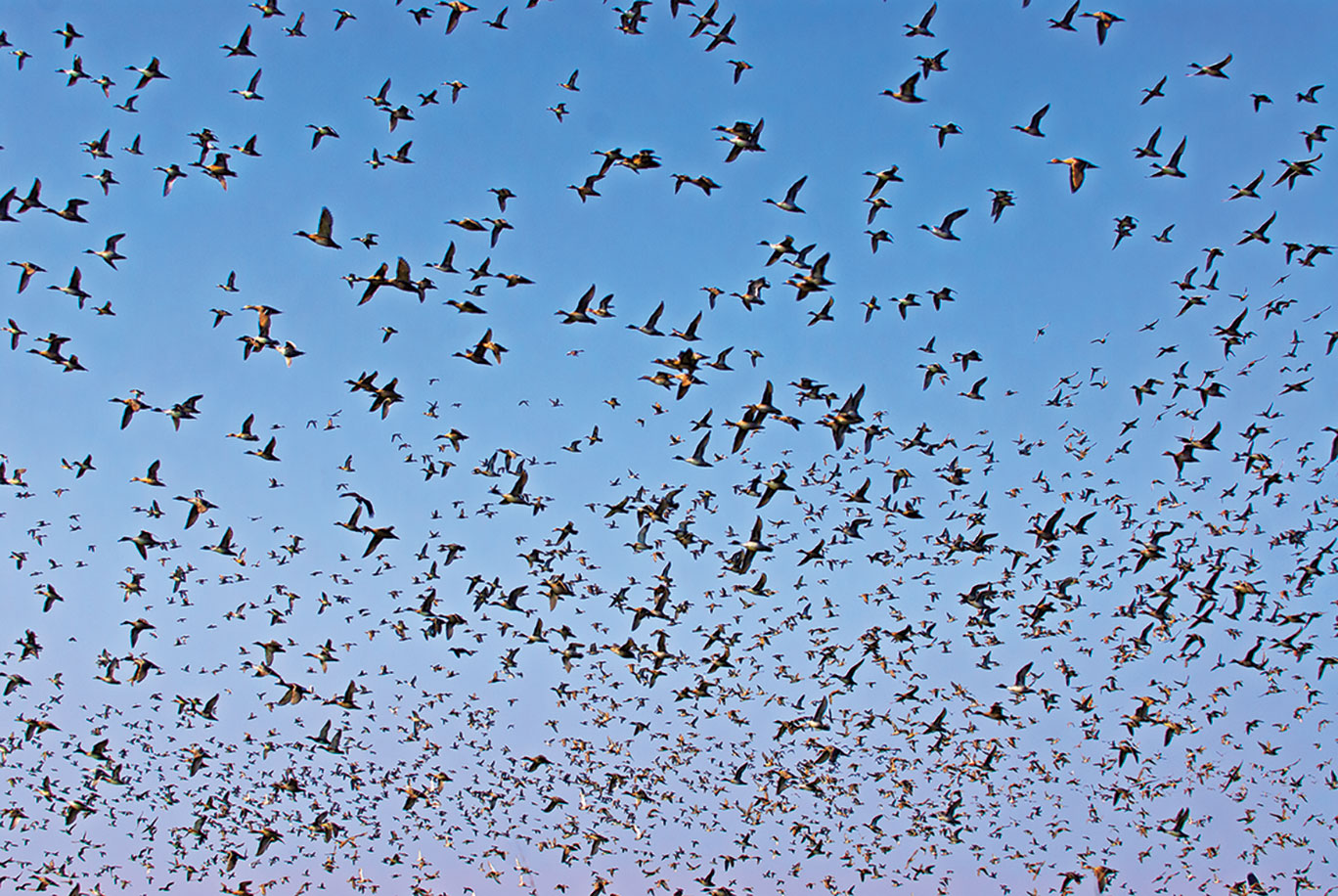
Vultures gather along the roadside in Uttar Pradesh. The real danger is that people begin to accept the reduced biodiversity around them. The urgency to address these challenges through natural rewilding is far greater than we realise. Photo: Dhritiman Mukherjee.
Behind The Loss
Decades of human pressure, habitat fragmentation and alteration, and changing relationships between humans and nature are among the many reasons for this generational loss. In India, like other parts of the world, the reasons are interconnected.
Wetlands that once supported thousands and lakhs of migratory birds have been drained or encroached upon. Forests and grasslands have been destroyed in the name of ‘development’. Species that once moved freely are now restricted to isolated patches of habitat. Freshwater rivers and lakes are polluted with plastic, household waste, and agricultural waste, including pesticides. Rivers that once carried water year-round now flow at low depth and speed. This low flow, caused by irregular precipitation patterns and a changing climate, has affected the survival of aquatic species.
Unregulated tourism and human presence have also caused disturbance to fragile ecosystems. Popular destinations have become dumping grounds. Noise pollution, light pollution, habitat disturbance and unregulated infrastructure development now tell a different story of loss.
Perhaps the biggest loss is human adaptation to the new depleted baseline. A generation that has never witnessed the wildlife abundance of bygone days, are understandably silent about this gradual yet radical change. People begin to accept the reduced biodiversity around them, further weakening conservation. The urgency to address these challenges through natural rewilding is far greater than we realise.
A Lifetime for Kashmir's Wildernesses
When we speak of Dachigam, one name immediately comes to mind: Nazir Malik, a retired wildlife guard who spent his entire life in Dachigam. A great friend of my grandfather, the late Abdul Rehman Mir, Malik walked the landscapes of Dachigam with him for decades. He was awarded the Sanctuary Wildlife Service Award in 2016, before his retirement. While discussing generational amnesia, I realised there could be no better person to speak to than Nazir Malik, who has spent his entire life observing Kashmir’s wildlife.
One of the first examples Malik mentioned was the milkweed butterfly, once commonly seen in Dachigam but slowly declining now. For nearly 12 years before his retirement in 2020, he did not see a single individual. Other butterfly species, too, have significantly reduced in number.
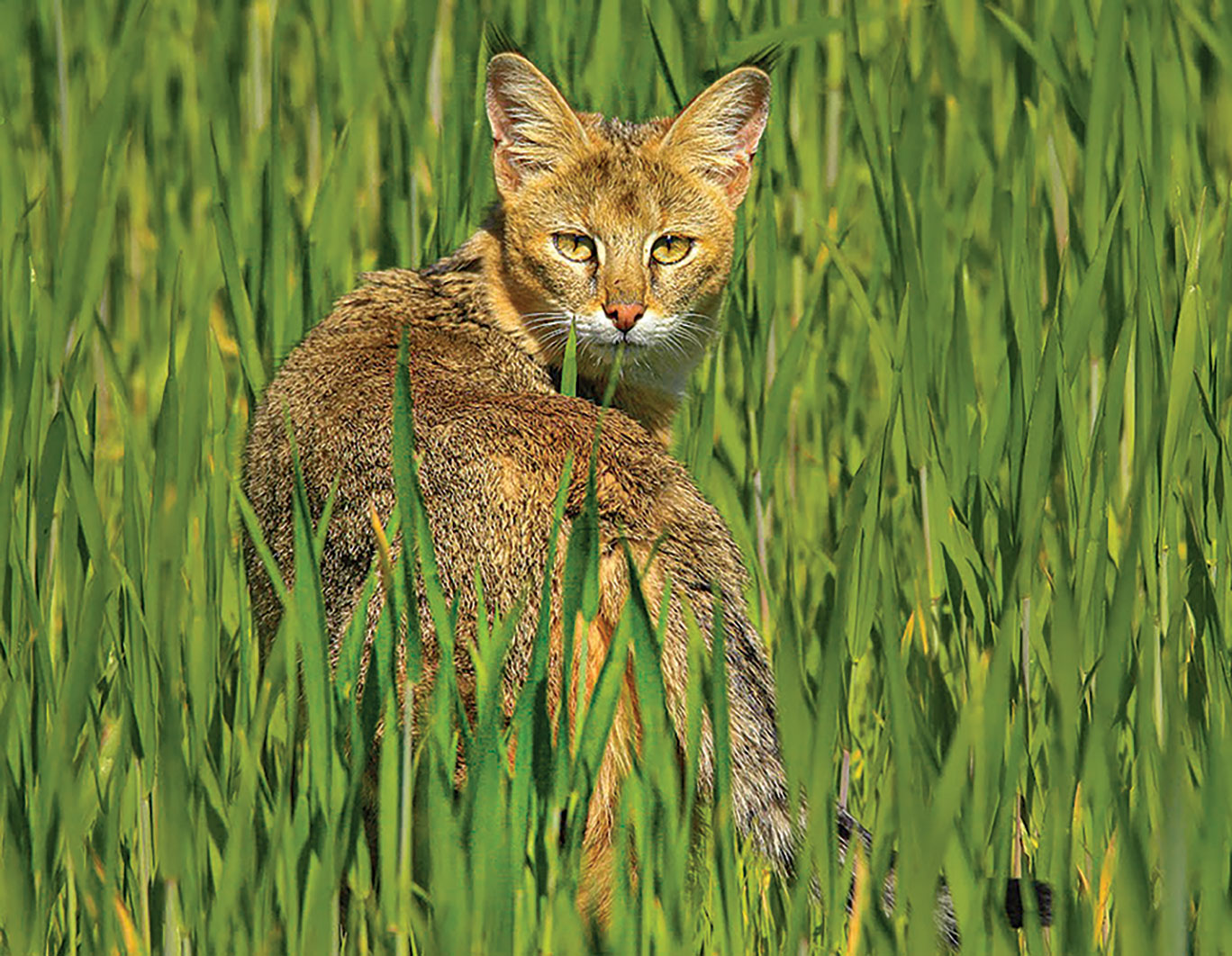 Photo: Deepak Garg/Sanctuary Photolibrary.
He also spoke of the declining numbers of jungle cats in Dachigam; he believes the species has experienced a sharp decline. This closely matched my own observations during camera trapping in 2025: leopard cats were frequently recorded, but not a single jungle cat. The changes are not limited to animals. Malik highlighted the decline of plant species such as Saussurea lappa, locally known as
kuth, and
Aconitum heterophyllum, both of which are Critically Endangered medicinal herbs native to the Himalayan region.
Climate change, according to Malik, has also left a visible mark. Recalling his earlier years, he mentioned that he and my grandfather would trek to Upper Dachigam in July during the 1980s, when the Sheen Marg area was fully snow-covered. The situation is entirely different now: the area is completely dry, even though much of the ecosystem depends on snowfall.
Malik has also observed that the grass species
Solenanthus circinnatus, which was either absent or very uncommon in Dachigam, is now aggressively competing with other species such as
Onosma hispidum and
Ophioglossum, contributing to their decline. He believes the grass may have been introduced to Dachigam by non-local grazers, particularly Bakerwal herds.
Even pollinators have not escaped these changes. Malik says the numbers of rock bees have significantly declined in recent years compared with his early years of service. Colonies once commonly seen in Dachigam are now increasingly scarce.
To me, listening to Nazir Malik felt like opening a living archive of Dachigam’s ecological memory. Scientific surveys can reveal what exists today, but people like him provide something equally valuable: a window into what existed before. Their observations remind us that ecological decline is measured not only through numbers, but also through the memories of those who have witnessed landscapes change over a lifetime.
And perhaps that is the central message of generational amnesia: before species disappear from ecosystems, they first begin disappearing from memory.
Responsibility To Remember
Memory can itself be one of the strongest tools of conservation. Every elderly person who remembers a wilder landscape carries an archive that scientific surveys cannot achieve. Conservation is not only a battle against the extinction of a species, but also a struggle against forgetting the natural world, generation after generation.
The decline in expectations alters how societies will respond to wildlife conservation. Children who grew up without witnessing fireflies will never know that something vanished. A generation that never saw an otter will never question its disappearance. This is why stories matter. Today, we need storytellers and stories that will teach another definition of abundance and help shape better conservation strategies.
Yet despite this gradual but terrible loss, wildlife continues to survive. Nature persists despite anthropogenic pressure, habitat fragmentation, pollution and climate change. The survival of what -is around us should never make us forget what once existed but has now disappeared.
Perhaps that’s why conservation sometimes starts with just remembering: that wetlands were once filled with birds, fireflies once illuminated the dark, vultures were once abundant, and sparrows were once omnipresent.
The moment silence becomes normal, we start losing not just the species, but also our understanding and moral commitment to conservation.
Kashif Farooq Bhat is a fourth-generation wildlife conservationist from Srinagar, Jammu and Kashmir, with a Master’s in Wildlife Science from Aligarh Muslim University. He has worked on the ecology of various species. He is one of the Project Leaders in Sanctuary Nature Foundation’s Mud on Boots project, where his work focuses on community engagement and hangul conservation. Through his writing and wildlife photography, he works to raise awareness about protecting our natural heritage.