We Are at the Apex of a Cliff
First published in Sanctuary Asia,
Vol. 46
No. 8,
August 2026
When human habits change, ecological foundations shake… and risks rise, suggests Praveen Gupta.
Everything we have built worth anything was built in the goldilocks phase. Everything that has fuelled our hubris, vanity and unlimited greed has been on a finite planet. Ironically, the unintended consequence of all this – no more goldilocks! We believe we have mastered nature, but find ourselves in the midst of mother nature pushing back father greed.
There are some noteworthy shortcomings that need to be accounted for in our stocktaking. Amnesia, myopia, arrogance, that we are a chosen special creation. An Apex species. Everything that we have built is expected to last. What we believe to be inert is living.
Our stay on the planet is far shorter than other species that have been here longer, but have shorter individual lives. Perhaps that is how it is meant to be – late arrival and early departure – unless we learn to adapt to Nature. And the sooner the better. Because we have proved to be the biggest threat to ourselves, while risking the very future of generations unborn. In the process, by endangering our co-habitants, we risk losing all the free planet management services Earth's biodiversity offers.
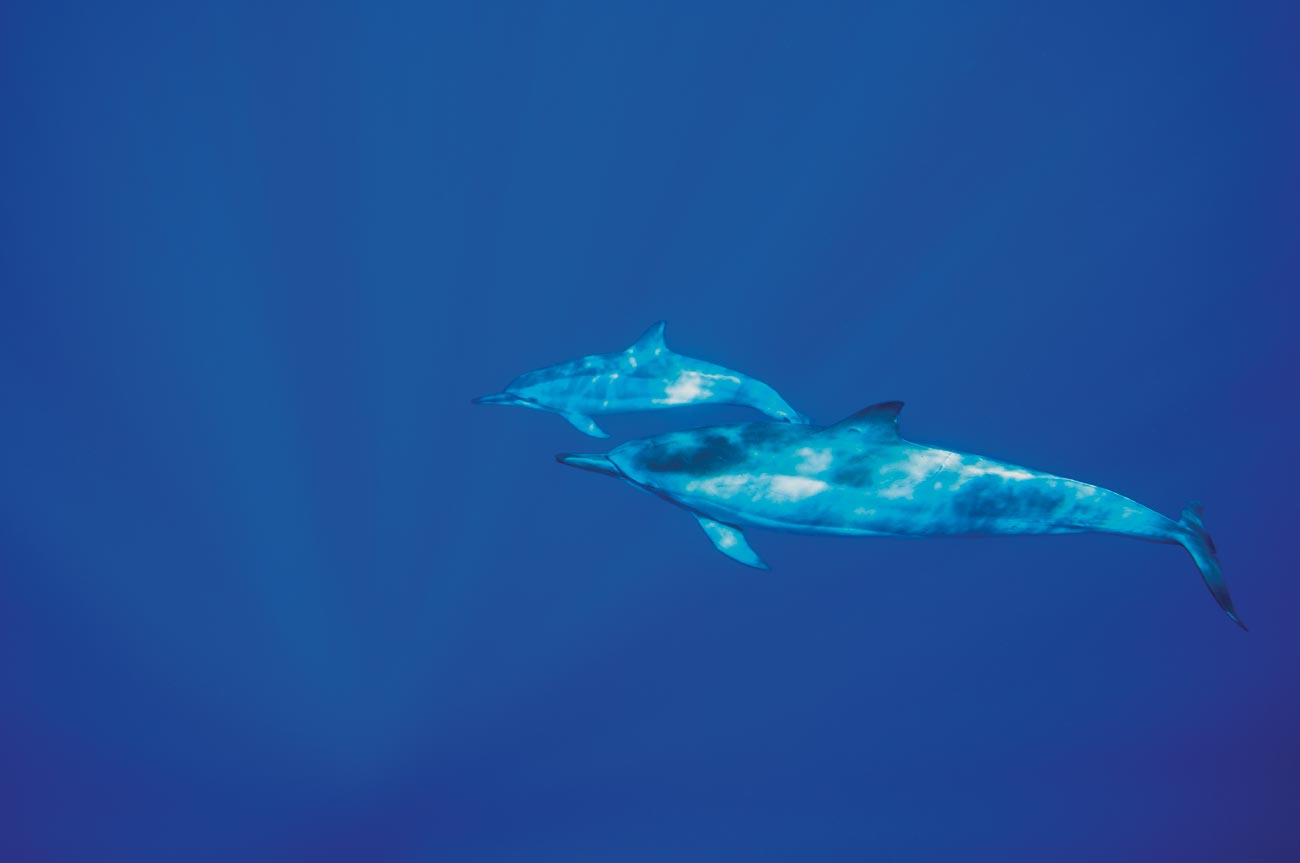
Over the past few decades, there have been several proposals, arguing that certain highly intelligent or cognitively complex non-human animals such as dolphins and octopuses should receive some form of legal personhood and stronger protections. Photo: Umeed Mistry.
Ignorance Is Not Bliss?
Instead of priding ourselves to be the apex of the evolutionary processes, researchers suggest that human consciousness “represents a more basic cognitive process, possibly shared with other animal phyla.” This reframing has major implications not only on how scientists define consciousness but also on how humans position their relationship to other life forms. According to John Birch, Principal Investigator of the Foundations of Animal Sentience project at the London School of Economics, the debate was stuck in an anthropogenic view of consciousness, derived from clinical models that place coma at one extreme and full wakefulness at the other.
Todd Feinberg and Jon Mallatt in The Ancient Origins of Consciousness, published in 2016, proposed that consciousness appeared much earlier in evolutionary history than had been commonly assumed. They believe that the great Cambrian explosion (about 500 million years ago) of animal diversity produced the first complex brains, which were accompanied by the ability to distinguish between self and the environment, and that simple reflexive behaviours evolved into a unified inner world of subjective experiences, deducing that all vertebrates are and have always been conscious. Feinberg and Mallatt even suggest that arthropods, including insects and probably crustaceans, meet many of the criteria for consciousness.
A case has already been articulated for enhanced rights for sentient dolphins, legal ‘personhood’ for chimpanzees, octopuses and their relatives (Cephalopods) which, as a group, may be similar in intelligence to vertebrates and deserve humane treatment.
Whether or not we are willing to share our self-appointed, elevated status remains to be seen.
How Mindful?
Marcia Bjornerud, a professor of Geology and environmental studies at Lawrence University, was asked by award-winning journalist Anne Strainchamps, if Earth is conscious? Bjornerud replied, “Well, one recent definition that I’ve read for consciousness has to do with the degree of connectivity between components in a complex system. If that’s the criterion for consciousness, then yes, Earth is conscious, because everything is interconnected from the centre of the Earth to the surface.”
Researchers Ettore Camerlenghi and Ari Martinez have revealed that birds and monkeys in the Amazon share information via an ‘internet of the forest’. As we plot and extract, nature is watching. The calls of birds in the canopy might allow one to relax. But what sounds soothing to humans may signal danger to other animals, and trigger fear across the forest, explain the authors. They examined the spread of predator information across a megadiverse animal community in the lowland Amazonian forests of Peru (comprising over 370 bird and 10 primate species).
Camerlenghi and Martinez’s paper in Cell Biology Insights highlights how the central role of small canopy species shapes community-wide information flow: responding to and propagating alarm calls effectively creates a functional ‘acoustic highway’ in the canopy. Some species contribute disproportionately to these networks by being particularly vigilant, accurate in predator detection, and consistent in alarm call production. However, how predator-related information spreads across animal communities remains poorly understood, say the authors.
The World Without Us
The Chernobyl nuclear accident of April 1986 remains the most severe nuclear disaster in human history, with long-lasting consequences for ecosystems exposed to chronic ionizing radiation. Long-term studies show that biodiversity has increased around Chernobyl 40 years since the disaster. Foxes, bears and bison have returned in the absence of humans. The Chernobyl Exclusion Zone has become a natural laboratory of genetic instability, adaptation, and ecological recovery in flora and fauna under chronic radiation, writes Gulsah Yildiz Deniz in Science Direct.
It is not only at Chernobyl where these nuclear zones are encouraging animals to return. Fukushima, has witnessed mammals, including bears, raccoons and wild boars return in high numbers, transforming exclusion zones into unexpected sanctuaries.
Extinction Outpacing Speciation
Biodiversity and nature’s contributions to people are our common heritage and humanity’s most important life-supporting ‘safety net’. “But our safety net is stretched almost to breaking point,” says Prof. Sandra Díaz, Co-chair of the IPBES Global Assessment Report on Biodiversity and Ecosystem Services, and others. “The diversity within species, between species and of ecosystems, as well as many fundamental contributions we derive from nature, are declining fast, although we still have the means to ensure a sustainable future for people and the planet.”
Estimates suggest that for vertebrates such as birds or mammals, a new species might appear naturally only once every one hundred years or so. However, because there are millions of insects and microbial species, it is likely that at least one new species forms somewhere on Earth every day. Climate change acts as a double-edged sword for biodiversity, significantly accelerating extinction rates while simultaneously creating new, narrow opportunities for rapid speciation.
The most critical impact is that extinction is currently outpacing speciation by a massive margin. Current rates are estimated to be 1,000 to 10,000 times higher than natural background levels. If global warming reaches 2.70C, up to one-third of all species could face extinction by 2100, explains professional mechatronics engineer Karl Robertson. Biologists often look at the background speciation rate – the natural speed at which new species appear over geological time without human interference. As we brutalise and destroy our invaluable inheritance, ironically, we continue discovering the new.
Less than 0.001 per cent of the seafloor has ever been directly seen by scientists. From underwater trenches to sea caves, there are myriad spaces where undiscovered creatures may be thriving. Thanks to the Ocean Census Alliance, we now know of 1,121 entirely new species living beneath the ocean waves. Over the course of 13 expeditions and other efforts between mid-2025 and mid-2026, scientists found hundreds of previously undiscovered creatures living under the waves, writes K.R. Callaway in Scientific American.
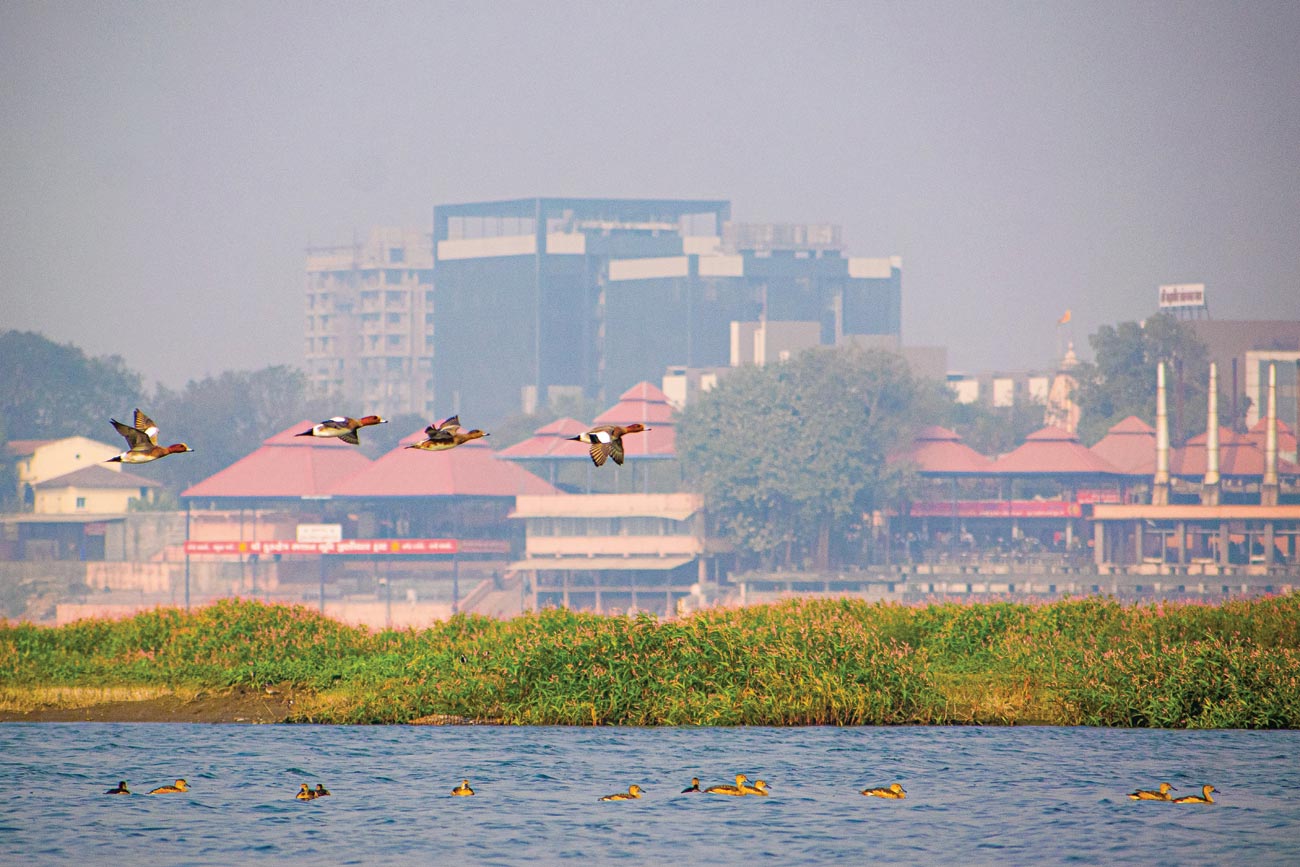
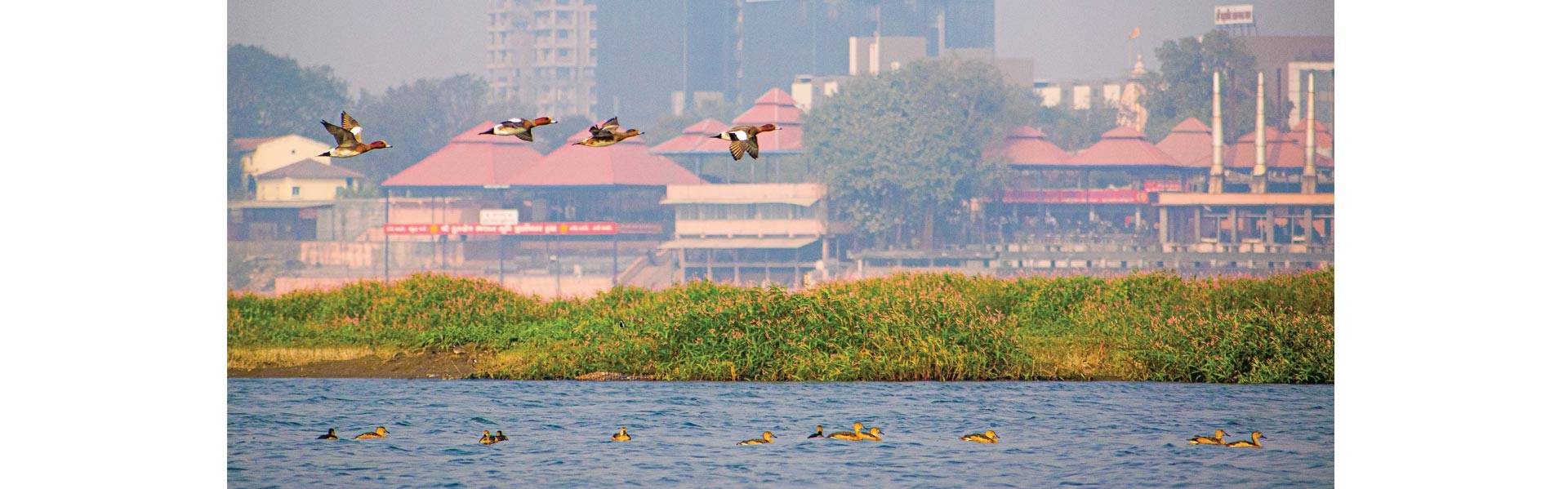
Freshwater ecosystems in urban areas urgently need protection. As urban waterways become increasingly degraded and freshwater species continue to decline, cities face greater risks from climate-driven flooding, heatwaves, and water scarcity. Photo: Mithilesh Yadav/Sanctuary Photolibrary.
Triggering Ancient Carbon
We are not only creating huge debts for future generations but also drawing hugely from past credits. In Why Arctic Rivers Matter for the Global Climate published by SciTechDaily, Michael A. Rawlins, Craig T. Connolly and James W. McClelland explain how Arctic rivers play an outsized role in Earth’s systems. They carry about 11 per cent of the world’s river water into an ocean that holds only one per cent of global ocean volume. This makes the Arctic Ocean highly sensitive to changes upstream.
While snowmelt is a major contributor to river flow, thawing permafrost is becoming increasingly important. Beneath the surface lies a layer of soil that freezes and thaws each year, known as the ‘active layer’. As temperatures rise, this layer is getting deeper, allowing more groundwater to feed into rivers.
The deepening active layer contains large amounts of organic carbon that have been frozen for thousands of years. As the soil thaws, more of this material is released into rivers as dissolved organic carbon (DOC), eventually reaching the ocean. The Arctic Ocean already receives a disproportionate share of this carbon compared to other regions. Each year, more than 275 million tonnes of it are converted into carbon dioxide, contributing to additional warming and creating a feedback loop that can further accelerate climate change.
Co-existence Is The Mantra
How to build cities for wildlife, not just people is based on research by Helen Currie, Irene Gregory-Eaves and Steven Cooke.
Across the world, urban planning projects are beginning to take a different approach. One that designs with living freshwater systems, rather than trying to control and contain them.
In a new study, an international team of freshwater scientists and planning experts highlight that, while our towns and cities contain some of the world’s most degraded rivers, wetlands and ponds, they also provide huge opportunities for protecting and restoring freshwater wildlife.
Cities and towns have historically been designed with people in mind. Planning systems prioritise housing, transport, economic growth and flood defence – often treating rivers and streams as infrastructure rather than living ecosystems.
Urban planners shape the very environments where freshwater pressures are most intense – towns and cities. Every day, they make decisions affecting how land is zoned, how stormwater is managed, where green space goes, what buffers are protected, and how urban form evolves. Their actions ripple through entire catchments.
Yet most urban planners often aren’t supported or equipped with the ecological knowledge needed to incorporate freshwater biodiversity into daily practice.
Urban planners need the tools, training and support to recognise freshwater ecosystems as valuable living systems that underpin city resilience, human health and everyday wellbeing – rather than obstacles to be overcome.
The consequences are stark and hard to ignore – degraded urban waterways, declining freshwater species, and whole cities are more vulnerable to climate-driven floods, heatwaves and water scarcity, contributing to a global collapse in freshwater biodiversity.
Our rivers, lakes, ponds and wetlands occupy only a tiny fraction of the planet while supporting roughly a third of all vertebrate species. Importantly, freshwater acts as an ecological life-support system, sustaining a range of species – including us.
The Much-Too-Large Footprint
Human activities are driving a global decline in biodiversity and are interfering with the natural processes essential for human well-being. Achieving climate and development goals is impossible without keeping nature intact. To deliver on the nature-positive goal by 2030, we must halt the loss of remaining intact biomes and ecosystems; these are irreplaceable systems that cannot be quickly restored. In parallel, it's crucial to reverse species extinction risks and scale up restoration efforts. Dr. Johan Rockstrom, Director of the Potsdam Institute for Climate Impact Research, and others lay out the path forward. “The Anthropocene is all about the much-too-large footprint we are having on the planet. I think it’s preventing people from seeing past the current moment… I’d like us to start thinking about a post-Anthropocene world, in the distant geologic future. How can we imagine ourselves living differently as human earthlings?
I’d like to think we will be here, that there will still be humans. I think we can do better,” says Dr. Bjornerud.
At the apex of a cliff and with the goldilocks behind us, can we?
Praveen Gupta is a former insurance CEO. He believes insurers – like other financial services – have a critical role to play not only in nurturing our environment today but also ensuring planetary well-being for the long term.