Turning Turtle
First published in Sanctuary Cub,
Vol. 46
No. 9,
September 2026
When a wild animal comes to a rescue centre, everyone wants to know: will it return to the wild? The answer comes from watching its behaviour, week after week. By RESQ Charitable Trust.
Healing a rescued animal is only the first step. The harder part is waiting for the animal to show, by itself, that it remembers how it can survive independently in the wild. Rehabilitators call these signs ‘milestones’; a checklist made for each species and decided the moment the animal is admitted. Think of it as a series of tests: the animal must pass each test before it can be certified fit to return to its natural home.
A Chance To Recover
Here is a real example. A young green sea turtle washed up on a Konkan beach in Maharashtra. She had cuts from a boat propeller on her shell, and was dull, weak and severely dehydrated. X-rays showed a build-up of gas in her stomach, and blood tests found an infection. The vets treated the infection and rehabilitators kept her comfortable, but nobody could force her to eat. She could not dive; she floated on the surface, refusing every meal.
She had many milestones to clear, but four mattered most: diving deep and staying down steadily, without buoyancy issues; eating on her own; staying healthy, with no infections or illnesses; and no human imprinting, no comfort around people.
Since green sea turtles live in salt water, we spent days making our own artificial seawater, and kept our nine-by-six-metre pool full enough at all times for her to practise diving. Giving an animal the chance to reach its milestones means first giving it the right conditions to try.
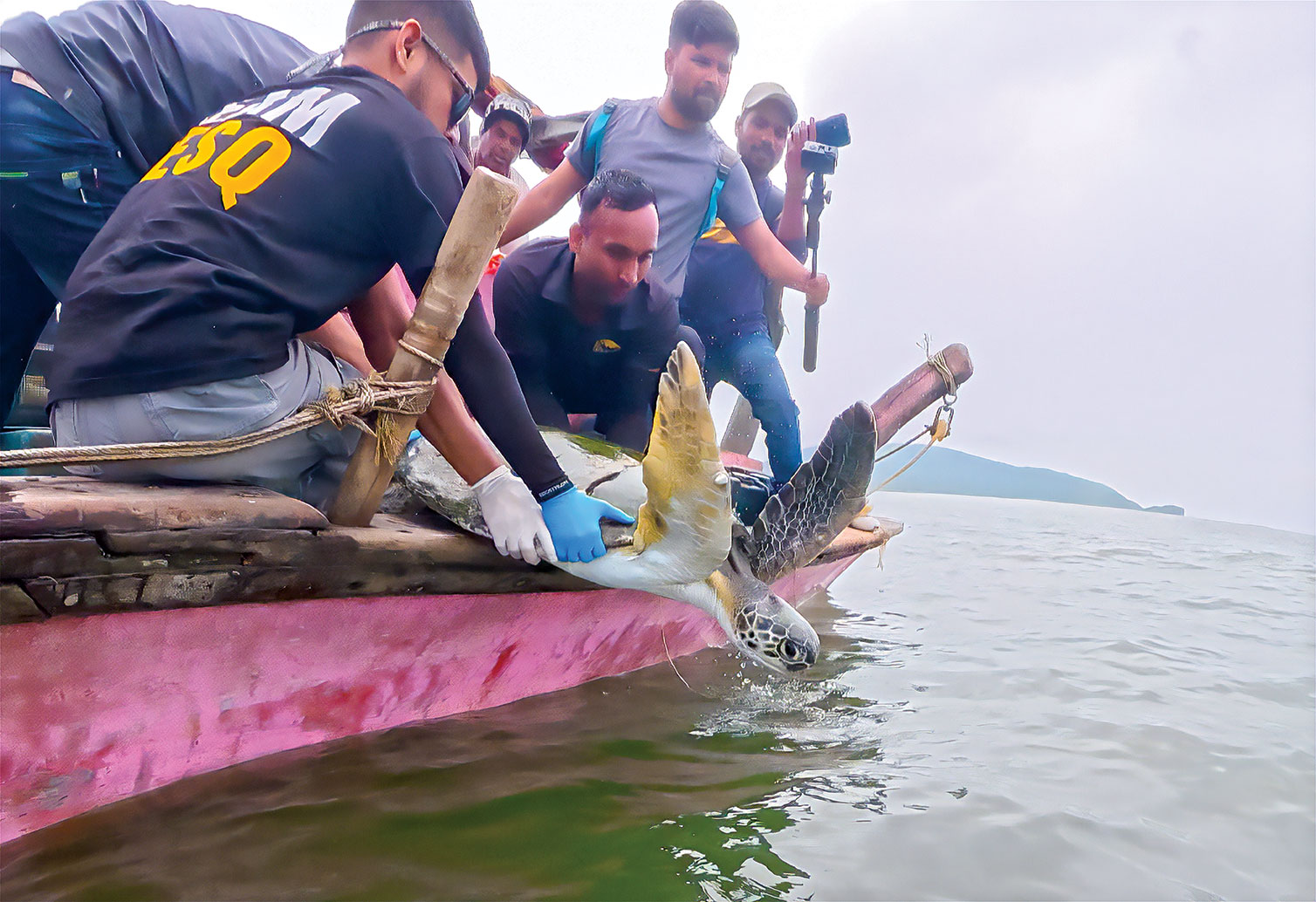
Off to freedom! The turtle was eager to go back into the ocean. Photo: RESQ Charitable Trust.
Towards Healing
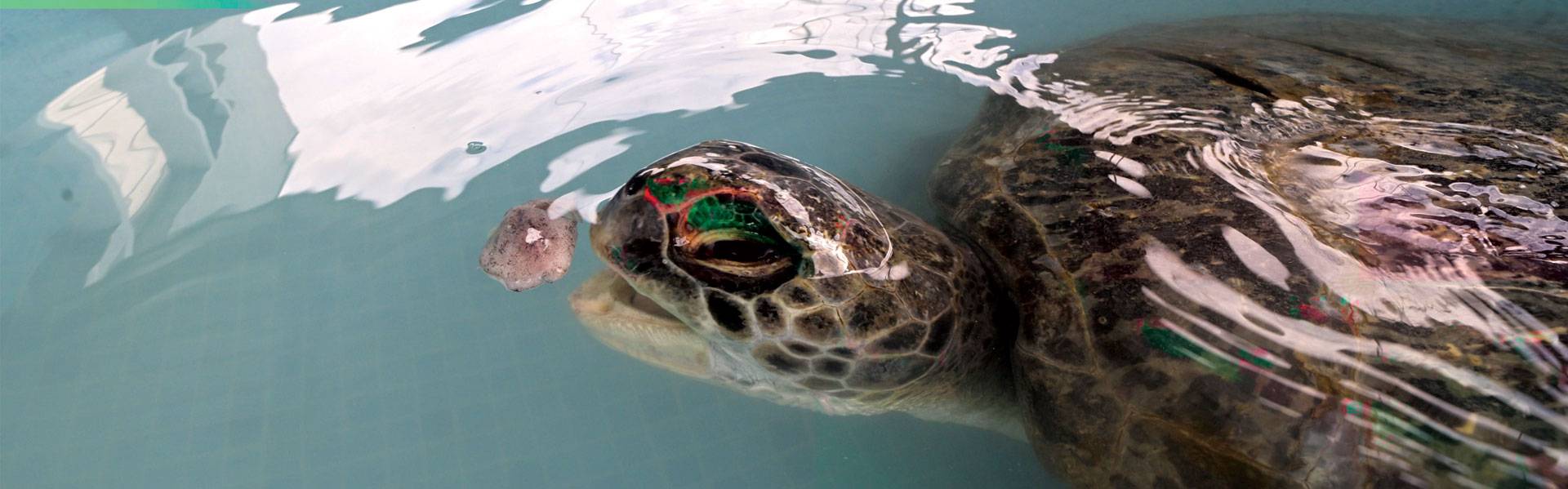
Eating real food was the only way to clear the gas from her stomach; medicines were only a temporary fix. Her infection cleared, but she still would not eat. Eventually, we discovered the truth: she was just a fussy eater. The moment we tried cuttlefish, she tucked in as if she hadn’t eaten in weeks, which, by then, she almost hadn’t. Once she started feeding herself, and eating a little more each day, we knew her whole body was healing, not just her wounds.
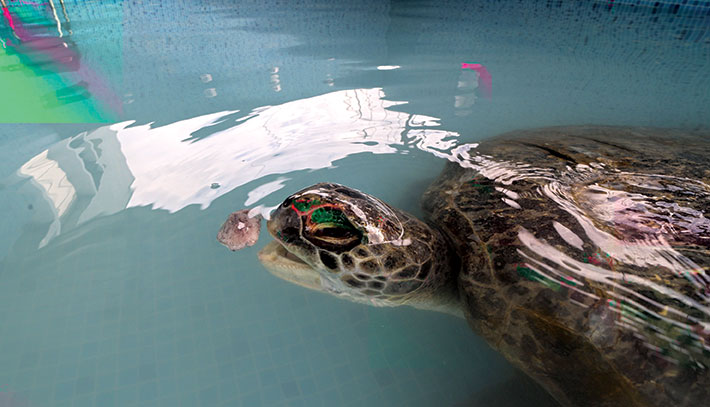
The rescued green sea turtle’s favourite food turned out to be cuttlefish! Photo: RESQ Charitable Trust.
Ready To Return
The team also watched how she moved and how well she was diving. Only once she could eat by herself, swim strongly, dive, and stay underwater long enough, did we feel she was ready to leave.
On the release day, we rode out on a boat with the Maharashtra Forest Department team into deep water, and set her free. Eighty-two days of careful watching ended in one strong swim into the ocean.
The RESQ Charitable Trust is a Pune-based conservation action organisation working with the Maharashtra and Goa Forest Departments on wildlife rescue, rehabilitation and human-wildlife coexistence, guided by science since 2007.