The Sentinels Of The Deccan Plains: The Wolves Of Kiraksal
First published in Sanctuary Asia,
Vol. 46
No. 4,
April 2026
By Chinmay P. Sawant
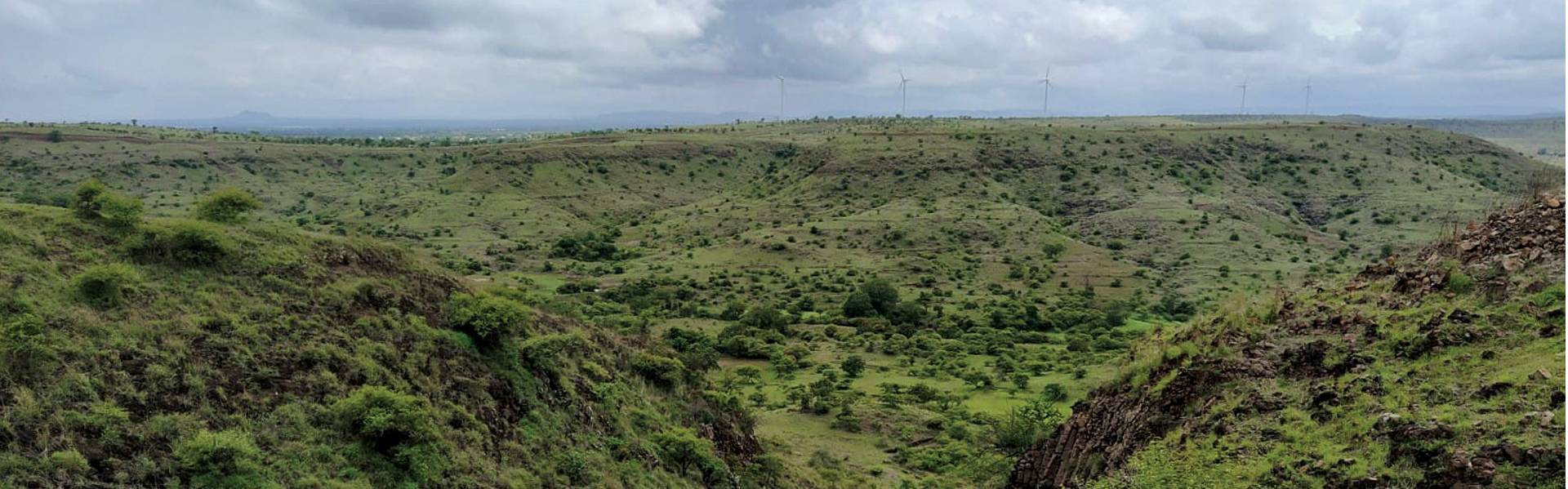
As I stand on a rocky outcrop in Kiraksal, looking across the vast landscape of Maan taluka, I see something entirely different from the colonial lens of degraded forests or wastelands: I see a vibrant, high-functioning Open Natural Ecosystem (ONE) that covers approximately 25.6 per cent of Satara district. In 2023, we launched the Kiraksal Conservation Project to document the pulsating life of the Maandesh region. Supported by WWF-India's flagship Conservation Catalyst Programme (CCP)and local stakeholders, our team set out to prove that these semi-arid scrublands are critical biodiversity hotspots.
The climate here is harsh, with summer temperatures soaring to 430C and average annual rainfall of only 300-500 mm. Yet, this environment has fostered a resilient assemblage of flora and fauna. During our systematic biodiversity assessments, we documented 606 species, including 212 birds, 34 herpetofauna, 160 vascular plants, and 18 mammals. Trekking through the Kukudwad forest with team member Ajit Katkar, we found the landscape hosts 295 distinct floral species with a remarkable 15 per cent endemism. We spent hours photographing the rare 'lantern' flowers (Ceropegia), which are highly sensitive to habitat disturbance and emerge only during monsoons.
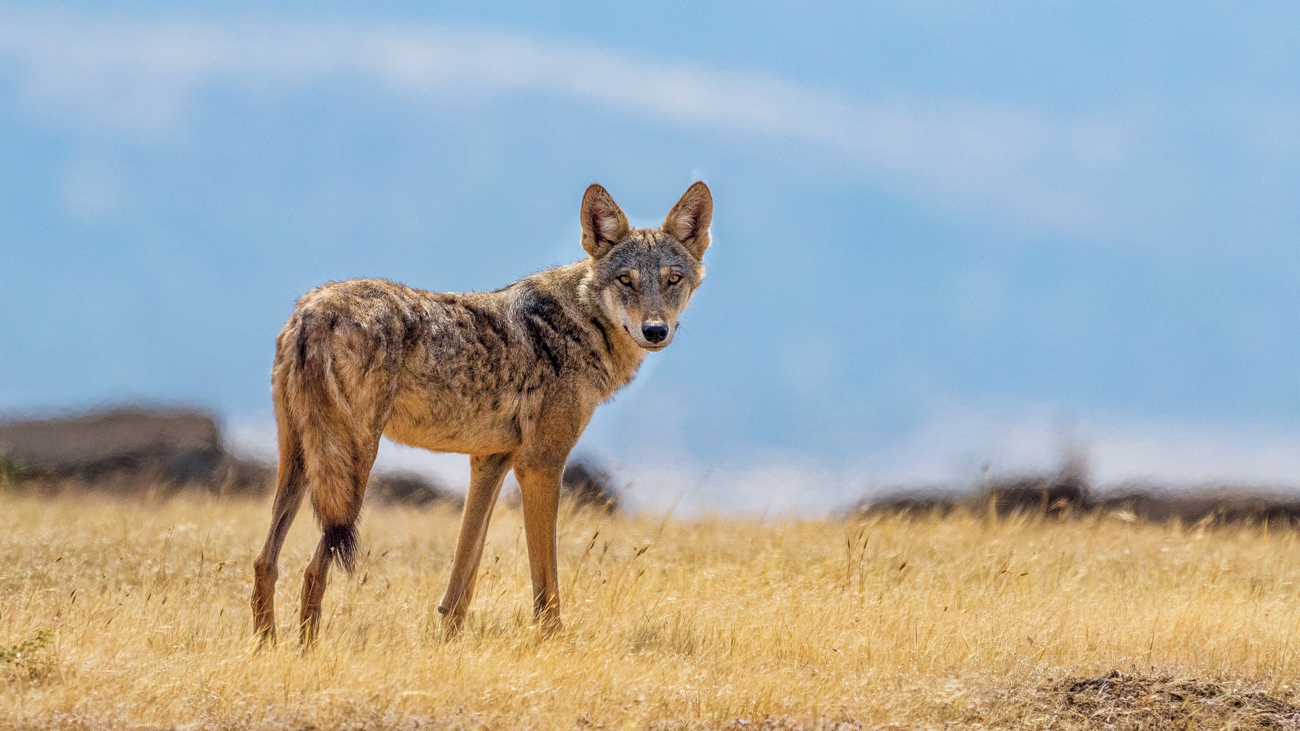
The true sentinel of the Kiraksal landscape is the Indian grey wolf. The survival of this keystone predator will be crucial to saving what remains of the Deccan's grasslands. Photo: Sushant Jadhav/Sanctuary Photolibrary.
Changing The Narrative
The true sentinel of this landscape is the Indian grey wolf. For years, Kiraksal was dismissed as a mere transit route for these predators, but our research transformed that narrative. By deploying camera traps with our field assistants in a 1 km. x 1 km. grid and conducting intensive sign surveys, we confirmed that Kiraksal is a breeding stronghold for the striped hyena, golden jackal, Bengal fox and the Indian grey wolf. We are currently monitoring two wolf packs, mapping active breeding dens and essential rendezvous sites for species persistence, in the rocky crevices of the Dambi Hills and Madladara of Kiraksal forest.
Our fieldwork blended high-tech monitoring with traditional tracking. Conducting night surveys using spotlight counts to detect nocturnal eye-shine, we recorded 211 independent camera detections, documenting species such as striped hyenas and jungle cats. We identified seven distinct hyenas by examining unique flank-stripe patterns, potentially the first village-level study of its kind in Maharashtra.
There has been tremendous progress since we received the WWF-India CCP grant. As this area lies in the drought-prone region of Satara, past schemes have focused primarily on watershed management. However, biodiversity monitoring is just critical in this unexplored landscape. 'Kir' (िकरकsss) means dense in Marathi, for its dense scrub-covered hills and grasslands. The region's geography is complex; droughts occur every three to four years, and vegetation is sparse. Yet, the wildlife is well-adapted, and we found strong signs of wild canids and other biodiversity.
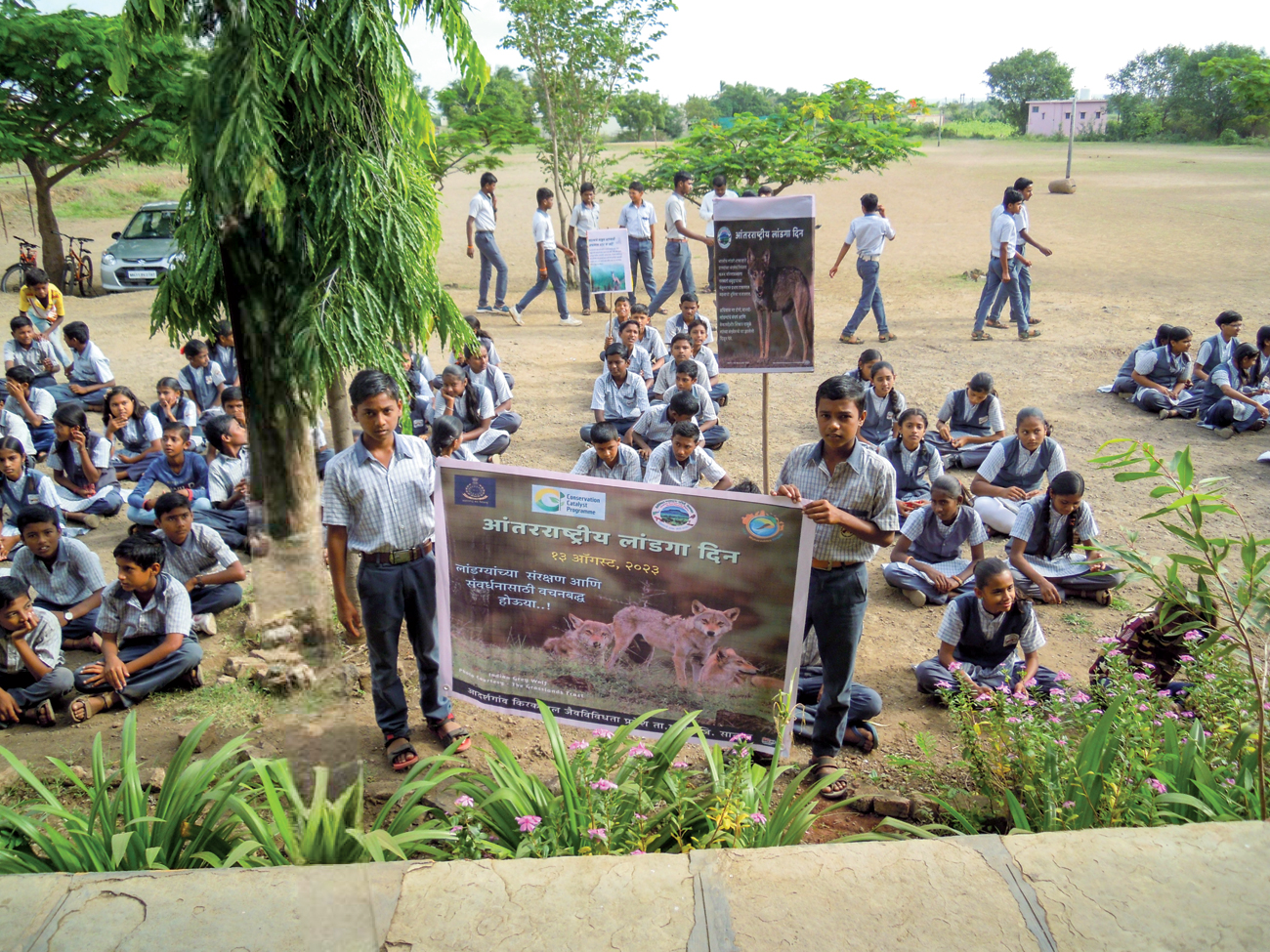
International Wolf Day was celebrated in a local school - a small step that could go a long way in changing the negative perception around this enigmatic canid. Photo: Prathamesh Katkar.
Overcoming Challenges
Mass hunting was once common during the annual Nagapanchami festival. Villagers hunted wild animals with their dogs, paid obeisance to the deity at the Shrinath temple, and then distributed their winnings among the community. Besides hares, animals such as hyenas, jackals, foxes, and even wolves were hunted. Most heartbreaking was the killing of wolf pups, sometimes taken from their dens. This history of destruction strengthened my resolve to begin this project and work toward ending such ambush hunting practices.
Habitat destruction from firewood collection and tree felling is another severe issue here. We held meetings with local hunters, many of whom also use snares to hunt hares, porcupines, and wild pigs, to explain the study and its importance. Because these hunters know every mammal den in the area, we engaged and trained local youth as project assistants to support conservation efforts. Field assistants Prathamesh Katkar, Vishal Katkar, and Abhijit Mane were also trained to support shepherds and farmers navigate the tedious compensation process, helping bridge the gap between the community and the Forest Department. This has encouraged the department to engage more actively with the community.
Since then, hunting has declined significantly, and several young people have been trained for sustainable livelihoods. We also worked with the village panchayat and biodiversity committees to celebrate International Wolf Day, making Kiraksal the first village to do so.
While this work lays an important foundation, practices such as hunting and tree felling must be addressed by actively involving communities in biodiversity conservation. Gram panchayats, shepherds, and the Forest Department must all act as stakeholders, working together to foster coexistence and better manage human-wildlife interactions and conflicts in Kiraksal.
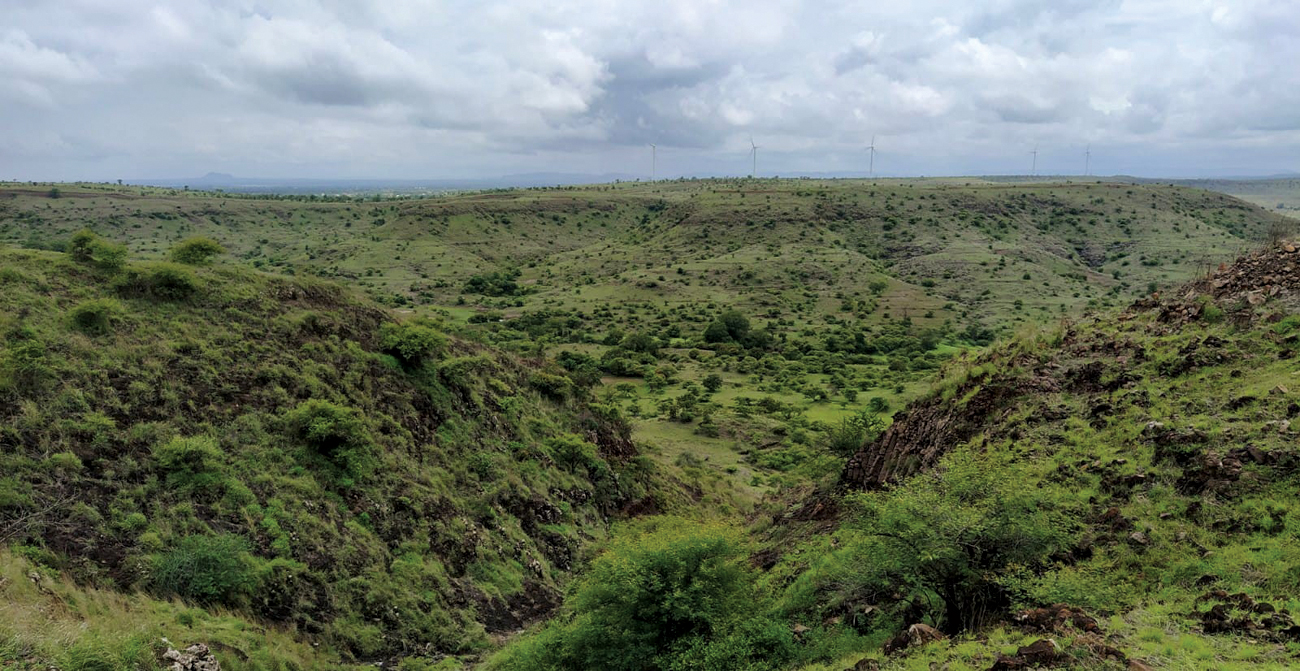
Kiraksal's scrub forests labour quietly, sustaining life through unseen ecosystem services - their silence is wisdom. Photo: Prathamesh Katkar.
In The Driver's Seat
The soul of this project are the villagers of Kiraksal, and our field ornithologist Dr. Praveen Chavan. Conservation in human-dominated landscapes must be cultivated from within. The villagers pioneered a unique 'Tri-System' of self-imposed social prohibitions. This includes kurhad-bandi (logging ban), shikar-bandi (hunting ban), and vanva-bandi (fire ban).
This transformation has empowered our ;Green Guardians' and para-taxonomists, many of whom come from traditional hunting families. By learning to use GPS, install camera traps, and identify species, they became primary custodians of the land. I still recall the excitement of local youth as they learned to distinguish between a Bengal fox and a golden jackal using field guides. Despite these successes, the landscape remains under siege. Our land-use and land-cover analysis shows that between 2020 and 2025, thorny scrub forests and open savannahs in Kiraksal declined by about 1.6 sq. km., owing to expanding agriculture, irrigation canals, and built-up areas.
We also face the threat of hard barriers. Proposed linear infrastructure, large-scale solar installations, windmills, stone crushers, and sand mining could sever the vital corridor connecting Kiraksal to the newly formed Atpadi Wolf Conservation Reserve. If these links break, our thriving wolf population risks genetic isolation, hybridisation with feral dogs, and eventual collapse.
Invasive species such as Lantana camara pose another silent crisis, showing up to 90 per cent relative dominance in some patches. This plant forms dense thickets that suppress native grasses, obstruct hunting visibility for wolves, and reduce livestock fodder for the Dhangar community. As grazing commons shrink, the potential for human-carnivore interactions/conflict increases. Furthermore, free-ranging dogs pose a dual threat of resource competition and the transmission of lethal diseases such as canine distemper virus (CDV) to wildlife.
Now, our strategy must shift. Informal community protection is no longer sufficient against external developmental pressures. Our primary recommendation is the formal legal notification of the Kiraksal continuous forest cluster as a Conservation Reserve (CR) to prevent detrimental land-use changes. Otherwise, we are likely to lose these fragile Maandeshi grasslands, their culture, and wildlife. Alternatively, designating it a Biodiversity Heritage Site (BHS) would legally recognise the community's role in preserving traditional ecological knowledge while safeguarding grazing rights.
We must also implement critical policy changes. First, we must reclassify these areas as 'Old-growth Savannas' rather than wastelands. Second, we must halt misguided afforestation; planting exotic trees such as gliricidia or eucalyptus destroys wolf and fox habitat. Most importantly, we must stop the tillage of virgin savannah lands, as ploughing destroys the underground bud banks of native perennial grasses.
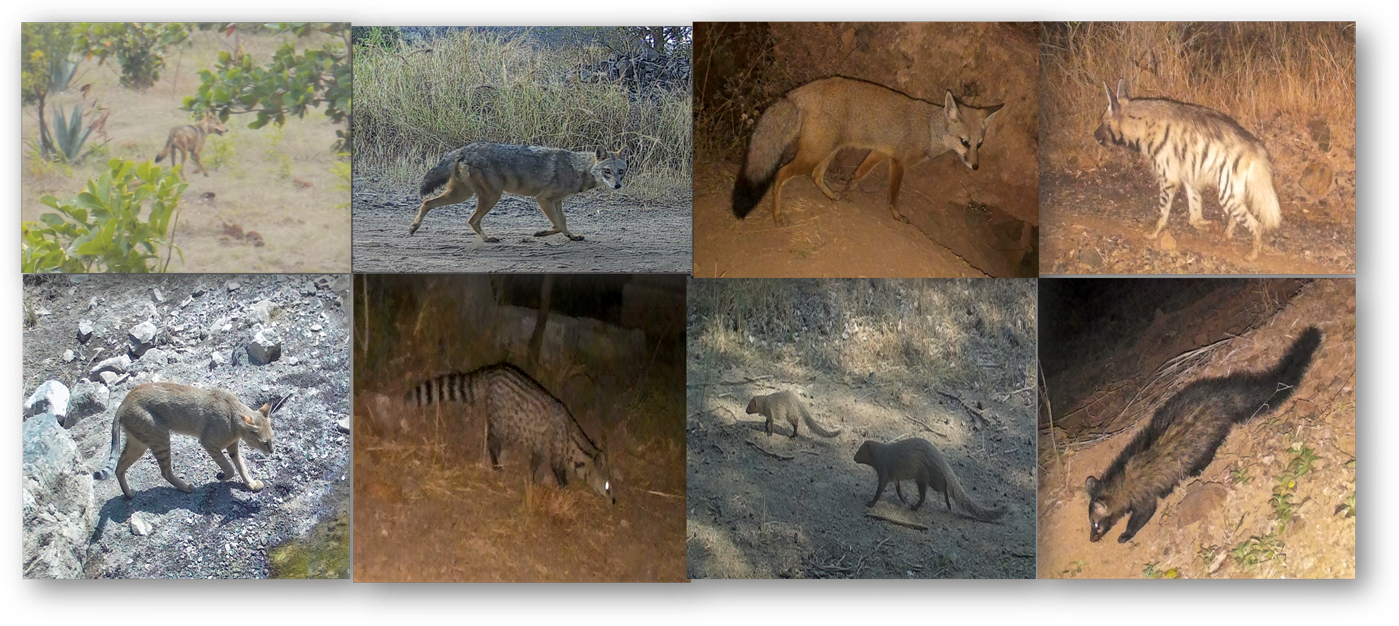
Kiraksal's camera traps reveal a quiet nursery of the wild - a thriving breeding stronghold for the less-celebrated yet vital ones: the striped hyena, golden jackal, Bengal fox, and other overlooked denizens that keep the ecosystem in balance.Photo Courtesy: Chinmay Sawant.
The Sentinel
Running this project while doing my Master's in wildlife science from WII gave me hands-on training in field techniques, task implementation, and financial record-keeping. This opportunity reinforced that grassroots conservation needs strong support; as rural and semi-rural areas rapidly urbanise, we are losing crucial grasslands. We successfully tackled numerous challenges such as manpower and community support, including initial political arrogance when placing camera traps. Trust-building was essential, as rural sociology is uniquely shaped by local political, social, economic, cultural and ecological needs.
The Kiraksal Conservation Project demonstrates that the semi-arid Deccan Plateau is not a barren stretch of land, but a vibrant ecosystem linking human culture and wild nature. The Indian wolf acts as the sentinel; its survival indicates the health of our water tables, pollinators, and pastoral economy. By formally protecting this strategic ecological tri-junction, India can fulfil a global conservation priority and set a gold standard for community-led stewardship.
I remember a quiet evening near Waghjai Lake, watching a Bengal fox trot through the Gavalkhora forest. In that moment, the complexity of the landscape felt tangible; the perennial springs provide hydration for over 160 bird species, and Dhangar shepherds unconsciously maintain the habitat heterogeneity the wolves need. We present this work hoping it inspires a future where the howl of the wolf continues to resonate across the Deccan. The king of the grasslands must have a place to stay, and that place is here, in the heart of the Maandesh.
Chinmay Prakash Sawant is the Project Lead, Kiraksal Conservation Project in Satara district, Maharashtra.