The Making Of Vidarbha's Tiger Forests
First published in Sanctuary Asia,
Vol. 46
No. 8,
August 2026
By Raza Kazmi
The forests of Vidarbha in eastern Maharashtra, with their crown jewels of the Tadoba and Pench Tiger Reserves, are widely regarded as one of the most fecund tiger habitats not just in India but across the world. But how did these habitats evolve over time? Therein lies a tale.
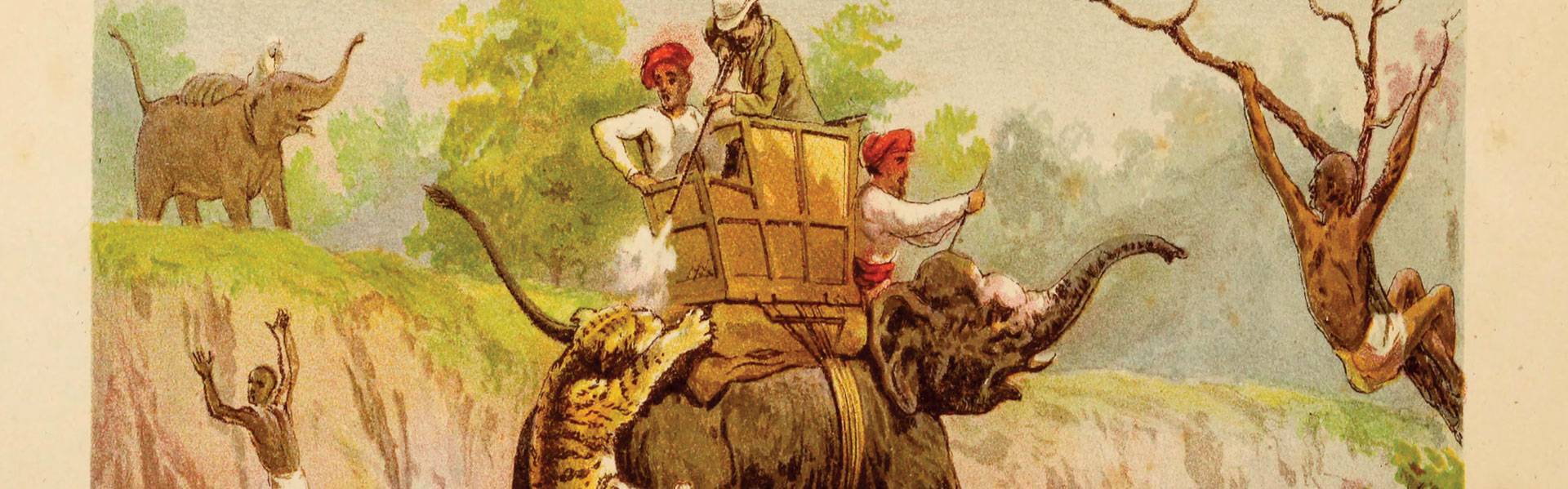
The forests of northern and eastern Maharashtra, that is, the landscapes of Khandesh and Vidarbha, were part of the colonial province of Central Provinces with its capital at Nagpur. The forests of Central Provinces, as it was informally known, were widely reputed among British ‘sportsmen’ as unparalleled havens for ‘large game’, as the colonial-era hunters referred to the charismatic mammalian fauna of India. The prized catch was, of course, the tiger, but equally vied for were the wild buffalo, gaur, and barasingha that abounded in certain tracts of the province.
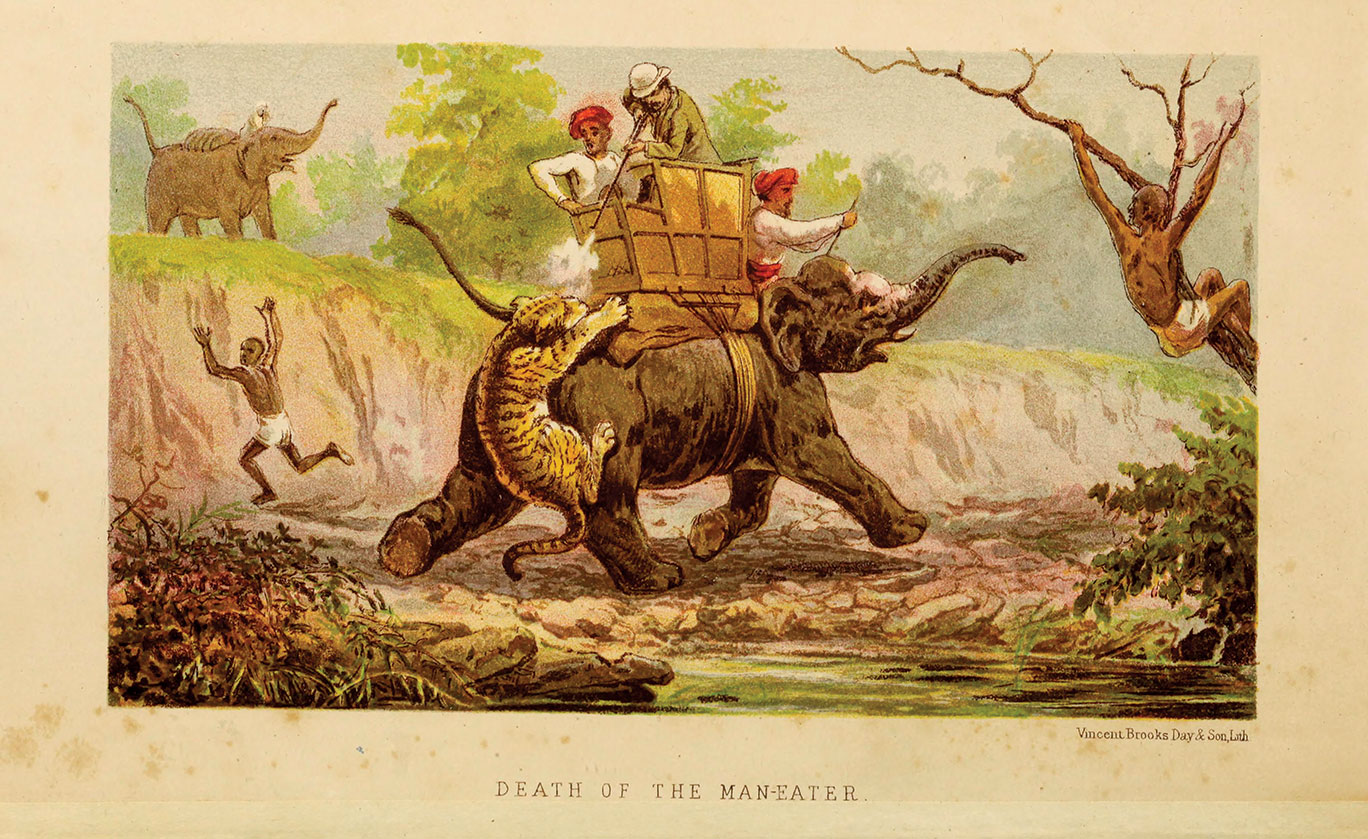
The forests of Central Provinces were prime hunting grounds for shikaris of yore. Source: Highlands of Central India by Captain James Forsyth (1871).
Tiger Country
In those days, wildlife hunting was part of administrative policy as well as the cultural norms of the administrative and landed classes. Consequently, thousands of tigers, and other wildlife, were killed every year across every British province. Environmental historian Mahesh Rangarajan has given a conservative estimate of approximately 80,000 tigers being hunted across India between 1875 and 1925. The actual numbers, including those that never made it to the record books, would have been much higher. The Central Provinces, naturally, recorded some of the highest numbers. For instance, between 1866 and 1869, an incredible 1,489 adult tigers and 124 cubs were officially eliminated in the Central Provinces. Of these, Vidarbha recorded some of the highest numbers. The scale can be imagined from this incredible figure – 141 adult tigers and 78 cubs were officially killed for bounty in just a single year, during 1857-58, in the forests around Nagpur. Each dead tiger, in those days, earned a reward of anywhere between Rs. 5 and 25, and even more in case the animal was a declared ‘man-eater’. While the number of tigers being killed in Central Provinces in general, and Vidarbha in particular, declined by the turn of the 20th century compared to the massive killings of the 19th century, the numbers were still quite high. Even in the early 1900s, anywhere between 30 to 50 tigers were being killed every year by hunters in Vidarbha alone.
Around this time, the organisation of forests was evolving. By the turn of the 20th century, the forests of Vidarbha had been divided into three large forest divisions: Chanda, Nagpur-Wardha, and Bhandara. The forests that today make up Maharashtra's Pench Tiger Reserve were mostly part of the Nagpur-Wardha forest division. However, the most famous among all these were the forests of Chanda.
The forests of the Chanda forest division, once the territory of the powerful Gond kingdom, with Chanda (now Chandrapur) as its capital, were widely regarded as the finest tiger country not just in the Central Provinces but across India.
J.W. Best, a fabulous writer and an equally dynamic IFS officer, summarises it well when, in 1935, many years after his retirement from service, he reminisced on his time in Chanda. "I was told when I arrived in Chanda that the forest extended from the verandah of the forest officer's bungalow to the Bay of Bengal. That huge area of forest was then, and probably still is, one of the wildest bits of country in India proper... It remains the unspoilt land of my dreams... We found not only all the beasts of other parts of the Province in those forests such as buffaloes and swamp deer, spotted deer and mouse deer, tigers, leopards and wild dogs, but the birds as well. Here the two kinds of jungle fowl lived together in the same scrub... the golden cock of the North, the grey of the Deccan," he wrote.
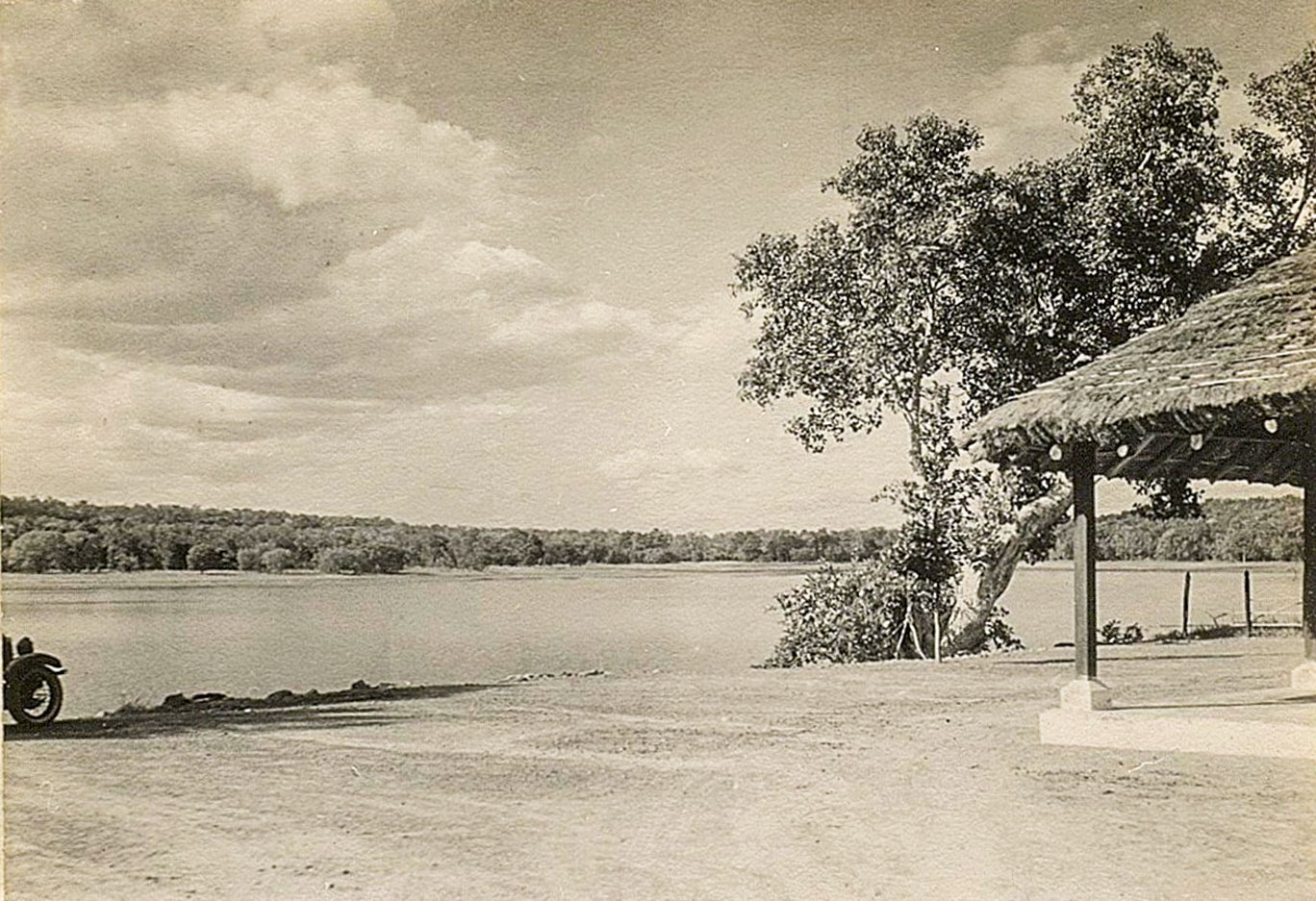
View of Tadoba lake from the Forest Rest House in 1930, photographed by Sir H.G. Champion. Source: Raza Kazmi Personal Collection.
Shikar Blocks To Protected Areas
However, the massive size of the forest division soon necessitated its partition. Thus were born the divisions of North Chanda and South Chanda. The northern bit covered what today is Chandrapur district, while South Chanda forest division was roughly coterminous with present-day Gadchiroli district. As one can imagine, even these were very large areas, and subsequently, by the time of Independence, another three divisions were carved out, viz. Central Chanda, West Chanda, and East Chanda.
However, even as forest administration evolved and independent India took the reins of its forest wealth, the tradition of "sport hunting" continued unabated. At the time, the entire forests of Vidarbha were broken down into multiple shooting blocks that could be booked for hunting through permits. By 1958–59, there were an incredible 141 shooting blocks in Vidarbha, spread over eight forest divisions and covering a massive 15,608 sq. km. Prior to the enactment of the Wild Life (Protection) Act, 1972, the entire state of Maharashtra had 164 shooting blocks. Multiple commercial shikar companies operated in these shooting blocks post-1947. The largest and most famous of these was Allwyn Cooper, headquartered in Nagpur, which regularly operated in the forests of old Chanda in particular. Interestingly, it is worth noting here that almost all major Protected Areas of present-day Maharashtra are composed wholly, or partially, of these former shooting blocks.
The massive toll on wildlife as a result of widespread hunting, however, had started becoming apparent well before Independence. By the early 1930s, the decline in tigers and other wildlife across Vidarbha was noticeable. This prompted the first nascent steps towards conservation of wildlife in Vidarbha. Certain shooting blocks were closed off to allow recovery of wildlife in these areas, and certain sanctuaries were set aside where shooting was banned.
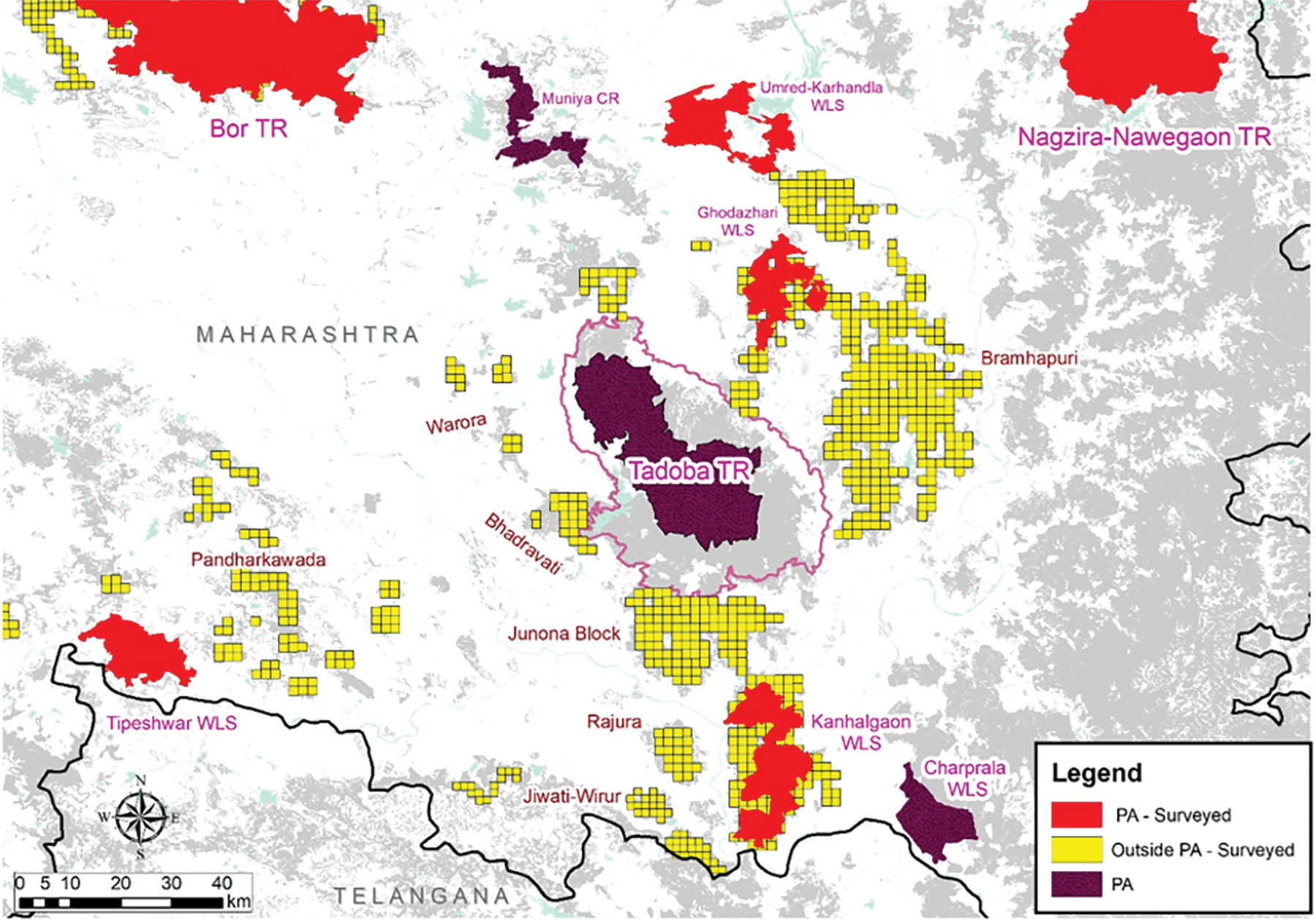
This map shows the extent of forest areas camera-trapped in and around the old Chanda landscape. These forests were widely regarded as the finest tiger country not just in the Central Provinces but across India. Even today, they are among the most important tiger habitats outside Protected Areas in peninsular India. Photo: WCT.
The Birth Of Tadoba
One such shooting block lay in the North Chanda forest division, with a beautiful lake at its centre – Tadoba. This shooting block was partially closed off for hunting in 1905, with only the hunting of carnivores being exempt. By 1931, all hunting had been prohibited. Finally, in 1935, an area of 118 sq. km. around the lake was declared a ‘Game Sanctuary’. Twenty years later, in 1955, while Vidarbha was still part of Madhya Pradesh, Tadoba was upgraded from a sanctuary to a ‘national park’. Tadoba, however, had a twin far up north. Kanha, spread across the Banjar Valley of Madhya Pradesh, was also declared a ‘national park’. Thus, Tadoba and Kanha became the first two national parks of Madhya Pradesh, notified under The Madhya Pradesh National Parks Act, 1955. A year later, in 1956, under the States Reorganisation Act, Vidarbha was merged into Bombay State, which would later be bifurcated into Gujarat and Maharashtra in 1960. Thus, Tadoba now claimed a new title, that of the first national park of Maharashtra.
Around this time, in the 1950s, other nascent efforts at conservation in Maharashtra were also undertaken. The Bombay Wild Animals and Wild Birds Protection Act was enacted in 1951, while a separate wing to work towards the preservation of wildlife in Bombay State was also created by the Forest Department around 1956. In 1960, a small area in the Sahyadri Range was declared the Radhanagri Wildlife Sanctuary.
Eventually, with the enactment of the Wild Life (Protection) Act, 1972, and the inauguration of Project Tiger a year later in 1973, wildlife conservation got a fresh impetus in Maharashtra. A number of Protected Areas were notified in the years that followed, while Maharashtra's first tiger reserve was notified as one of the nine reserves declared across India. However, instead of Tadoba, as some would have expected owing to its rich history, it was the forests of Berar region of Central Provinces, in the form of Melghat, that were chosen as the first tiger reserve of Maharashtra. Tadoba would have to wait another 20 years before it would earn the tag of a tiger reserve. By then, the area had expanded considerably with the addition of the Andhari Wildlife Sanctuary. Pench, on the other hand, would have to wait another five years before it finally earned the tag of a tiger reserve in 1998-99.
Status Of Tigers Today
By Aditya Joshi
Walk into the forests of old Chanda even today, and the past is still legible on the ground. These forests are among the most important tiger habitats outside Protected Areas in peninsular India. Systematic camera-trapping surveys conducted across these blocks over the past decade have confirmed what history suggested was possible all along: that these areas outside PAs supported resident, breeding tiger populations. Bramhapuri forest block, which is spread over roughly 1,100 sq. km, supports a density of around 4.5 tigers per 100 sq. km. South of Tadoba, the Junona block of about 350 sq. km. has an even higher density of nearly five tigers per 100 sq. km. Further south of Junona, the Kanhalgaon block, covering 350 sq. km., supports close to four tigers per 100 sq. km.

Genetic data has since put a fine point on what the camera traps already suggested. A 2014 WCT assessment, built on 177 scat samples and micro-satellite genotyping of 104 individual tigers across the Greater Tadoba Landscape, found that Bramhapuri and Kanhalgaon were not merely holding resident, breeding tigers; they were functioning as active source populations in their own right, tigers dispersing into Tadoba-Andhari at the same rate TATR fed individuals back into them. Of nineteen recorded dispersal events in the study, eight were movements between Bramhapuri and TATR alone. This inverted a long-standing assumption in tiger conservation: that Protected Areas are sources and the surrounding territorial forest merely supports the overflow (sinks).
The reach of that connectivity has only become more apparent since. In 2016, a tiger photographed in Kaghaznagar (Telangana) was pattern-matched to an individual first recorded four years earlier in Central Chanda Forest Division, a reminder that these are not closed populations.
Then, in 2021, a male tiger camera-trapped in Bramhapuri turned up again on the other side of the country, near the Odisha-Andhra Pradesh border, having travelled the length of the Central Indian landscape, one of the longest dispersal events documented in India. With secure outside PA forest blocks supporting tigers and protected corridors, dispersing tigers settle and establish founding populations of their own.
This landscape never stopped supporting tigers; the only gap was in the systematic monitoring of these non-Protected Areas. What the genetics and the dispersal records confirm is that old Chanda's importance was never really local. A tiger born in Bramhapuri can end up recolonising a forest 1,000 km. away; a secure corridor can decide whether a founding population takes root on the far side of the country. This is the reason why Ghodazhari and Kanhalgaon have since been upgraded to wildlife sanctuary status, and why the wider landscape has been incorporated into national tiger-monitoring exercises (All India Tiger Estimation).
The forests of old Chanda have survived the gun, survived a century of exploitation as shooting blocks, and survived being passed over when Maharashtra's first tiger reserves were chosen. What they are being asked to survive now is quieter, and in some ways harder. A landscape supporting some of India's highest tiger densities outside a Protected Area is also a landscape with the highest human-tiger conflict, infrastructure fragmentation, and the slow attrition of everyday multiple-use forest into something less forgiving of large carnivores.
Aditya S. Joshi has spent nearly two decades studying wildlife in the forests of central India. As Head of Conservation Research at the Wildlife Conservation Trust since 2015, he leads work on wildlife connectivity, corridor conservation, and applied research for wildlife conservation.
Since then, despite a few hiccups in between, the forests of Vidarbha have largely gone from strength to strength in terms of tiger conservation. Multiple new Protected Areas have come up in the forests of old Chanda, and tigers have reoccupied multiple forests from which they had once been exterminated. However, new challenges have emerged with these successes, especially navigating the concerning uptick in human-tiger conflict, as well as multiple projects that have fragmented habitat.
So, what does the future look like for the wildlife of Chanda? History tells us that the fortunes of these forests have waxed and waned over time. There have been periods of extraordinary loss, but also of remarkable recovery. However, even as history offers us clues, it cannot provide certainty. The future of old Chanda, unlike its past, is one that we are still writing.
Writer and wildlife historian, Raza Kazmi is a Conservation Communicator with the Wildlife Conservation Trust, Mumbai. His field of expertise includes the wildlife history of India, conservation policy and issues unfolding in India’s ‘Red Corridor’ landscape.