The Eternal Story
First published in Sanctuary Cub,
Vol. 46
No. 9,
September 2026
What if the world around us were an extraordinary storybook, and trees, rocks, rivers, wind and fossils were its pages? Nature is constantly recording what happens to it, leaving clues for those willing to look closely. By Lakshmy Raman and Shatakshi Gawade.
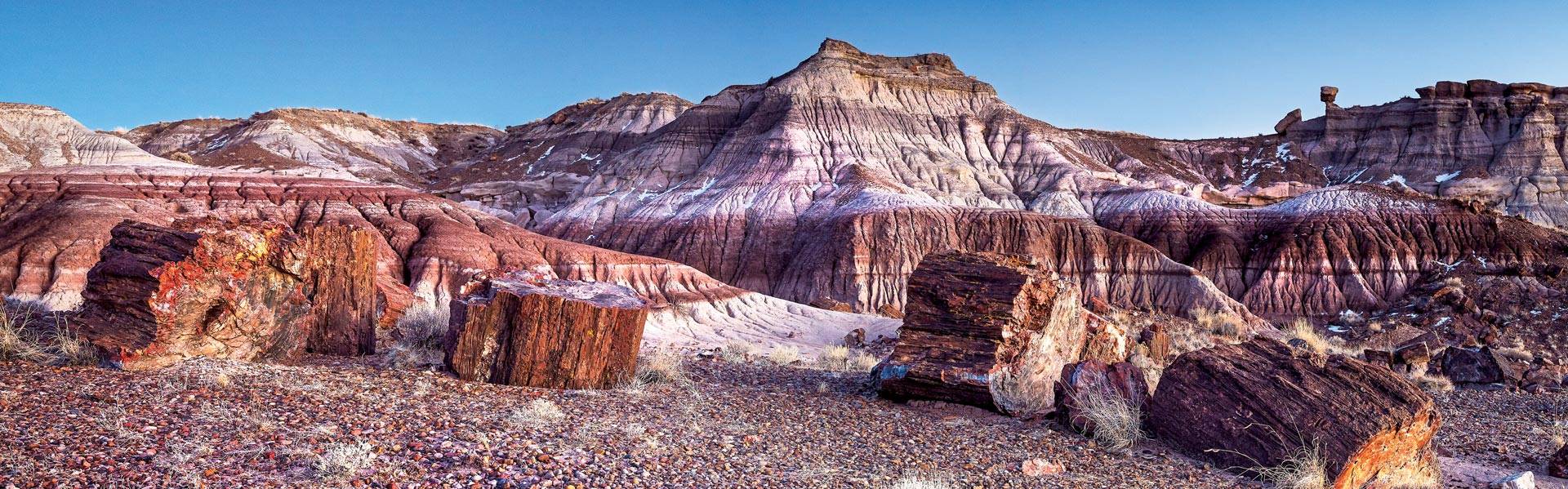
It looks like an ordinary log. Its bark is cracked, glowing red, orange, purple and gold under the desert sun. Touch it though and the illusion breaks. This isn’t wood at all. It’s stone.
In the Petrified Forest National Park, Arizona, U.S.A., the stone logs were once living conifers. About 225 million years ago, this dry desert was part of a different landscape, with rivers running across it. Trees that fell into the rivers were buried beneath layers of mud, sand and volcanic ash. Over thousands of years, mineral-rich water carried silica into the wood, filling its tiny spaces and replacing parts of the original material with minerals. Traces of iron and manganese produced the reds, yellows and purples we see.
What remains, then, is more than a piece of stone. It is a story preserved by nature. Fossils of plants and animals found nearby add further detail, helping scientists reconstruct what life and the landscape looked like millions of years ago. And this makes us wonder: how many other stories are quietly waiting to be noticed?
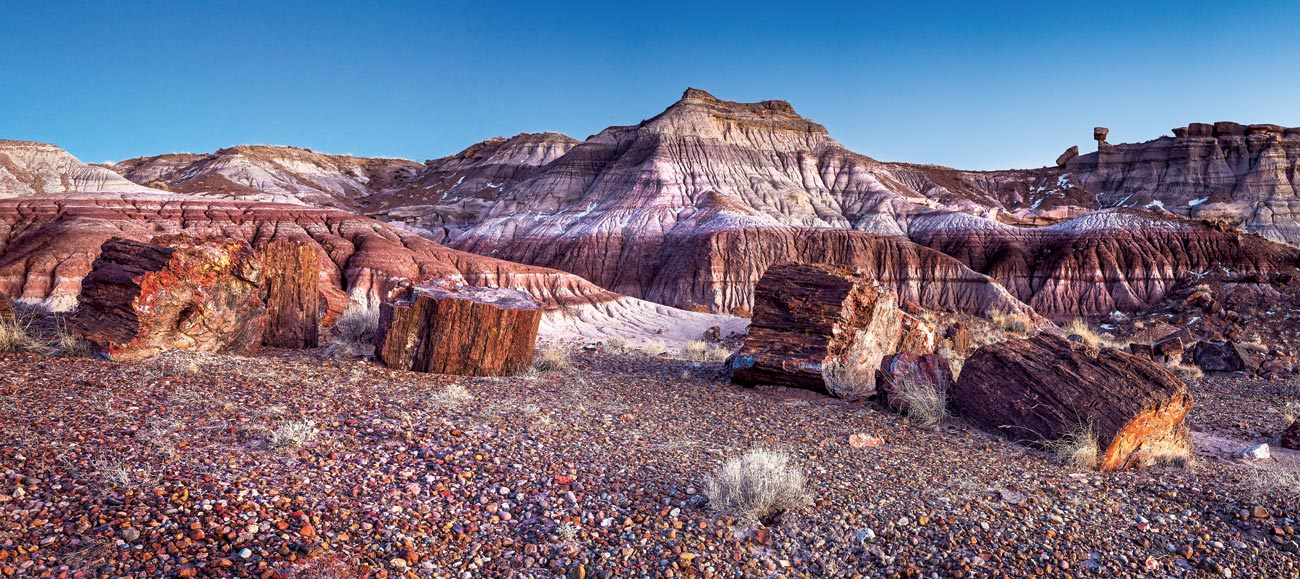
Jasper Forest is one of the most amazing places in the Petrified Forest National Park in Arizona. The colours of the sediments stand out here in the post sunset glow! Photo: Andrew Kearns/CC-BY-SA-2.0.
Stories In Stone
Nature keeps records everywhere. Tree rings can tell us a tree’s age and even about the weather it experienced. Wider rings often mean wetter years, narrower
ones drier stretches. Fossils, layered rock and signs of erosion tell older stories still, of ancient seas, rivers and volcanoes, and of creatures long vanished. Rocks are Earth’s storybooks, and geologists read their layers to understand our blue dot.
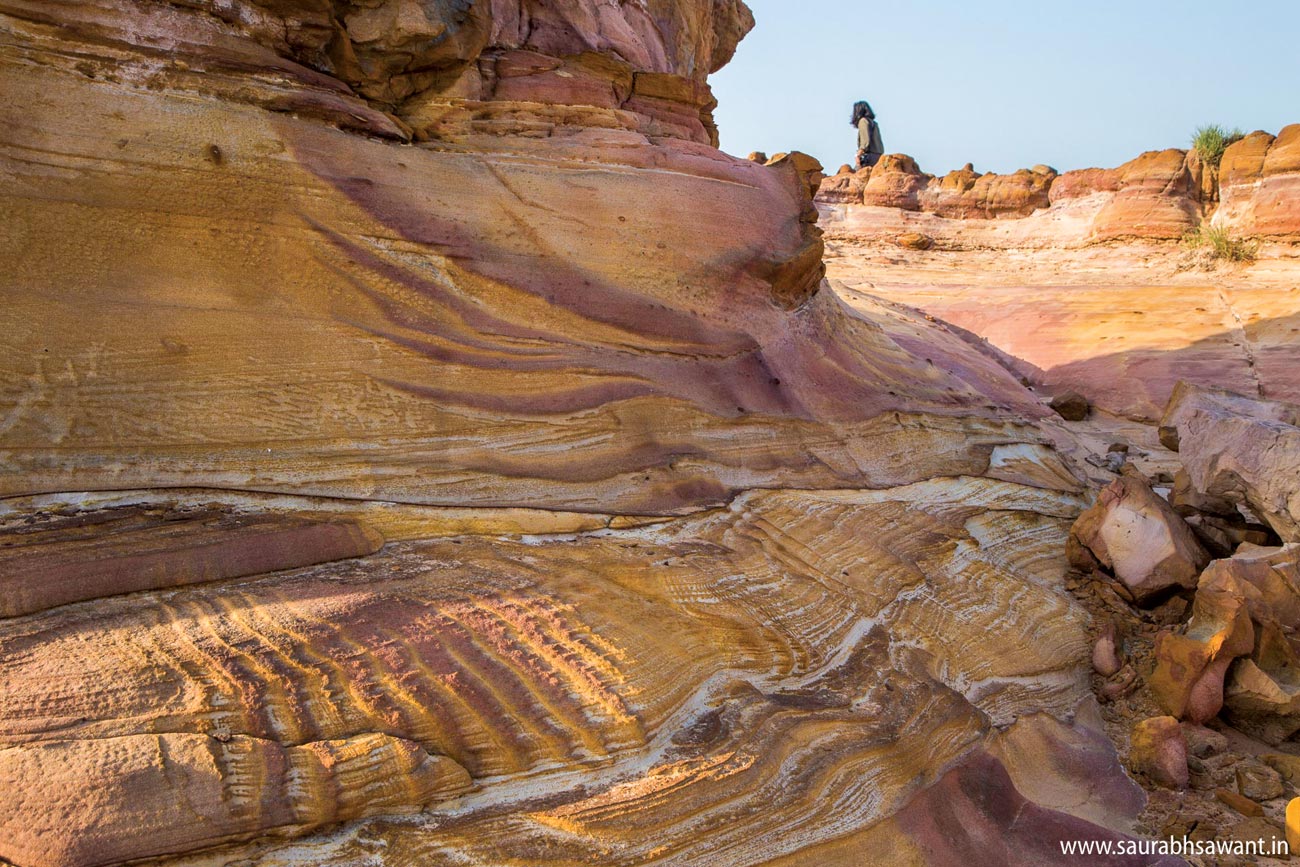
The dried Lyari riverbed in Kutchh shows off fantastic patterns of wind and water erosion over millennia. Photo: Saurabh Sawant/Sanctuary Photolibrary.
Shaped By Nature
Nature has its own clocks and calendars. Birds migrate with the seasons, animals follow daily rhythms, insects change through stages such as metamorphosis. Coral reefs grow centimetre by centimetre, which means a large reef may take thousands of years to form!
Elephants carry forward what they learn, remembering safe routes and hidden waterholes across decades, passing that knowledge to younger members of the herd. When we learn to read these clues, we discover that the world around us is part of a much larger story – one that began billions of years ago and is still being written.
Wind and rain are storytellers too, slowly reshaping entire landscapes. Strong winds can bend trees, dry out soil and carry away tiny particles. Rain leaves its own mark. Carving channels into soil, wearing rocks, filling rivers and slowly changing the shape of hills and valleys. With these signs, we can discover stories about weather, water, landscapes, and the plants and animals that have learned to live there.
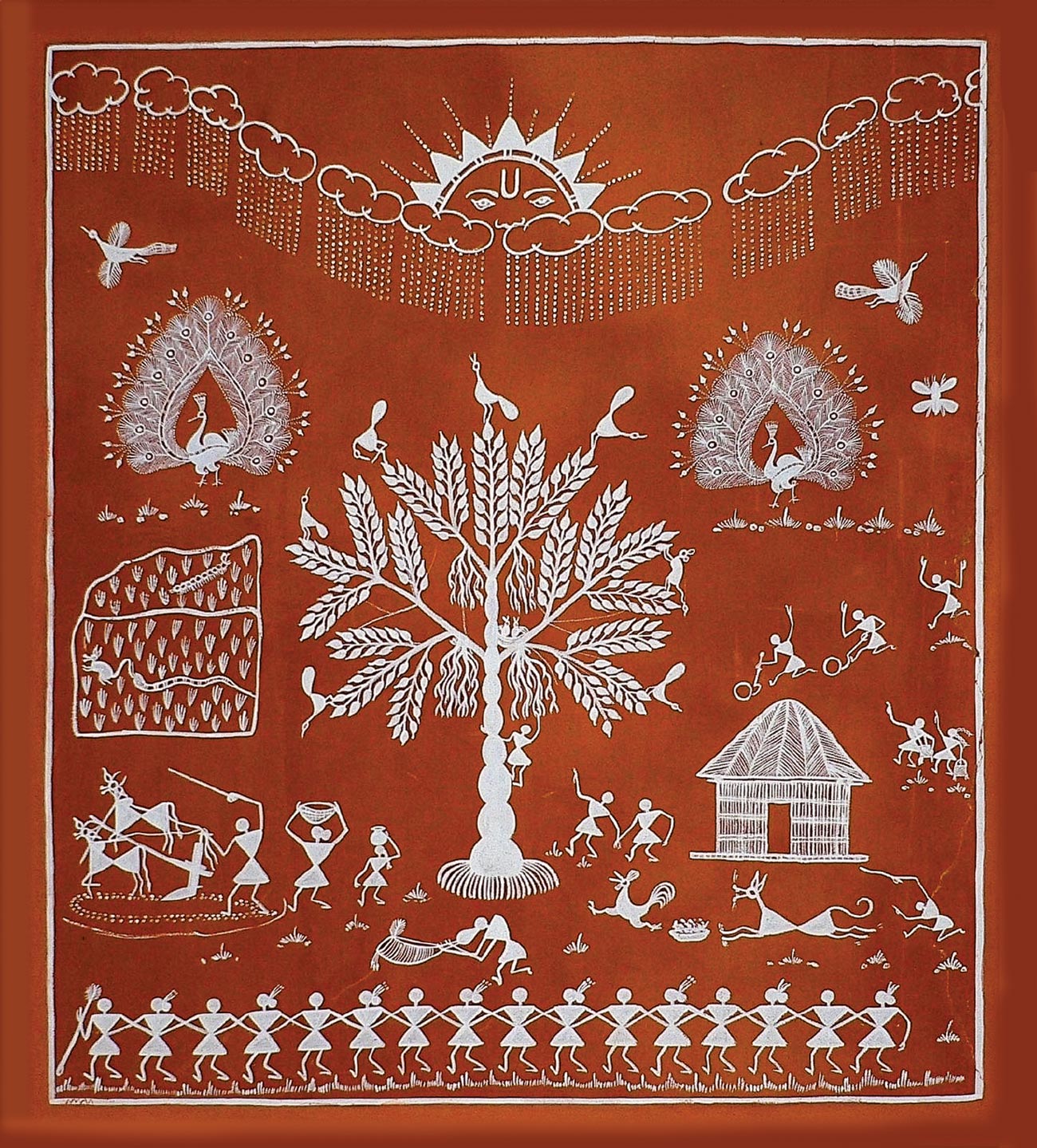
Warli wall art shows the Indigenous people’s deep understanding of and connection with nature. Photo: Pandiyan V./CC BY-NC 2.0.
People Who Listen
Some people have spent generations learning to read these stories. Indigenous communities often have deep knowledge of the plants, animals, seasons and weather of the places they call home. Communities such as the Warli, Bhil, Tharu, Angami and Paniya of India carry knowledge that helps them understand and use nature without harming the ecosystems around them, which is visible in their art, oral traditions and everyday lives.
For many Indigenous peoples, nature is something to learn from and respect and care for. The Dongria Kondh of Odisha, for example, regard Niyam Raja as the spirit of their mountain, deserving protection rather than extraction. The MÄori of New Zealand hold the concept of ‘kaitiakitanga’, a responsibility to guard and care for the environment.
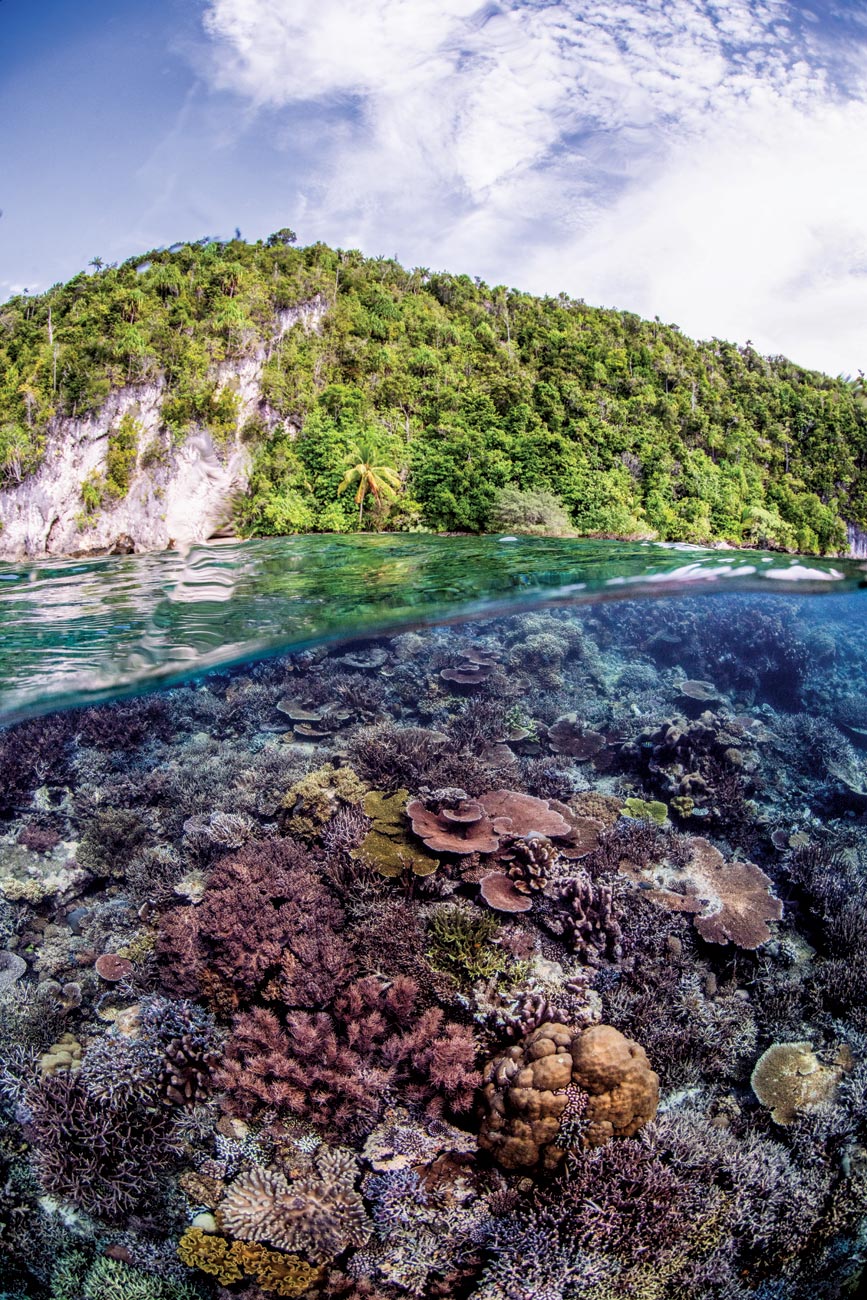
A living reef growing outward centimetre by centimetre over centuries. Photo: Dani Escayola/Ocean Image Bank.
Quietly observing your surroundings can reveal the mysteries of nature. The beautiful bracket fungus, for instance, grows across dead branches to break down wood and support forest life. Naturalist Raviraj Soman explains, “Even in its death, a fallen tree provides many ecological services.” And the fungus is just one of the visible clues of these processes in action!
Indigenous knowledge and science alike remind us that listening to nature is not only about discovering its stories, but understanding our place within them. And that is perhaps the most important story nature tells us. We are not outside the story. We are part of it. Every tree ring, fossil, flowing river and season is a chapter in a much larger book, and the more carefully we learn to look, listen and wonder, the better we can protect it for the chapters still waiting to be written.
Lakshmy Raman is Executive Editor, Sanctuary Asia and Shatakshi Gawade is Senior Editor, Sanctuary Asia.