Taking Charge
First published in Sanctuary Cub,
Vol. 46
No. 7,
July 2026
What we see is generally what we believe. At WTI, we have observed that expressing the urgency in species conservation is also best communicated through visual mediums. Art becomes the solution! By Madhumay Mallik.
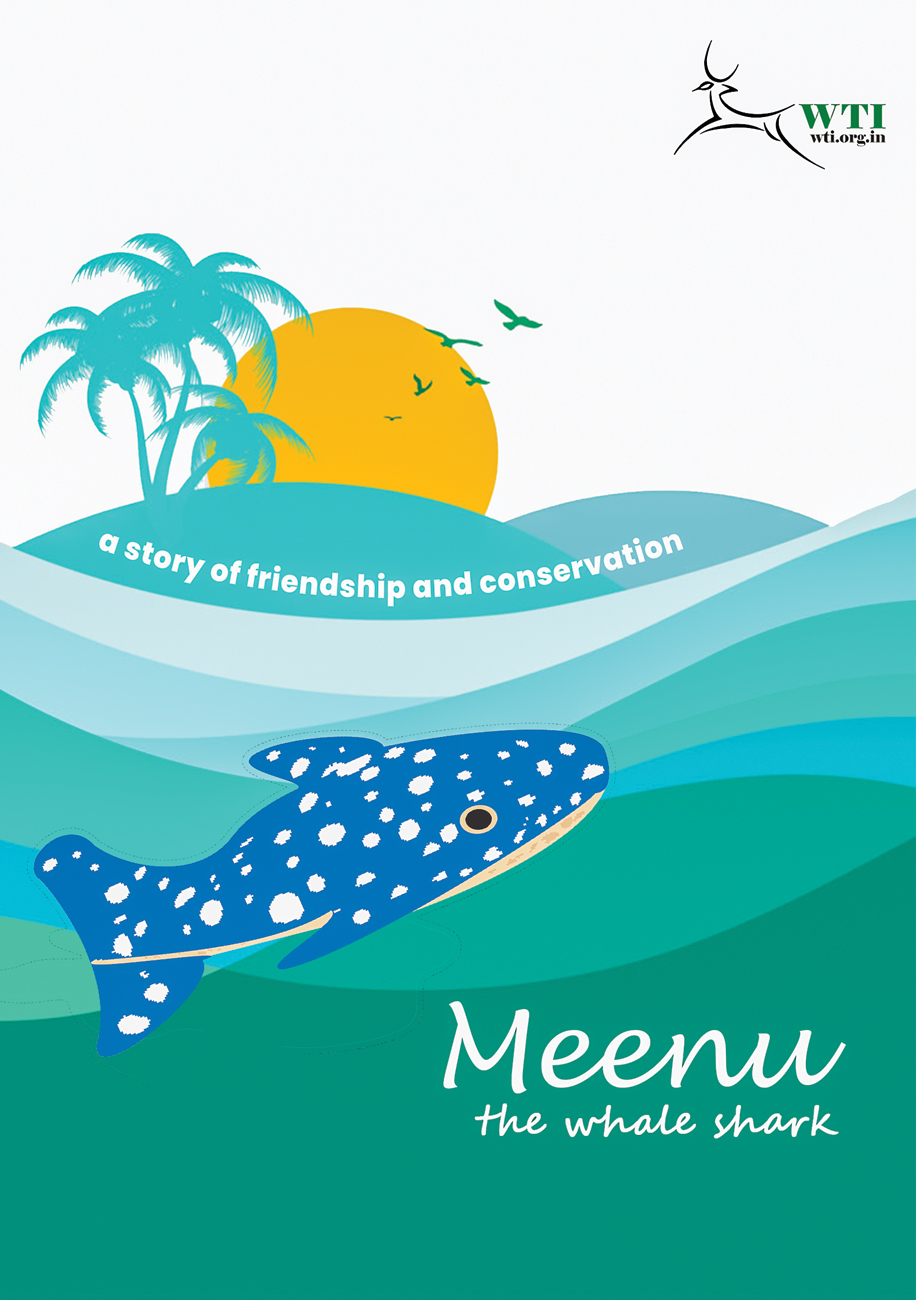
Reyansh, my 10-year-old nephew, has been hooked on wildlife stories since he stumbled upon a copy of Meenu, a comic book on whale shark conservation by the Wildlife Trust of India (WTI). With hope in his sparkling eyes, he regularly enquires, “When is the next book coming out?”
Art has the power to inspire, generate curiosity and connect emotionally. At WTI, we have observed that expressing the urgency in species conservation is also best communicated through visual mediums.
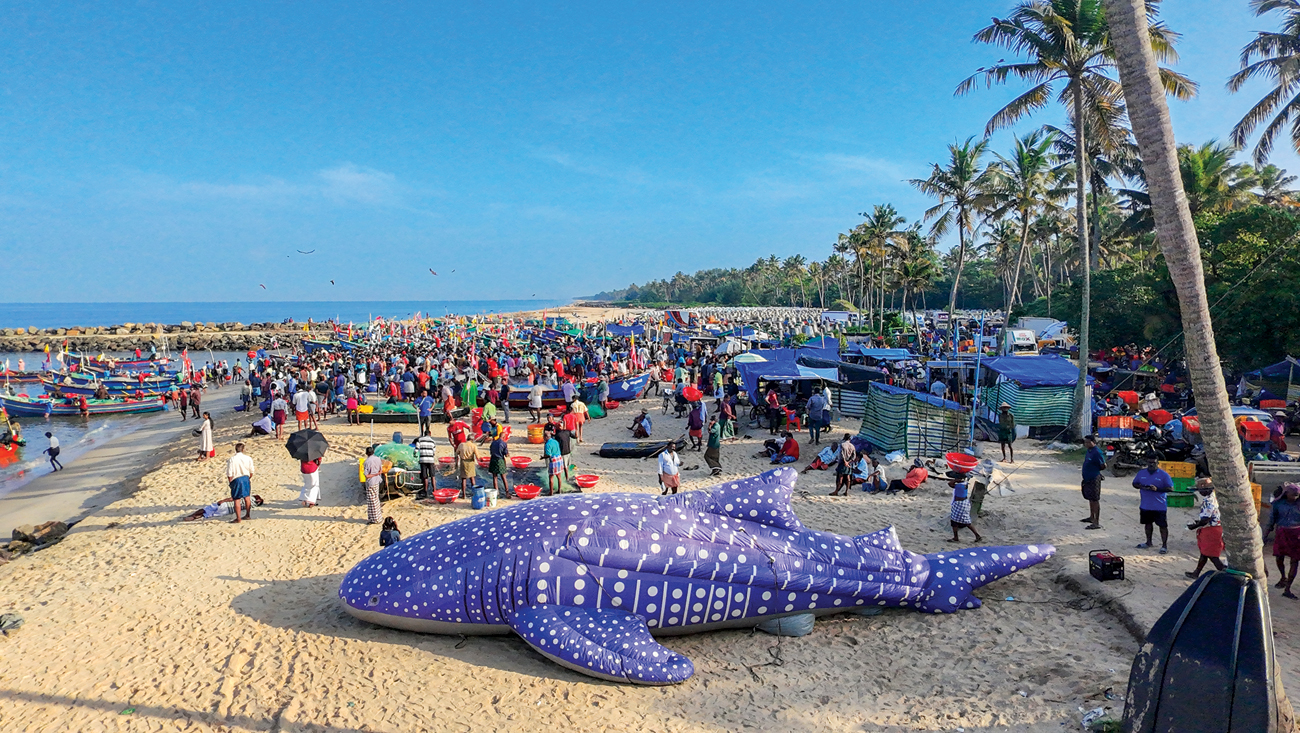
The Whale Shark Campaign in Amini, Lakshadweep, in 2024 used a large inflatable to inspire people to create awareness and gain support. Photo: Ajith.
Seeing Is Believing
The challenge in wildlife conservation, as with the crisis of climate change, has been the inability to visually communicate the science behind the need. Most of us, unfortunately, can’t interact with wildlife or wild spaces regularly, and consequently don’t understand the gravity of threats they are facing. The whale shark, for example, is a fish that lives deep in the ocean. It’s highly unlikely that you have ever seen one. What we see is what we believe. How will you rally for a species that you find no connection to? Well, art is the solution!
Life-sized inflatable models of the whale shark placed along the beaches of Gujarat, Kerala and Lakshadweep Islands have been a hit with not just the kids but locals of all ages. “The inflatable model gives a sense of the kind of animal we are trying to protect. Visual communication backed by science ensures that we can influence people to do their bit in conserving species, while fostering a generation that is aware and positively exposed to the cause,” says Saymanti B., the lead of Natural Heritage Campaign for WTI.
WTI has been able to engage more than 38,19,000 children across the country and made them aware of conservation initiatives through various artistic mediums.
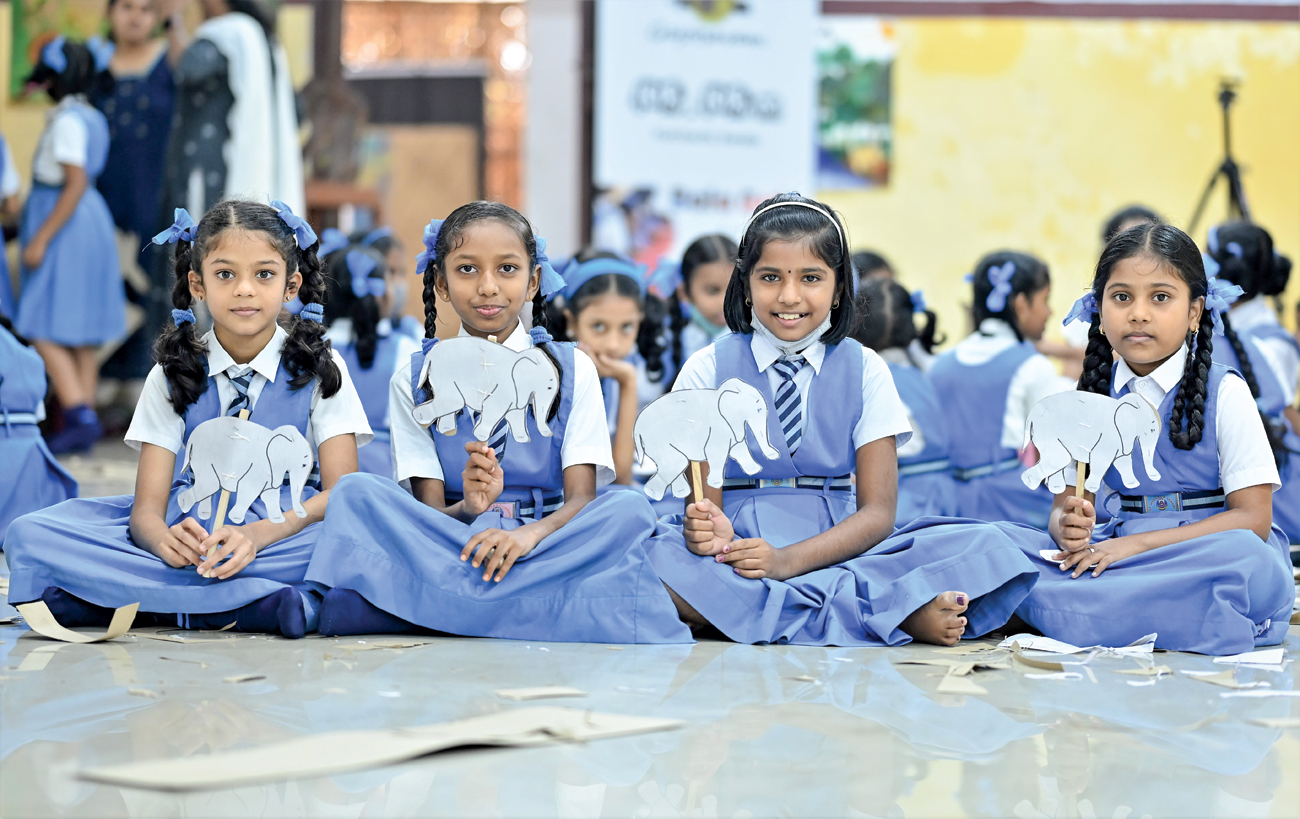
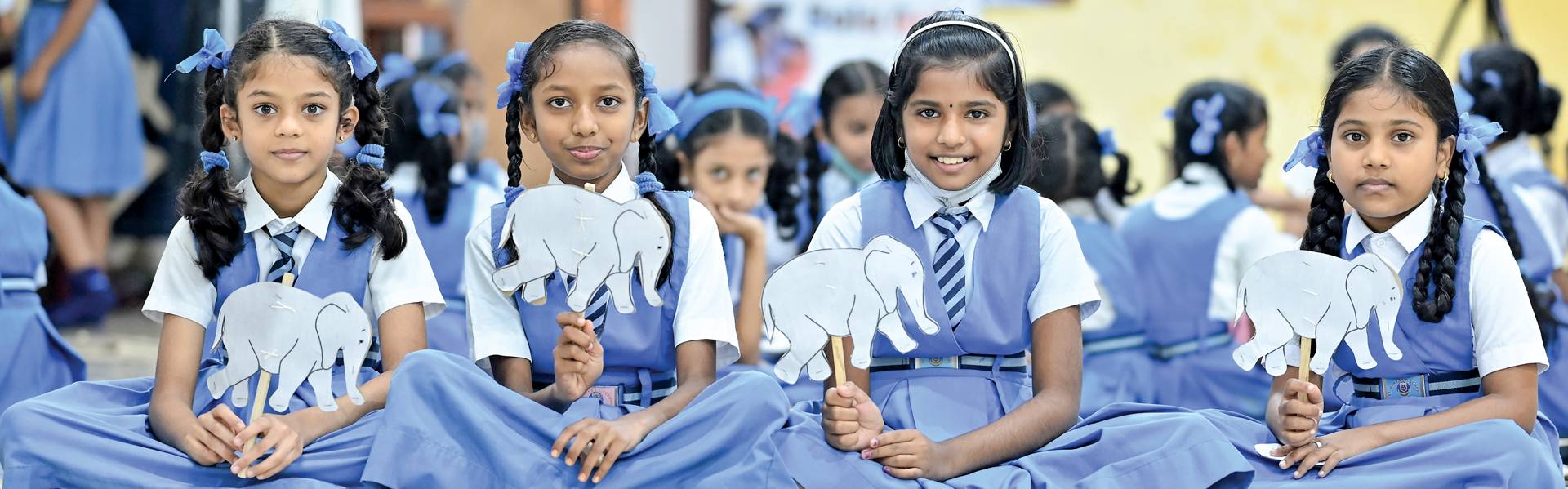
Students with shadow puppets at the BalaGaja Gajotsavam, Right of Passage programme, Kerala. Photo: Sreenanth K.
Art has the power to inspire, generate curiosity and connect emotionally. Photo Courtesy: WTI.
A Diversity In Expressions
As science communicators, we experiment with various mediums of artistic expression to convey conservation urgency. Painting competitions and street plays are traditional mediums. These allow for engaging the audience at a personal level. WTI also organises workshops in clay modelling and animal origami to help kids explore these mediums of expression and more importantly, have fun while learning about wildlife.
This way, the message is retained longer, probably for a lifetime, and chances are that these kids grow up to become conservationists themselves or support conservation initiatives! Clay modelling has been a great tool to explain the difference between African and Asian elephants. Being hands-on is a great way to learn that Asian elephants have smaller ears than their African cousins.
Wildlife masks and face paintings are a way for kids to become the animal themselves, as it is with costumes! In a recent WTI campaign event for the recovery of the White-winged Wood Duck in Arunachal Pradesh, a face painting workshop followed a lecture that made the audience restless. As soon as paintbrushes were brought out, the excitement and engagement went through the roof. What lectures couldn’t do, art did. Students started getting curious about where these ducks live, why their population is going down and importantly, how they could help. This is when we explain complicated issues, such as habitat destruction and polluted streams, when the audience is receptive. Students try learning more about the species they had become.
Art makes us pause, think and act. In project sites such as Manas, wall paintings have generated awareness of the biodiversity of the Protected Area and what we stand to lose. WTI, in partnership with the local community, was instrumental in ensuring that the once-lost tag of Manas as a ‘UNESCO World Heritage Site’ was reinstated in 2011 after a decade-long campaign and conservation interventions.
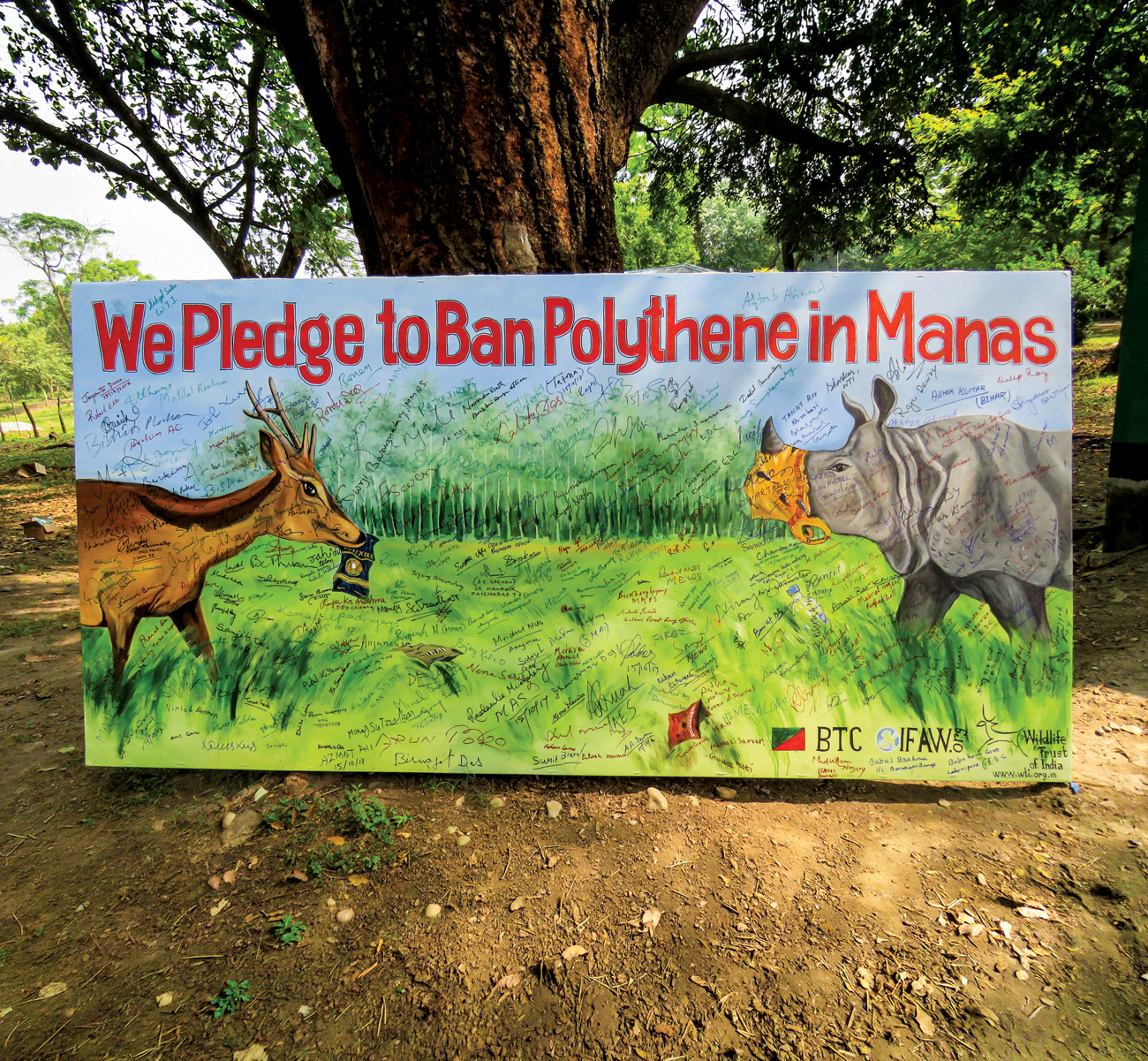
Wall art pledge signing in Manas under the Plastic Free Campaign. Photo Courtesy: WTI.
You Are A Champion Too!
Reyansh has since been drawing the whale shark in all its forms, in his art classes at school and at home, and talking about it among his friends. Whether it is painting or poetry, each one of us must find our own medium of expression and rally to the cause. At the end of the day, conservation needs more champions. You too can share your artwork on social media and generate awareness around species and their habitats!
Madhumay Mallik is a conservation writer, photographer, and graphic designer, currently engaged with the communications team at the Wildlife Trust of India. He posts on Instagram as smallerwonders.