Snakeroot Psychology
First published in Sanctuary Asia,
Vol. 46
No. 10,
October 2026
By Soham Kacker
Writing as I recover from a sudden and strong bout of sickness, I think of plants as a pharmacopoeia. The modern modification of salicylic acid – from Salix, willow – courses through my bloodstream as a painkiller. Reading off the ingredients of my Vicks VapoRub conjures a virtual garden – volatile compounds from camphor wood, mint flowers, Plectranthus leaves, and pine resin swirl through my nostrils in a valiant attempt to ease my laboured breathing.
The healing power of plants has been one of the earliest drivers for humans to observe, classify and study them. In India, some of the earliest classifications of plant forms come from medical or pharmacological texts such as the Carakasamhita; and in the Western tradition, the physic garden – devoted to the cultivation and study of medicinal plants – is the precursor to the modern botanical garden. Plants have often allowed us to alter our own experience, by combating disease or soothing pain, but we seldom realise to what extent the study of plants has actually taught us about ourselves. One of my favourite examples of this is a small understorey plant from the Indian forests – Rauvolfia serpentina, or the Indian snakeroot.
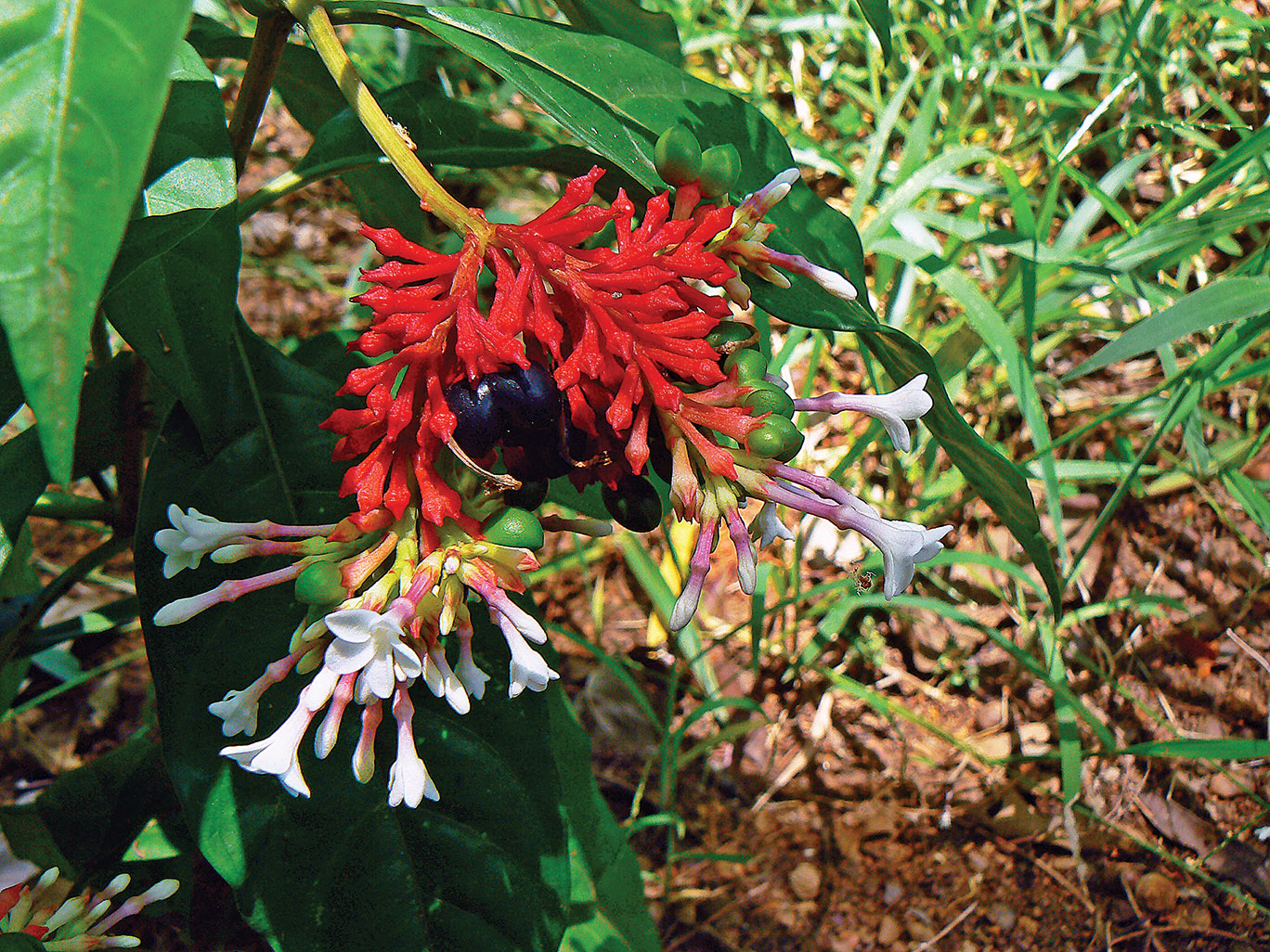
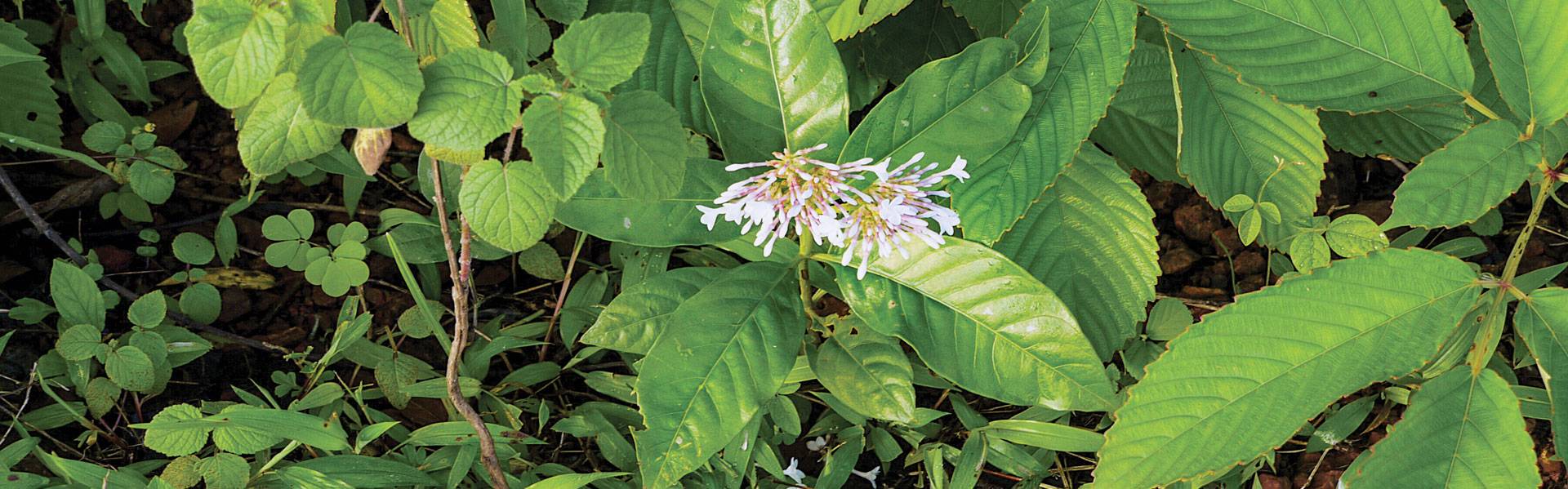
Sanskrit authors refer to Rauvolfia as sarpagandha, or in some cases, çandra, which refers to the moon. Ancient healers used its extracts to treat lunar afflictions – in other words, lunacy. Photo: Dinesh Valke/CC-BY-SA-2.0.
Sanskrit authors refer to Rauvolfia as sarpagandha, or in some cases, çandra, which refers to the moon. Ancient healers used its extracts to treat lunar afflictions – in other words, lunacy. Photo: Dinesh Valke/CC-BY-SA-2.0.Sanskrit authors refer to Rauvolfia as sarpagandha, or in some cases, çandra, which refers to the moon. Ancient healers used its extracts to treat lunar afflictions – in other words, lunacy. Photo: Dinesh Valke/CC-BY-SA-2.0.
Sanskrit authors refer to Rauvolfia as sarpagandha, or in some cases, çandra. This latter name refers to the moon, and speaks to the fact that ancient healers used its extracts to treat lunar afflictions – in other words, lunacy. Its effects as a sedative were well known, and it was even used occasionally as a hallucinatory drug. This traditional medicinal wisdom came back into focus in 1931, when two Indian pharmacologists were studying the effects of Rauvolfia extracts on mental patients. They described its efficacy in calming and ameliorating the temperaments of patients with even the most severe forms of maniacal insanity, although while their observations of a hypnotic effect matched the ancient herbal texts, the mechanism of action of the plant remained a mystery. What scientists observed was that the effects were highly dose-dependent, with larger doses often reversing the treatment’s effects causing depression rather than only calming hysteria.
In 1952, a key alkaloid reserpine was isolated from Rauvolfia roots, which was found to be linked to its mode of action. By 1954 it was discovered that reserpine could deplete animal tissues of noradrenaline and dopamine, two key neurotransmitters. Early experiments with neurotransmitter depletion using reserpine led to foundational knowledge that the levels of endogenous chemicals can have significant and lasting effects on the central and peripheral nervous system. In the late 1950s, these findings led scientists to propose a hypothesis, which suggested that mental illness was induced by a chemical imbalance – and was indeed a biological problem treatable by modern medicine. Through this experimentation, Rauvolfia helped birth the field of biological psychiatry, and changed the way we understand ourselves.
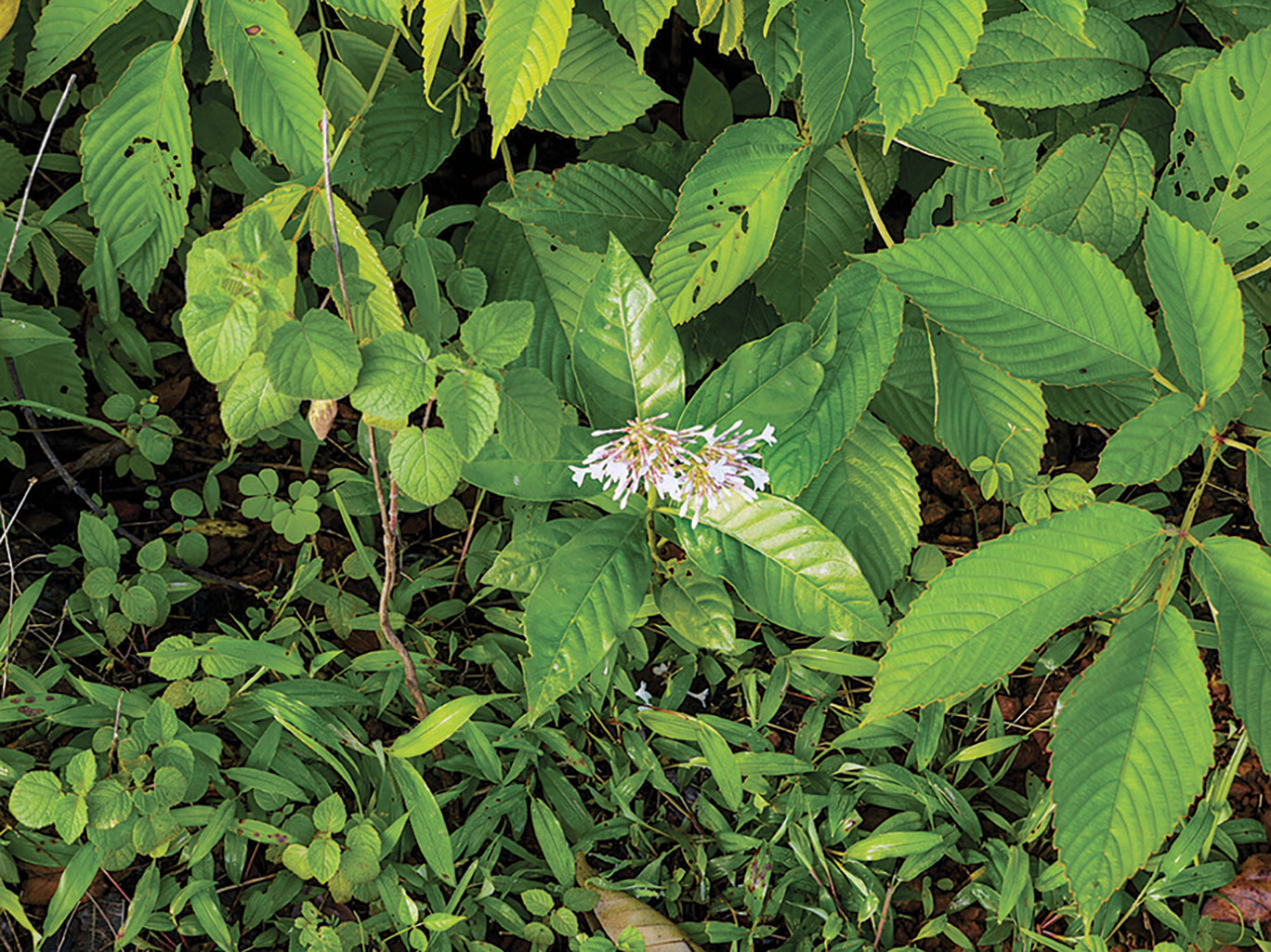
Sarpagandha remains a very important ingredient in the arsenal of Indian apothecary. It birthed the field of biological psychiatry, and changed the way we understand ourselves. Photo: Dinesh Valke_CC-BY-SA-3.0_Sarpagandha.
Until today, sarpagandha remains an important ingredient in the arsenal of the Indian apothecary, and is a key prescription in traditional medicine. However, this has at times placed pressures on its natural populations, which are estimated to be most robust in the lower Himalaya. From the 1980s to the early 2000s, the local demand for dried sarpagandha roots in India rose from around 50 tonnes to over 400 tonnes per year – supplied almost exclusively from wild-collected stock. While the availability of R. serpentina has fallen owing to changes in its natural habitat, other closely related and chemically-similar species such as R. tetraphylla have been recommended as substitutes, to try to ease the pressure on a single species. Even though pharmacological use can sometimes create a challenge for plant conservation, I marvel at how this little plant has changed how we see ourselves over time – as beings governed equally by the ebbs and flows of the chemicals within us, as by the waxing and waning of the moon.
Soham Kacker is a plant ecologist and horticulturist from New Delhi. His research looks at plant conservation and ethnobotanical landscapes in the Indian Himalaya and beyond.