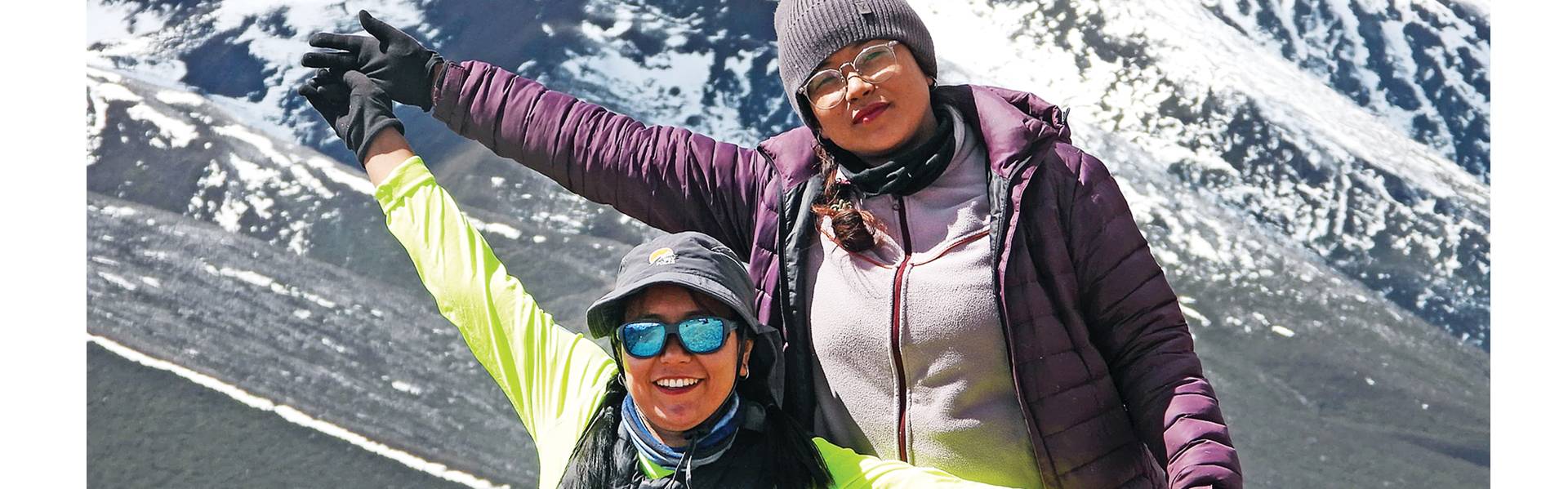
Sisters Who Walk The Himalaya: The Unseen Labour Behind Conservation
First published in Sanctuary Asia,
Vol. 46
No. 6,
June 2026
In the high-altitude landscapes of North Sikkim, two women field researchers offer a grounded look at what conservation work entails long before it becomes data. Through long days of walking, patient observation, and skills honed over time, Phung and Song contribute to rangeland assessments, ungulate monitoring, and long-term wildlife research in the Eastern Himalaya. In this piece, Kabya Chamling Rai shifts the focus away from spectacle, bringing to light the quiet, rigorous labour that forms the backbone of scientific understanding in mountain ecosystems.
North Sikkim is often spoken of as a place of beauty – a landscape to admire and photograph. But walking through it in winter makes one thing clear: this is not a view. Beneath the snow and the stillness lies terrain that demands labour, attention, patience, and respect. Nothing here is ornamental. Everything must be earned.
In the Chopta Valley, at around 4,000 m., winter mornings begin with constraint. Bathroom floors freeze if even a little water spills. Fireplaces burn around the clock, not for comfort but for survival. Hot water and tea are poured continuously, less to savour than to keep the body functioning. Step outside during snowfall and, within minutes, lips and cheeks turn numb and purple. Water taps are never fully closed; one small mistake and pipes freeze solid, leaving the camp without water for the rest of the day. Weather shifts quickly – sunshine to biting wind to snow within the hour.
By eight in the morning, the kitchen is already active. Phung Hangma crouches by the hearth, coaxing fire under a large aluminium vessel to boil water for drinking and brushing teeth. The drum meant for brushing water is frozen solid; it will not thaw until noon. Song Hangma picks up a belcha (shovel) and walks toward the bathroom. Overnight, the floor has frozen into a thick, uneven sheet of ice. She breaks it methodically for half an hour, clearing a path so no one slips. This is not counted as work. It is simply what must be done before the day begins.
When it is time to set out for the survey, Phung and Song check the survey phone, confirming the ungulate trail planned for the day. Since 2022, they have worked as freelance field researchers with WWF-India, walking long distances across rangelands, forests, and high‑altitude valleys in the districts of North and West Sikkim. Their work includes rangeland health assessments, vegetation sampling, ungulate surveys, and supporting snow leopard camera-trapping exercises to strengthen long-term ecosystem monitoring, inform science-based management, and build community-led stewardship of high-altitude landscapes. They do not announce their readiness. They shoulder their packs and start walking.
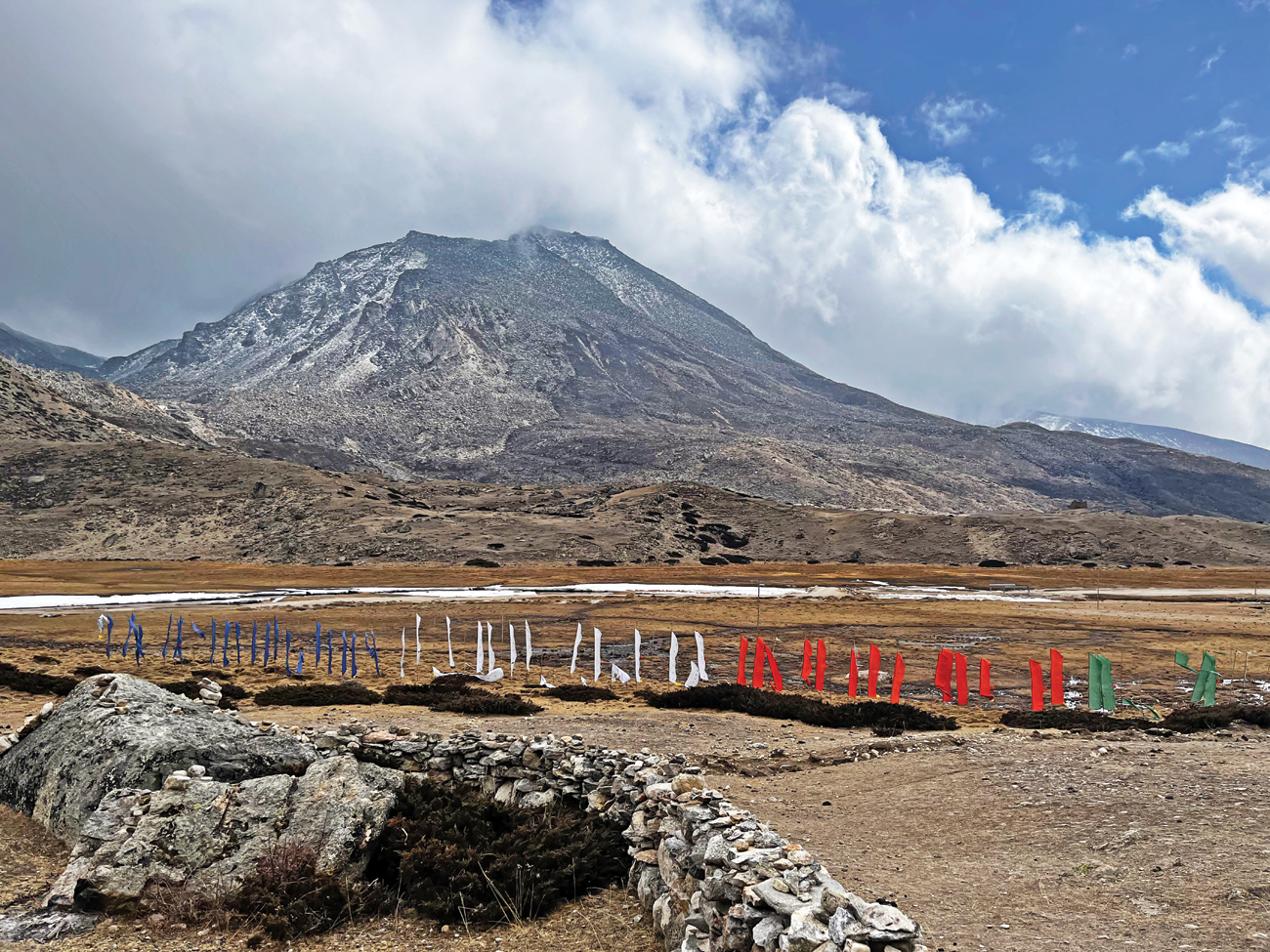
In winter, North Sikkim presents more than just striking scenery. The frozen silence and snow-covered ground reveal a region that is as demanding as it is beautiful, where every step requires care, endurance, and respect for the land. Photo: Kabya Chamling Rai.
Two Sisters Who Walk Together
Long before they became conservation workers, Song and Phung had a deeper relationship: they are sisters. They grew up together, studied in the same class, and now work side by side in the mountains. They are from the town of Yuksom in West Sikkim district, and in a typical year spend 70 to 75 days in the field.
When they are not surveying, their lives diverge slightly. Phung works as a trekking guide on the challenging Goechala trail. Song stays home with their mother, managing household work. Neither describes fieldwork as a calling. It is work – skilled, physically demanding, and often uncertain – but work they have chosen to continue as their experience and confidence have grown.
They were introduced to this work by a Himal Rakshak (trained local community guardian in Sikkim), who encouraged them to apply when survey opportunities arose. Himal Rakshaks are local volunteers trained by the Sikkim Forest Department to support wildlife monitoring, conflict mitigation, and community-based conservation. The organisation conducting the surveys was open to women joining, provided they were willing to walk through tough unfamiliar terrain.
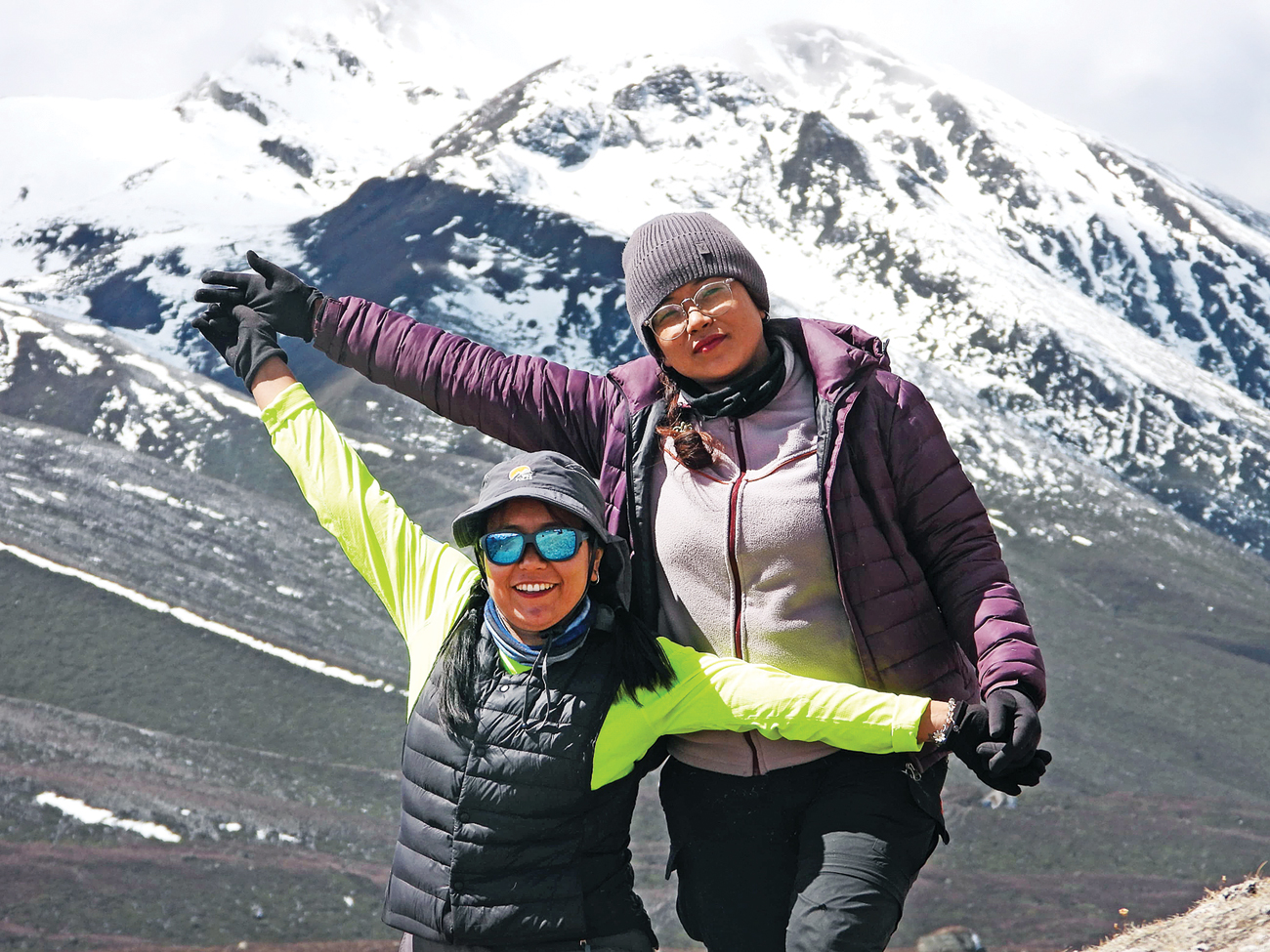
Song and Phung Hangma grew up together in Yuksom, West Sikkim, studied in the same class, and now work together to protect their mountain home. Photo: Pemba Romo.
When Mountains Weren't Work
Once, during an ungulate survey, while resting on a slope, I asked Phung how she and her sister had begun wildlife conservation work. She smiled before answering, then spoke about how they were running a liquor shop in the village and how when their father was alive, financial stability had not been a concern. After his death, the responsibility of running a home and other expenses fell to the two sisters, including Phung’s college fees. Women running a liquor shop, where most customers were men, quickly became the subject of gossip and judgement. But responsibility weighed heavier than scrutiny, so they continued. This history sits quietly behind their present work. They do not frame this as hardship overcome, but as context. Conservation did not replace vulnerability; it arrived alongside it, gradually becoming a space where skill, confidence, and independence could take root.
Lessons Before Surveys
Long walks and the slow reading of animal signs often remind the sisters of childhood summers spent in the mountains with their father. He taught them how to distinguish musk deer pellets, identify pugmarks, and recognise plants. During vegetation sampling, when they struggle to identify certain grasses, Song sometimes recalls Phung sighing. “I wish he was around to help us identify these grasses,” she says. “He could have named every species we now find difficult.”
They still recognise a few grasses easily, because their father taught them. He also taught them how to walk in the mountains – quietly, without unnecessary noise. He, like the rest of the community and the older generations, believed the mountains are holy places for local deities, and that disrespect could make one fall sick. Those lessons persist today, not only as belief, but as practice. They walk carefully. They pay attention.
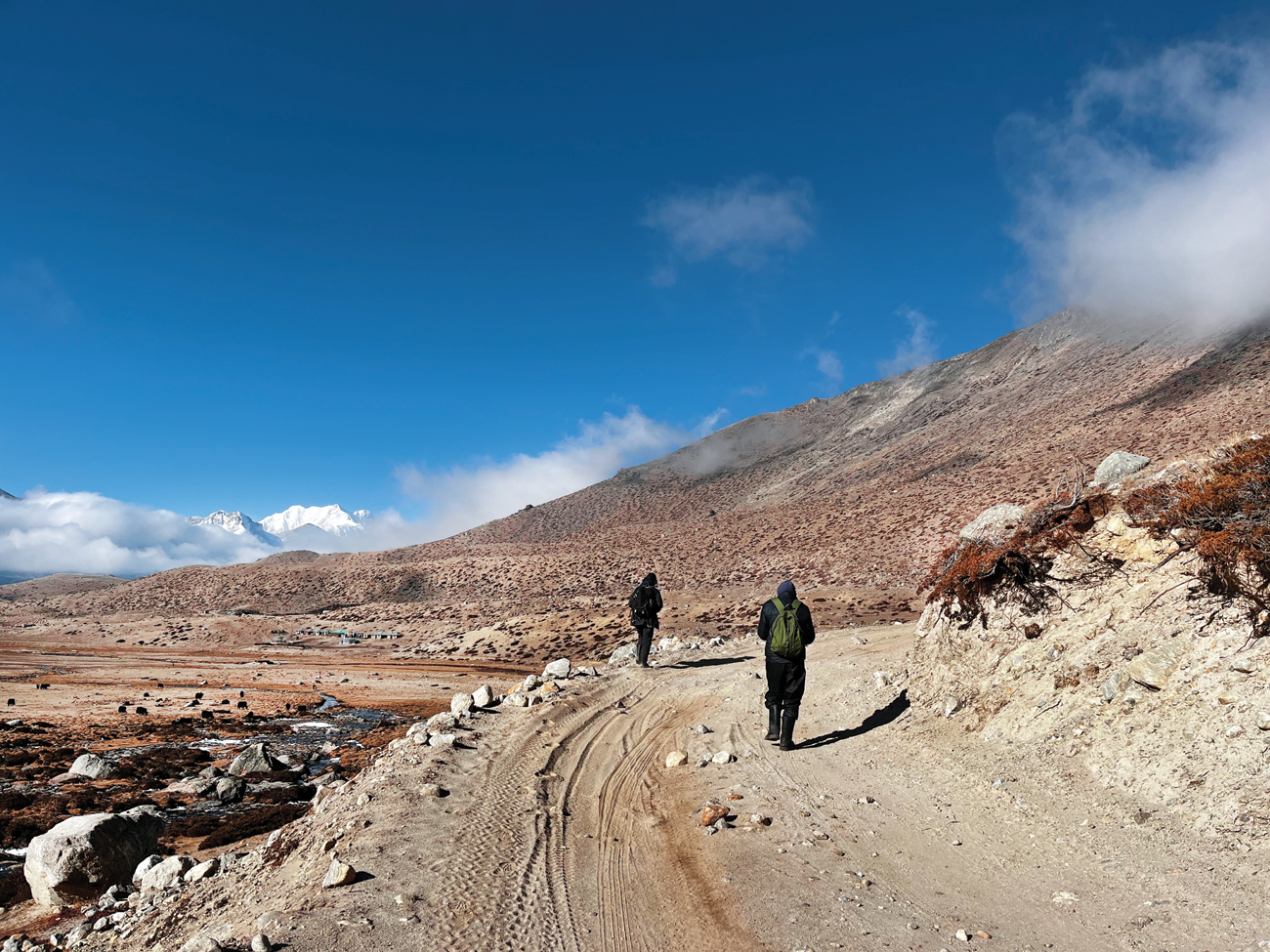
Before setting out for the survey, Phung and Song check the survey phone, confirming the day’s ungulate trail. Since 2022, they have worked as freelance field researchers with WWF-India, covering long distances across rangelands, forests, and high-altitude valleys in North and West Sikkim. Photo: Kabya Chamling Rai.
Skill, Fear, And Experience
Song walks slowly, breathing in rhythm with the slope. She advises moving as if there is nowhere urgent to reach. It regulates breathing, she says, and sharpens observation.
“I never thought I could walk for seven or eight hours at 3,500 to 5,500 m.,” she confesses. “I thought I was unfit. I had no stamina. But surveys taught me it was never about stamina. It was a skill.”
When trails disappear under deep snow, Song leads. She places her heel first, testing the ground before committing her weight. Beneath the snow could be rock, water, or a rhododendron bush. On difficult slopes, she suggests holding on to rhododendron branches – their roots are deep and strong.
These techniques do not appear in manuals. They are learned through repetition, mistakes, and careful attention. This embodied knowledge – how to move, where to pause, when to turn back – is central to the quality of field data collected, yet rarely acknowledged.
The Work People Do Not See
After long days in the field, the work continues. Grass samples are weighed and identified. Data sheets are filled carefully, often late into the night. When there are many samples, work stretches until ten or eleven.
“We wake up early, reach the sampling area by around seven, return to camp, and then continue working on data sheets,” Song says. “It can be strenuous.”
Ungulate surveys and camera trapping involve long hours of hiking. “The hiking itself is not very difficult for me,” she adds. “But we need to get up very early, and I’m often unable to eat enough in the morning. That part is challenging.”
As women, menstruation adds another layer of difficulty. “The body feels weak. You don’t feel like eating much. You also have to deal with cramps.”
Fear accompanies the work too – fear of Tibetan mastiffs, of wild animals, of slipping or falling. “I wonder what would happen if I got attacked or hurt myself,” she says. “I don’t have enough savings to take care of myself. That insecurity stays with me.”
Phung is frustrated when people assume they have an easy job. Once, she even considered quitting.
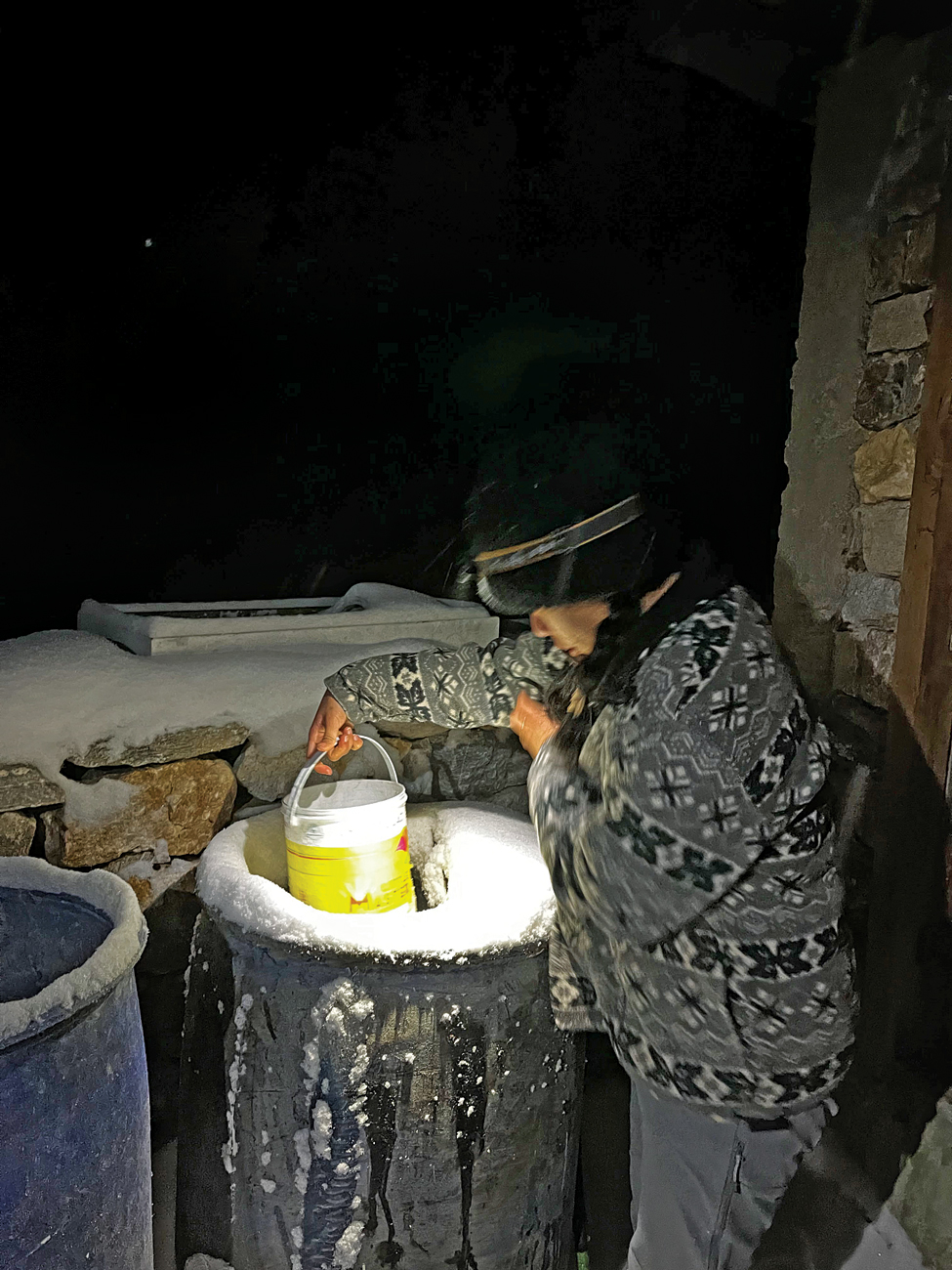
Nisam, a colleague, breaks through the frozen surface of the water vessel at the camp in Chopta Valley – a routine morning task before the fieldwork day can begin. Photo: Kabya Chamling Rai.
Walking Through Doubt
In February 2025, during an ungulate survey and camera‑trapping exercise in Muguthang in North Sikkim, they were walking toward Pach Pokhari – the Five Lakes. She felt fine when they started, but as they climbed higher it began to snow. With increasing altitude, the snow deepened, making each step harder. Walking slowly and steadily became mentally exhausting. Her survey partner struggled too.
Turning back was not an option, and moving forward was equally difficult. There was no transport, no immediate help. They had to walk. “That day, I really felt the need for walkie‑talkies,” she says. “So we could communicate for help. I thought maybe I can’t do this job anymore.”
The next day, she felt fine. The feeling passed. But the memory remained.
Phung smiles when she speaks of the future. “There may come a time when surveying becomes difficult,” she says. “I might be home with my family in the village. But I will still be part of conservation by encouraging more young people, especially women, to join this work.” She pauses. “If we do not look after our mountains ourselves, who will?”
There is no declaration in her voice, no appeal. Only a statement shaped by years of walking, breaking ice, reading signs, and returning again the next day.
In places like North Sikkim, conservation is not a view. It is work, often unseen, often precarious, carried forward step by careful step.
Kabya Chamling Rai An interdisciplinary conservationist with WWF-India in the Eastern Himalaya, her research brings together ecological science, local knowledge, and community aspirations to study elusive species such as the red panda and snow leopard. Her approach is grounded equally in the needs of communities and wildlife.