Saving Tuskers
First published in Sanctuary Cub,
Vol. 46
No. 7,
July 2026
Elephant tusks are often targeted by the illegal ivory trade. Wildlife SOS ensures its rescued elephants have the best care, and that tusks never turn into ivory. By Neellohit Banerjee, Wildlife SOS.
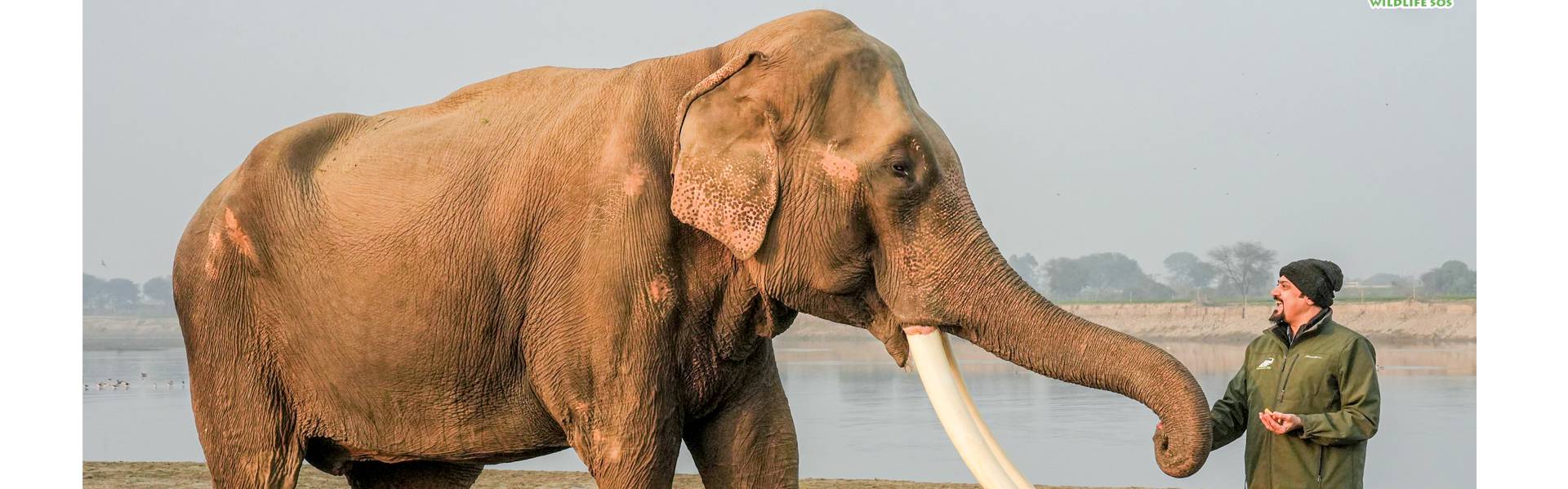
Mohan was a bull (adult male) elephant who had a magnificent pair of tusks. When Wildlife SOS first saw his weak body, we launched one of our most complicated rescue operations, only to face angry crowds and long court cases.
Mohan’s Freedom
Mohan had spent 50 years of his life chained and abused. Between our first unsuccessful rescue attempt and the one in which we succeeded in rescuing him, we saw that his tusks had been trimmed. This was clearly a case of ivory poaching. Sadly, when some humans see tusks, which are a pachyderm’s incisor teeth, they think of cutting them off and selling them for money. This has given rise to elephant poaching and the illegal ivory trade.
Luckily, we could rescue Mohan and bring him to our Elephant Conservation and Care Centre in Mathura, where he received all the love, care, dignity and his freedom. From feeling the sensation of grass and mud under his feet to meeting a younger male elephant, he surprised us with his gentleness.
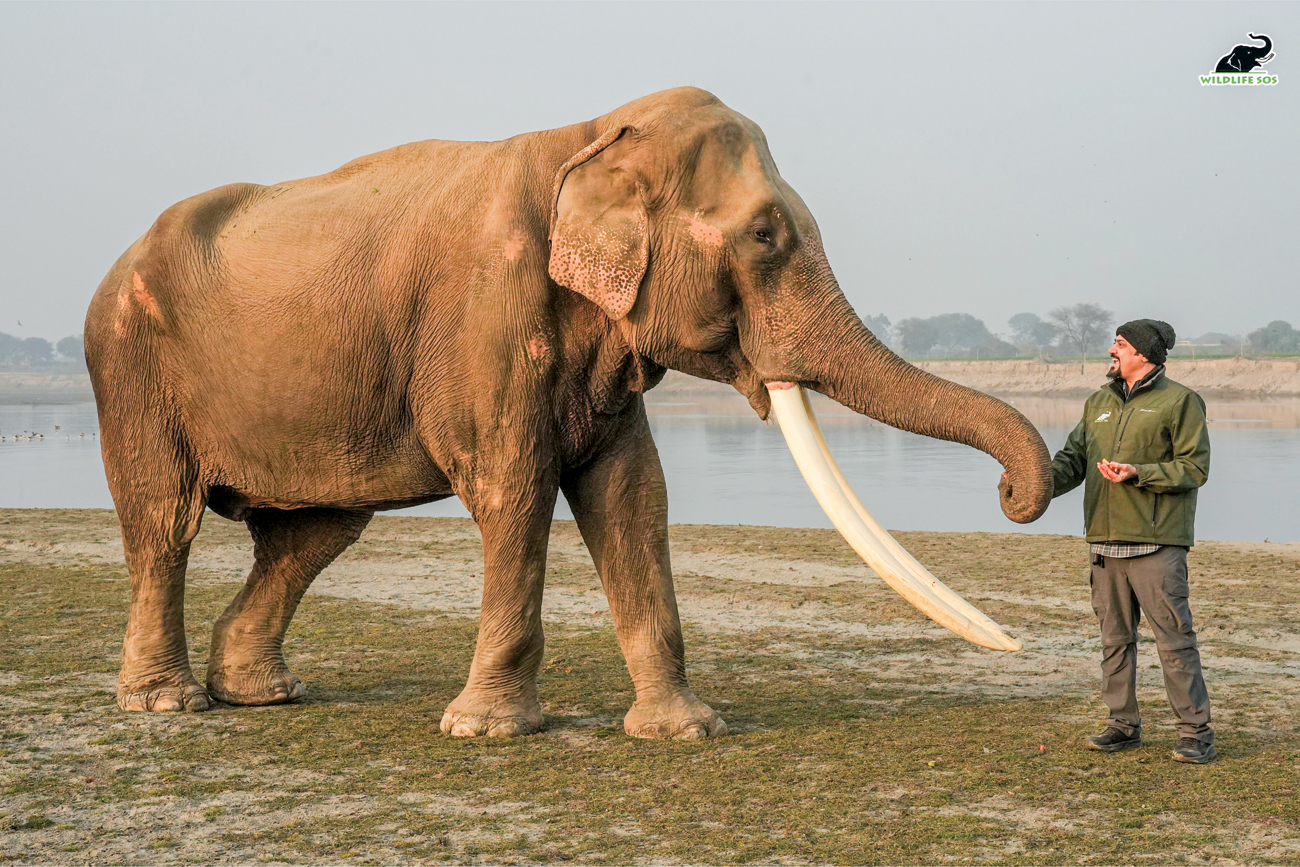
Rescue elephant Suraj with Kartick Satyanarayan, Co-Founder and CEO of Wildlife SOS, at the Elephant Conservation and Care Centre in Mathura. Photo: Wildlife SOS.
Health Over Trade
Ivory trade is illegal in India. The Wildlife (Protection) Act, 1972 prohibits all domestic commerce, imports and exports of both Asian and African elephant ivory. Anyone found engaging in the trade faces severe penalties, including up to seven years in prison. This is why the poachers who targeted Mohan received much-deserved punishment.
While they grow continuously throughout their lives in the wild, the wear and tear of tusks often leads to occasional breakage, which is considered natural. Overgrown tusks, if left unattended, restrict the trunk’s free movement, affecting an elephant’s ability to perform natural behaviours such as searching for food, drinking water, or dust bathing. So as part of their dental care, Wildlife SOS ensures the tusks are occasionally trimmed by our veterinarians, with appropriate permissions from the Forest Department. Some elephants, like Rajesh and Jai, tend to use their forward-facing tusks resulting in frequent cracks. We put a metal cap to help them avoid breakage!
At Wildlife SOS, our rescued elephants receive the best care for their tusks, and we make sure that they never have to make the journey from tusk to ivory. It should never be separated and cut off as ivory, and should not end up in people’s houses as showpieces. The beautiful biological artwork of tusks belongs intact on an elephant.
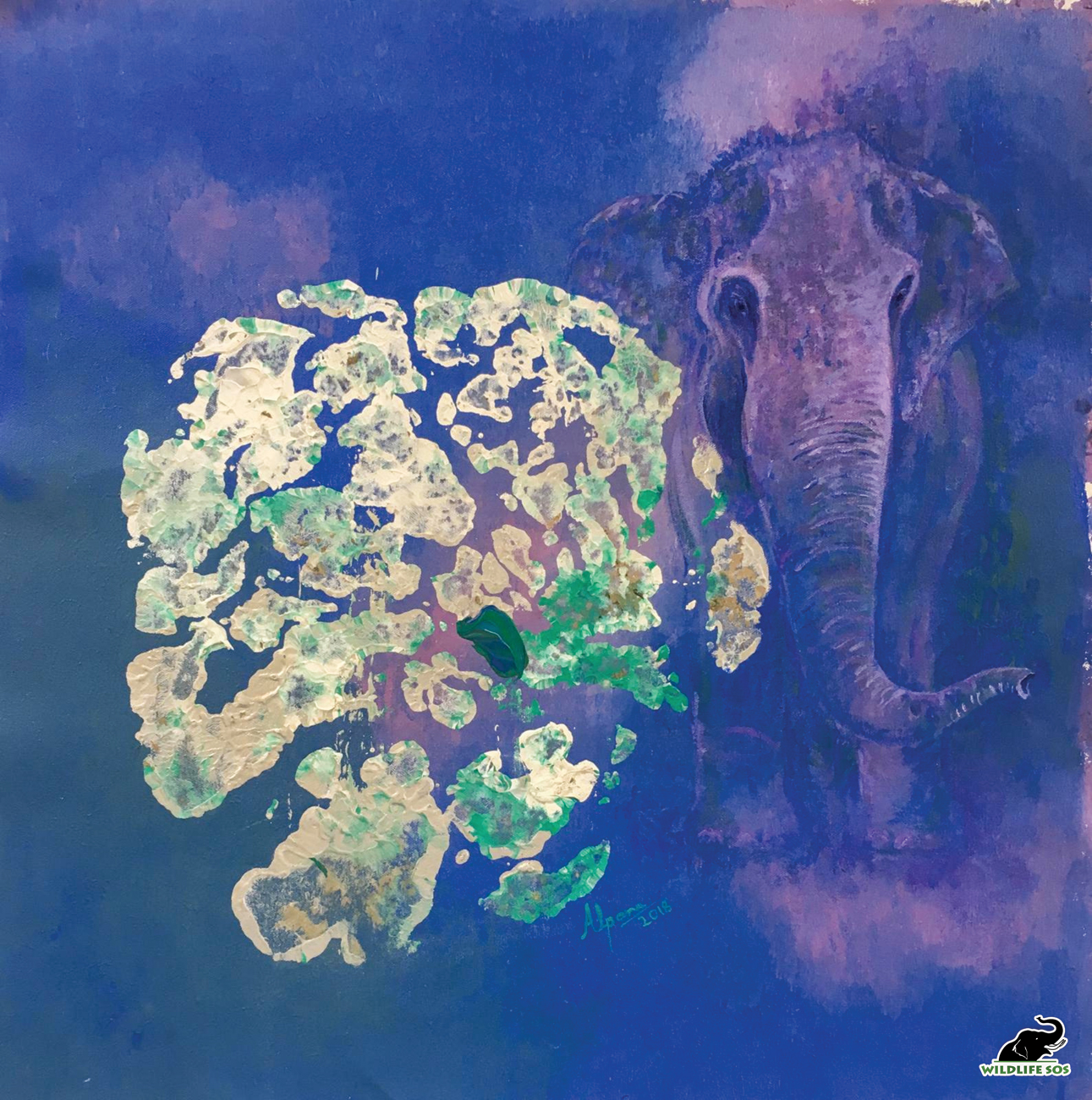
Padhchinh artwork featuring the footprints of Wildlife SOS elephant rescues, also showcased in their ‘Bid to be Wild’ auction. Photo: Wildlife SOS.
Established in 1995, Wildlife SOS is India’s largest wildlife conservation organisation, with over 15 rescue centres for wildlife such as elephants and bears, and India’s first elephant hospital and four rapid response units.