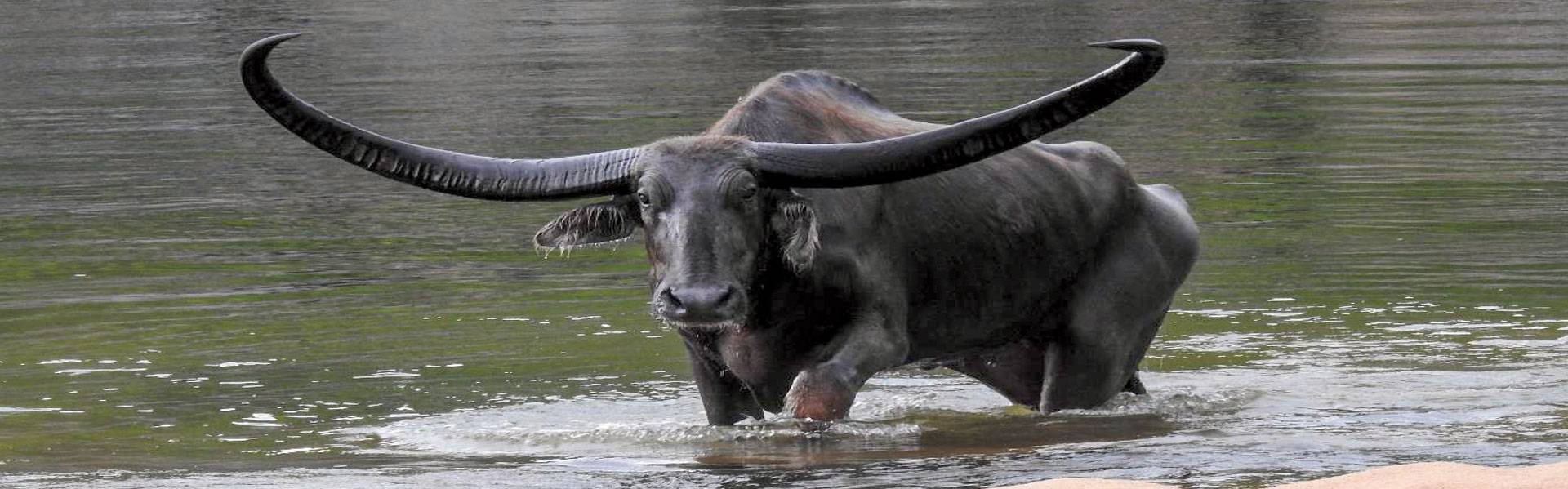
Protecting Central India’s Wild Buffalo
First published in Sanctuary Asia,
Vol. 46
No. 10,
October 2026
Meet M. Suraj
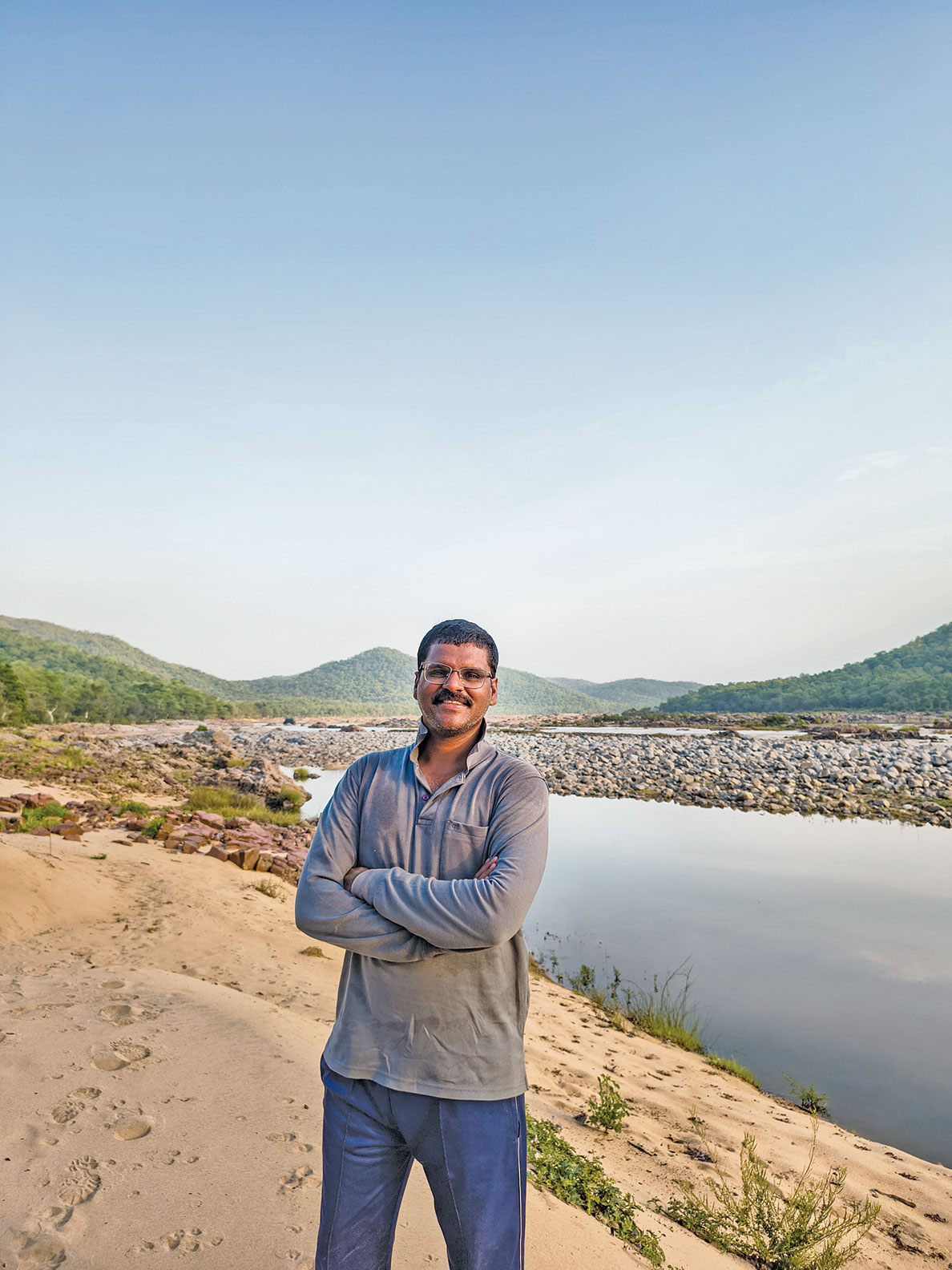
In Chhattisgarh's forests, Nova Nature Welfare Society is surveying its vast wilderness to understand the state of its wildlife, focusing on the endangered wild buffalo, with support from the Wildlife Conservation Trust (WCT)-BEES grant. M. Suraj, Founder President, shares their journey in this conversation with Raza Kazmi. Photo Courtesy: M. Suraj.
You’ve worked extensively in undivided Bastar. What is the current status of wild buffalo, its distribution and habitat, particularly across the Indravati landscape?
Before we began our work, only two limited BNHS surveys had been conducted in this landscape: the first in 1965, and the second, led by M.K. Ranjitsinh in 2000 which was severely constrained by the Naxal insurgency. It estimated 25 to 30 wild buffaloes in Indravati. We began working in the Indravati landscape in 2018 and found a further decline: around 15 confirmed individuals across three herds, along with a few roving males. This estimate is still constrained by limited accessibility.
The area and habitat use remain broadly unchanged from 2000 – around 100 sq. km. shared between the Indravati Tiger Reserve and the adjoining Kolamarka Wildlife Sanctuary in Maharashtra’s Gadchiroli district. The buffaloes benefited from the landscape’s prolonged isolation during the insurgency, particularly because local communities do not actively hunt them for meat or sport. With the insurgency now largely over, these conditions are undergoing a rapid and fundamental shift.
Other than the wild buffalo, how well are other species doing and what new challenges emerge for conservation?
Based on our observations since 2018, the tiger reserve is biodiverse despite traditional hunting practices. The long decades of isolation of this landscape on account of insurgency may have played a role in this. The forests are vast, and we have found evidence of nearly every animal native to this landscape, ranging from tigers and gaur to mouse deer, otters and crocodiles. Camera trapping revealed tigers, large herds of gaur and sambar, and some of the largest vulture populations in the state. The landscape also supports hornbills and varied avian species.
The forest may not be teeming with large and medium-sized fauna the way some of the more famous central Indian tiger reserves are, but there is enough wildlife despite the Forest Department's limited involvement over the past 40 years. The biggest challenge now is the sudden rush to open up this area for economic development as the armed insurgency ends. A dramatic rise in linear infrastructure – roads and other anthropogenic activity – is already affecting Indravati’s wildlife.
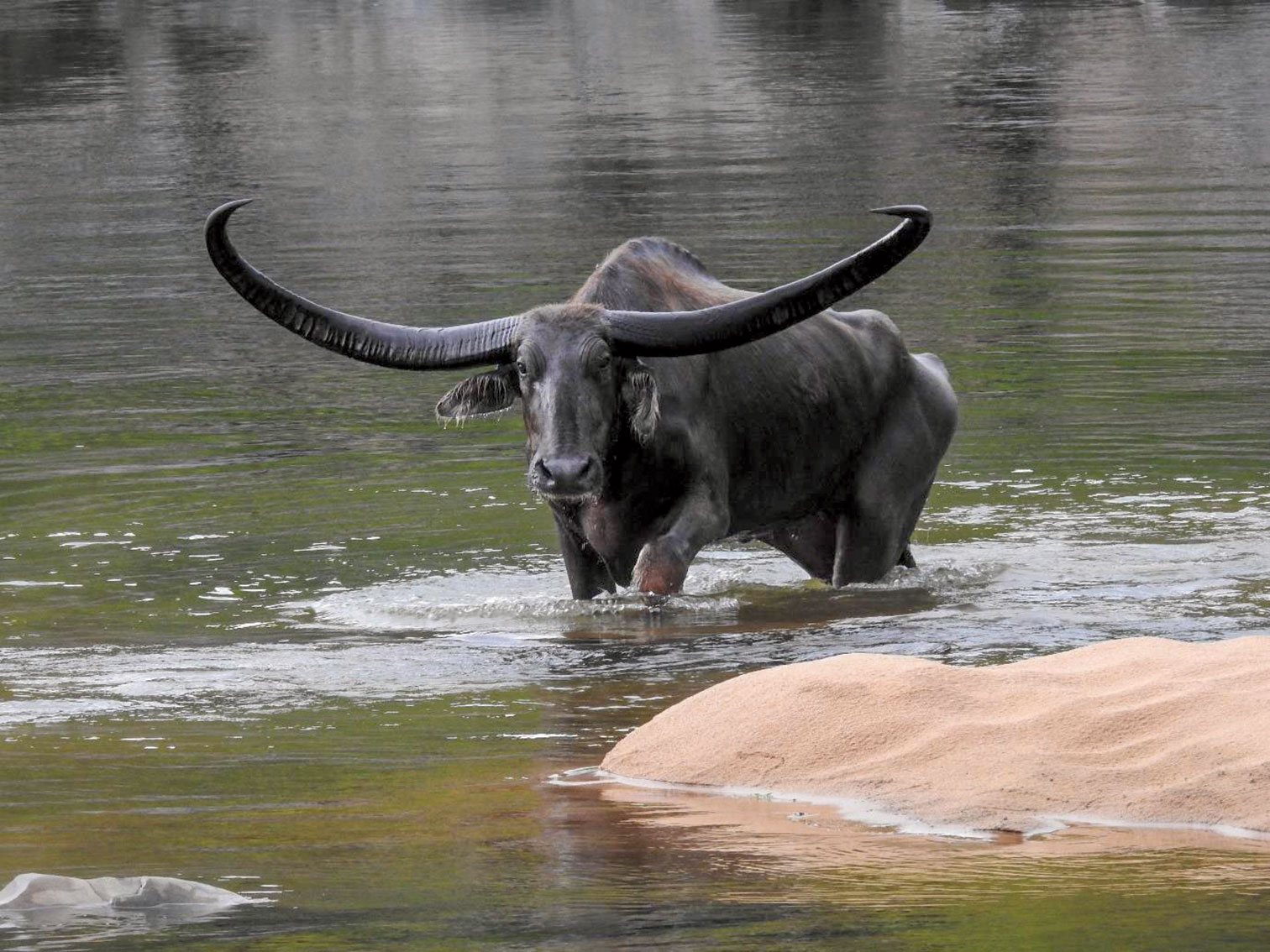
Nova Nature Welfare Society in Indravati Tiger Reserve. Photo: M. Suraj/Nova Nature Welfare Society.
Could the wild buffalo still survive in unassessed forests?
It is too early to say conclusively. We’ve started surveys in parts that haven't been scientifically assessed in decades, and have ventured into areas such as Abhujmarh as some of the first wildlife researchers. Our results show that wildlife, though in low density, is holding on in the region. We're now trying to understand the wild buffalo's habitat through these surveys, and where the herds move during monsoon floods.
Abhujmarh, spanning 3,000 sq. km. across a large part of the tiger reserve and the adjoining forests of Narayanpur district, offers hope for the previously undocumented populations. We’ve met villagers in Abujhmarh who claim to have seen wild buffaloes a few years ago. More surveys will reveal if that's a new population, long-distance migration from a herd we know, or buffaloes that survive in other small pockets.
What is your assessment of the forests of Bastar?
The condition has changed drastically over recent decades. The abundance of wildlife described in colonial accounts of Bastar is no more. The forests are fragmented, and old corridors are dysfunctional. Bastar was a critical link connecting the tiger forests of the Papikonda National Park in Andhra Pradesh with those of Maharashtra’s Navegaon-Nagzira Tiger Reserve and Telangana’s Eturnagaram Wildlife Sanctuary – Indravati and Pamed were the heart of that landscape. Today, resident tiger populations have disappeared from most of old Bastar, except for a small population in Indravati. The planned expansion of linear infrastructure across old Bastar's seven districts will further threaten this connectivity.
Poaching remains a threat too, especially snaring, which traps and kills animals including wild buffaloes. In the past three years alone, five tiger skins have been recovered and one tiger found injured by a snare in the tiger reserve.
Indravati offers hope for revival, and I think the Pamed Wildlife Sanctuary needs equal focus in the coming years. Bastar's Adivasi communities have lived in balance with the biodiversity around them, and that dynamic matters. We need to work with these communities on a sustainable approach – not a clean-break, with coercive action.
How does wildlife in the Kanger Valley National Park compare with the rest of Bastar?
The Kanger Valley NP is one of the most beautiful and picturesque PAs I know, but its wildlife is struggling. Most large mammals are either locally extinct or survive in very low densities. However, the park still harbours rare and endangered species such as the mouse deer, grey wolf, and the state bird of Chhattisgarh – the Hill Myna – but Indravati remains far ahead in terms of mammalian abundance. There's real scope for conservation intervention in the Kanger Valley.
In the Udanti-Sitanadi Tiger Reserve (USTR), what are your observations, particularly for wild buffalo and other large mammals?
USTR is finally on the right path to recovery under its current leadership, which has taken extensive efforts to curb poaching, evict encroachers and consolidate management. But it's a huge reserve pockmarked with villages whose communities depend heavily on the forest, which makes conservation difficult – much of the illegal forest and wildlife crime here stems from poverty and a lack of livelihood options. We need innovative solutions, particularly around Minor Forest Produce collection and community-based conservation and tourism. Unfortunately, it's already too late for the wild buffaloes of USTR, with just one old male surviving in the tiger reserve.
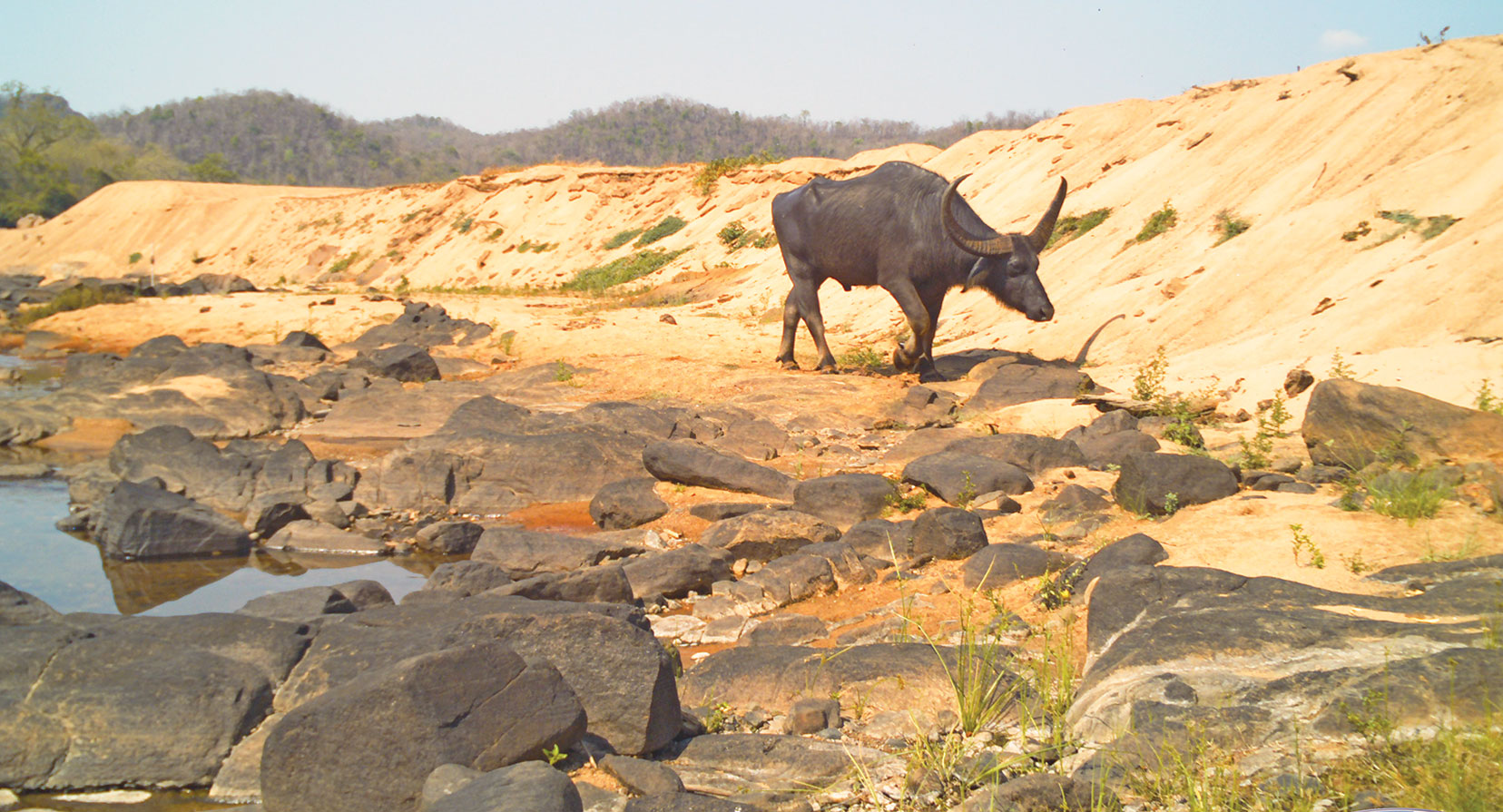
Abhujmarh’s vast, largely unsurveyed forests may still hold wild buffaloes yet to be documented. Photo: Chhattisgarh Forest Department/Nova Nature Welfare Society.
You also work around Korba. How are mining, roads and development affecting its forests and wildlife?
Korba sits at the extreme end of the Maikal hill range, so tigers from Achanakmar and Amarkantak use this landscape. There are also about a hundred elephants in these forests after the first herds moved into Chhattisgarh from Jharkhand and Odisha in the 1980s and 1990s. This relatively newly established elephant population, combined with large-scale mining and infrastructure disturbance, has resulted in severe human-elephant conflict.
Korba often makes news for mining-related destruction and pollution, but half the district is extremely rich in biodiversity – it's the only stronghold of the king cobra in central India, and includes the equally rich forests of Hasdeo, themselves threatened by mining. Even before we've fully documented what's here, the pressure for resources and the expansion of mines, roads and railways threatens to permanently erode what little remains intact.
What is the current scale and nature of hunting in Bastar and Chhattisgarh? Has it changed in recent years, and which species face the greatest pressure?
Traditional hunting practices, especially communal hunts, have been part of the cultural milieu of Adivasi communities in Chhattisgarh. It has been documented extensively by anthropologists. In the past, the villages were small and scattered, and wildlife was abundant. That is not the case anymore. Populations have risen dramatically, and wildlife numbers
have plummeted.
Earlier hunting was done using bow and arrow, spears and primitive traditional traps. Now, however, hunters resort to snaring with wire traps, leg traps, electrocution wherever electric supply is handy, poisoning and even country-made bombs, which are particularly brutal. The sheer scale of communal hunts often transforms a traditional cultural activity into a mass killing spree. Deer species, medium-sized mammals, and even gaur are the usual casualties. All these are the primary causes behind the local extinction of large mammalian fauna across many forests of old Bastar.
What has been the actual impact of the Naxal insurgency on Bastar’s wildlife? Did limited access aid recovery in some areas, or increase pressures such as hunting?
The insurgents were never concerned with wildlife conservation, but one unintended consequence of that era was the near-total isolation of this vast forested landscape from outside influence, especially the ingress of large-scale infrastructure development. The lack of access and enforcement did constrain efforts to check bushmeat hunting and some poaching, but the isolation also kept outside commercial forces at bay, and let animals survive deep within the landscape – this was especially true for Indravati's wild buffaloes. So the impact of insurgency is a mixed bag.
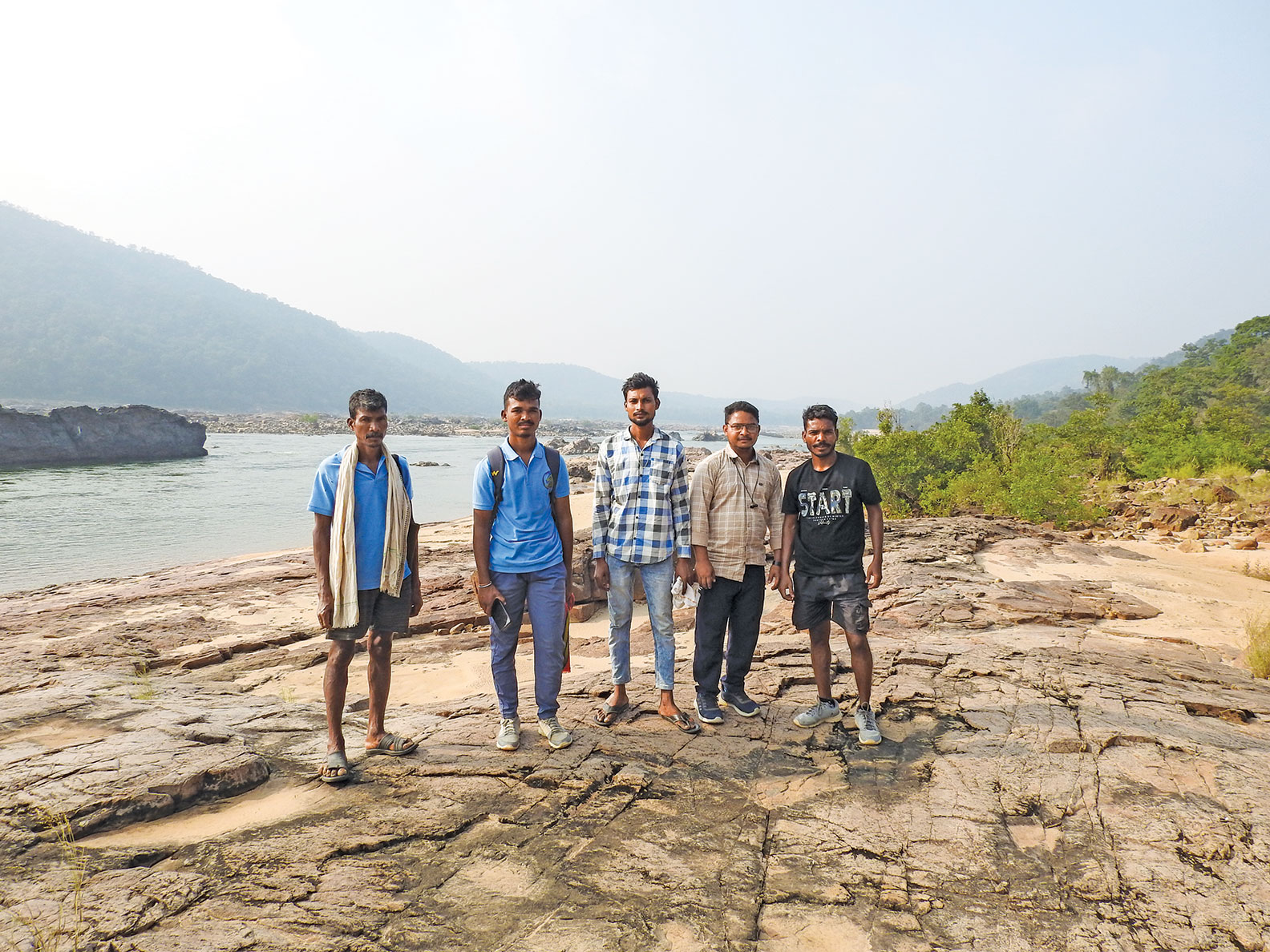
Nova Nature Welfare Society has been actively engaging local communities in the conservation of wild buffaloes in the Indravati landscape. Photo: M. Suraj/Nova Nature Welfare Society.
As access improves, is this a conservation opportunity or a threat?
Both. Improved security is opening up dramatic new access to these forests, which does present a window for research and conservation. But it also carries a real risk of cataclysmic destruction and disrupted corridor connectivity, given the breakneck pace of the infrastructure push across old Bastar – especially roads being built with little consideration for forests or wildlife.
At the same time, communities are wary – not just of this sudden influx of outside interests, but of conservationists and the Forest Department too, fearing coercive measures in the name of conservation, especially around the Indravati Tiger Reserve. We need to allay those fears and make communities partners and stakeholders. That's the only way to turn wildlife's fortunes around as the era of isolation ends, and to make conservation here sustainable in the long term. This is a very delicate time in Bastar's conservation trajectory.
How has Nova Nature Welfare Society evolved, and how has the (WCT)-BEES grant strengthened its work? Any advice for larger conservation NGOs?
The Nova Nature Welfare Society was established in 2004 with the sole aim of conserving wild buffaloes in Chhattisgarh. From 2012, the Society expanded its mandate around three key areas: scientific research to understand conservation issues; evidence-based planning and implementation of conservation action, independently or with other agencies; and, most importantly, conservation awareness and community mobilisation, enabling local communities to become stakeholders in the future of their landscapes.
Beginning with snake rescue and scientific studies of Chhattisgarh’s reptiles, the Society has since expanded its work on tiger estimation and rescue, human-wildlife conflict mitigation (particularly in elephant-dominated areas), king cobra conservation, and work on other rare and threatened species. It has published books and several scientific publications. Its rescue teams are active across eight districts and have conducted more than 35,000 rescue operations over 14 years. The Society also contributes to policy-making by serving as an advisory body to the state Forest Department.
Soon after we began working in Indravati, we realised that monitoring and conservation of this species would be impossible without community mobilisation. Wild buffalo terrain is extremely difficult and extensive, and the lack of familiarity with this landscape prevents outside agencies or Forest Department staff from effectively monitoring or working in such areas. The solution was community monitoring teams trained and equipped to track, monitor, and collect data on wild buffaloes, as well as creating awareness among other villagers within the landscape. We have identified and trained about 30 individuals from six remote forest villages in critical buffalo habitat. The (WCT)-BEES grant is the backbone of this entire exercise. Of the 30 identified people, 10 are now being considered for formal long-term employment by the management of the Indravati Tiger Reserve under its 'Van Bhainsa Mitra' (Friends of Wild Buffaloes) programme. WCT is showing the way on how larger conservation NGOs can help in places such as Bastar by collaborating or supporting grassroots NGOs by providing funding support.
Writer and wildlife historian, Raza Kazmi is a Conservation Communicator with the Wildlife Conservation Trust, Mumbai. His field of expertise includes the wildlife history of India, conservation policy and issues unfolding in India’s ‘Red Corridor’ landscape.