On the Fence in the Dooars
First published on
July 11, 2026
By Priyanka Das
On the night of April 28, 2026, while I was asleep at Daju’s (elder brother) house in Panijhora forest village, I heard the dogs barking relentlessly and I wondered if the elephant had come. In no time, the sound of crackers followed, and my suspicions were confirmed. The pachyderm must have entered the recently planted gua bari (areca nut plantation), I thought. However, despite the commotion, my sleep-laden mind did not let me leave my bed to open the door or window to peep outside.
The next morning, aroused by the cluck-clucks of the chickens around 5 a.m., I called out for Bhauju (elder brother’s wife). I hoped that nothing too unfortunate had gone down last night. Bhauju said the elephant had broken the solar fence and entered the gua bari and destroyed a few plants. I sighed with some relief.
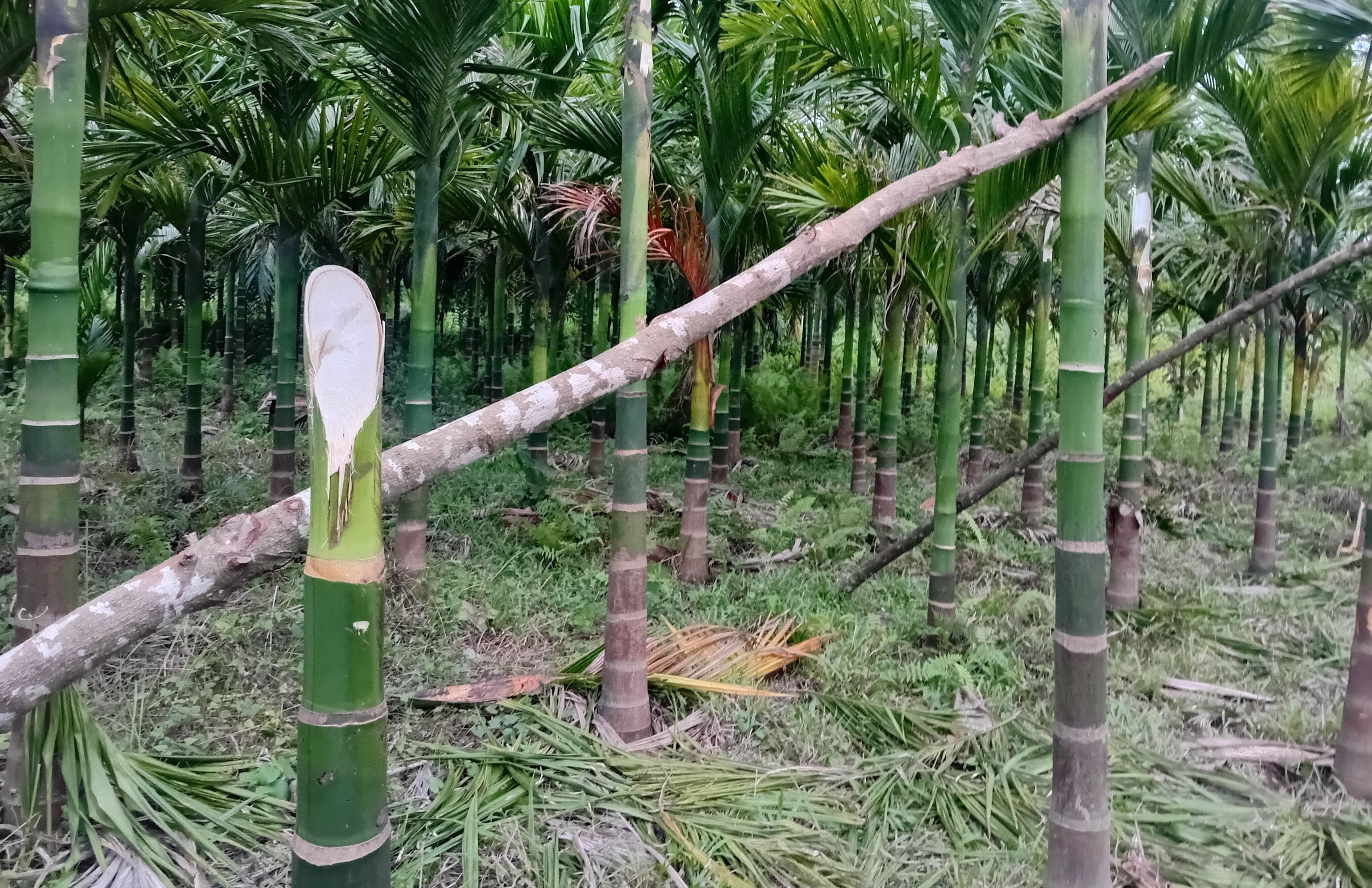
An areca nut plantation damaged by the elephant. Photo: Priyanka Das.
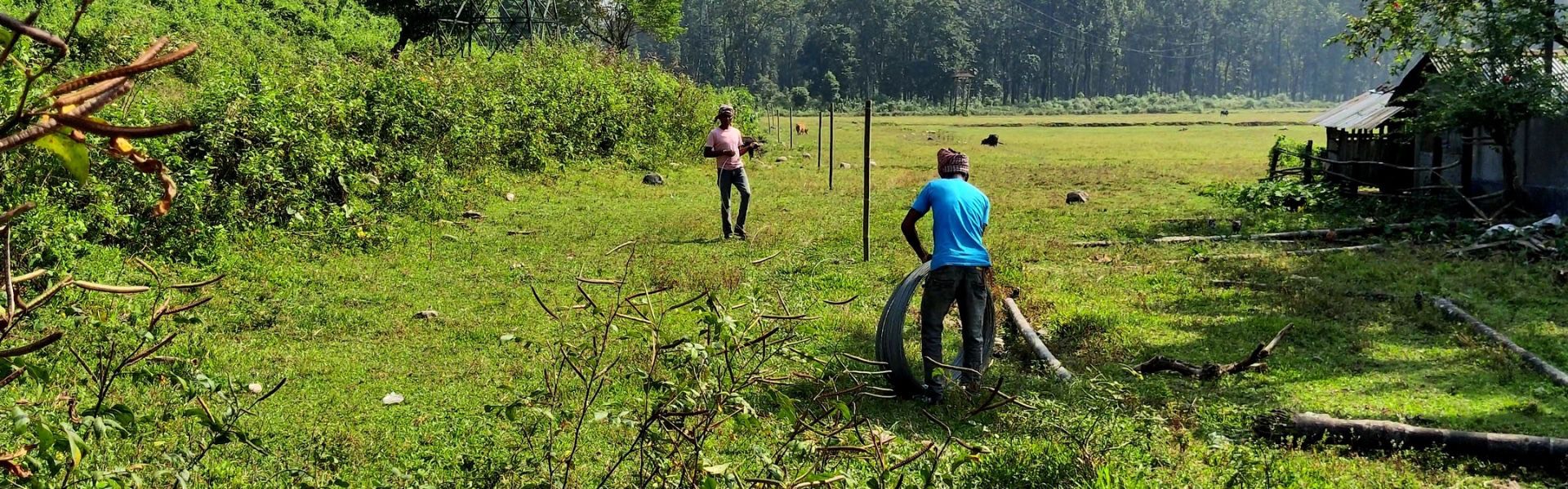
The implementation of the solar fence had once required great effort. Panijhora is bordered by the Chapramari Wildlife Sanctuary, reserved forests of Jalpaiguri division, the Murti river, and a national highway. This fence was spearheaded by Panijhora’s Amir Kumar Chhetri, with support from various organisations, individuals, and the state Forest Department. The solar fence was co-designed with the community, and is currently owned and managed by the community. It has the reputation of being a successful replicable model in the landscape. The journey of the fence has been documented in a film by Green Hub and Sanctuary Nature Foundation (https://youtu.be/PK0FboZ9gHI?si=BtdgQjAF0-R6GNLH), which was later screened in other villages to inspire people.
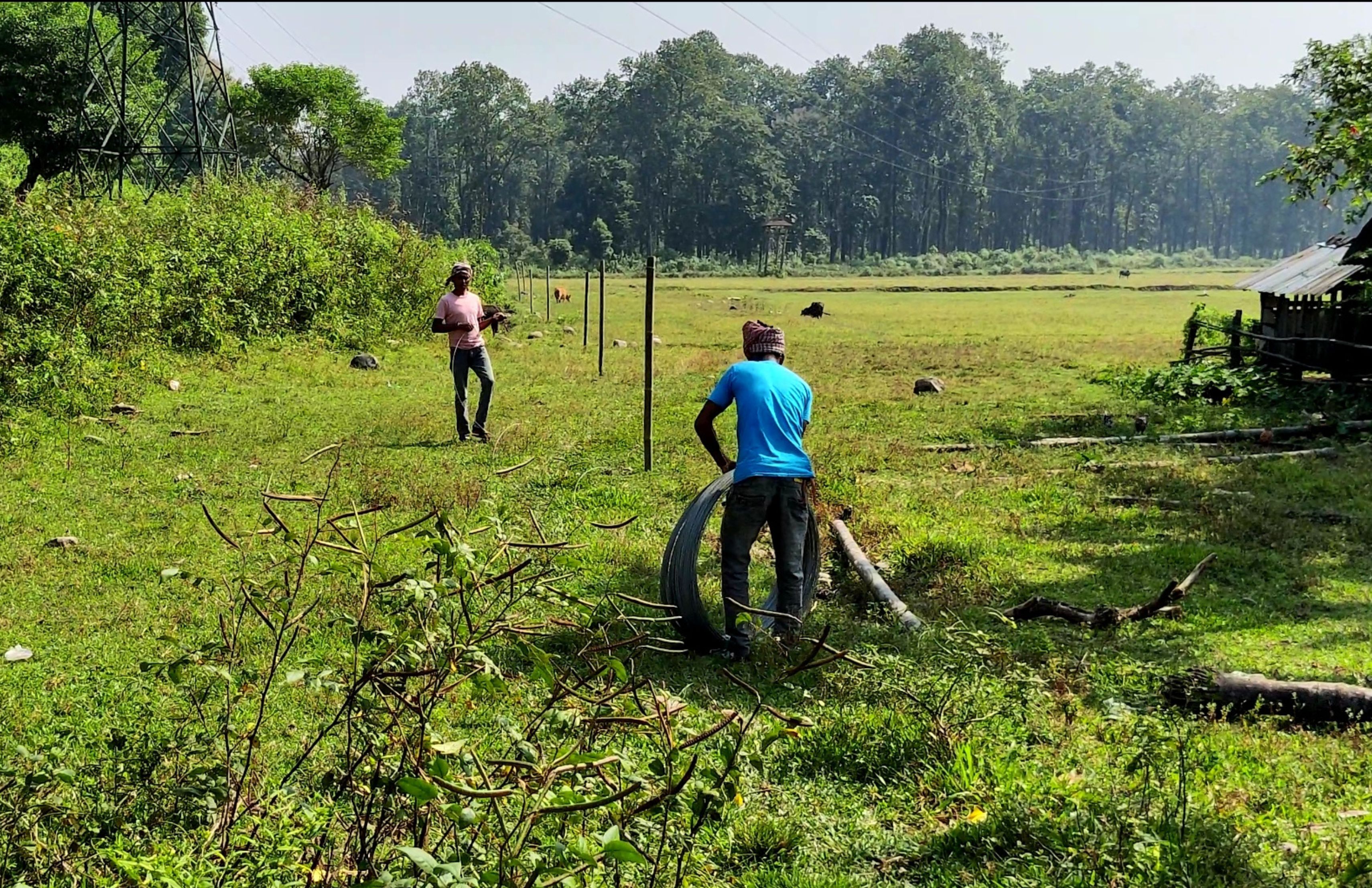
The solar fence in Panijhora forest village. Photo: Priyanka Das.
The solar fence stood strong in the aftermath of the COVID 19 pandemic, when migrant labourers returned and agriculture became the primary source of sustenance. Communities attempted the use of electric wires to protect their crops and deter the elephants with no intention of killing it. Unfortunately, it caused 12 elephant deaths across the Dooars owing to electrocution. Amir visited these villages and shared the model used in Panijhora along with the willingness to provide all kinds of technical support. Today, Panijhora’s neighbouring village has a solar fence funded by a different organisation, and stands successful following the same model of community management.
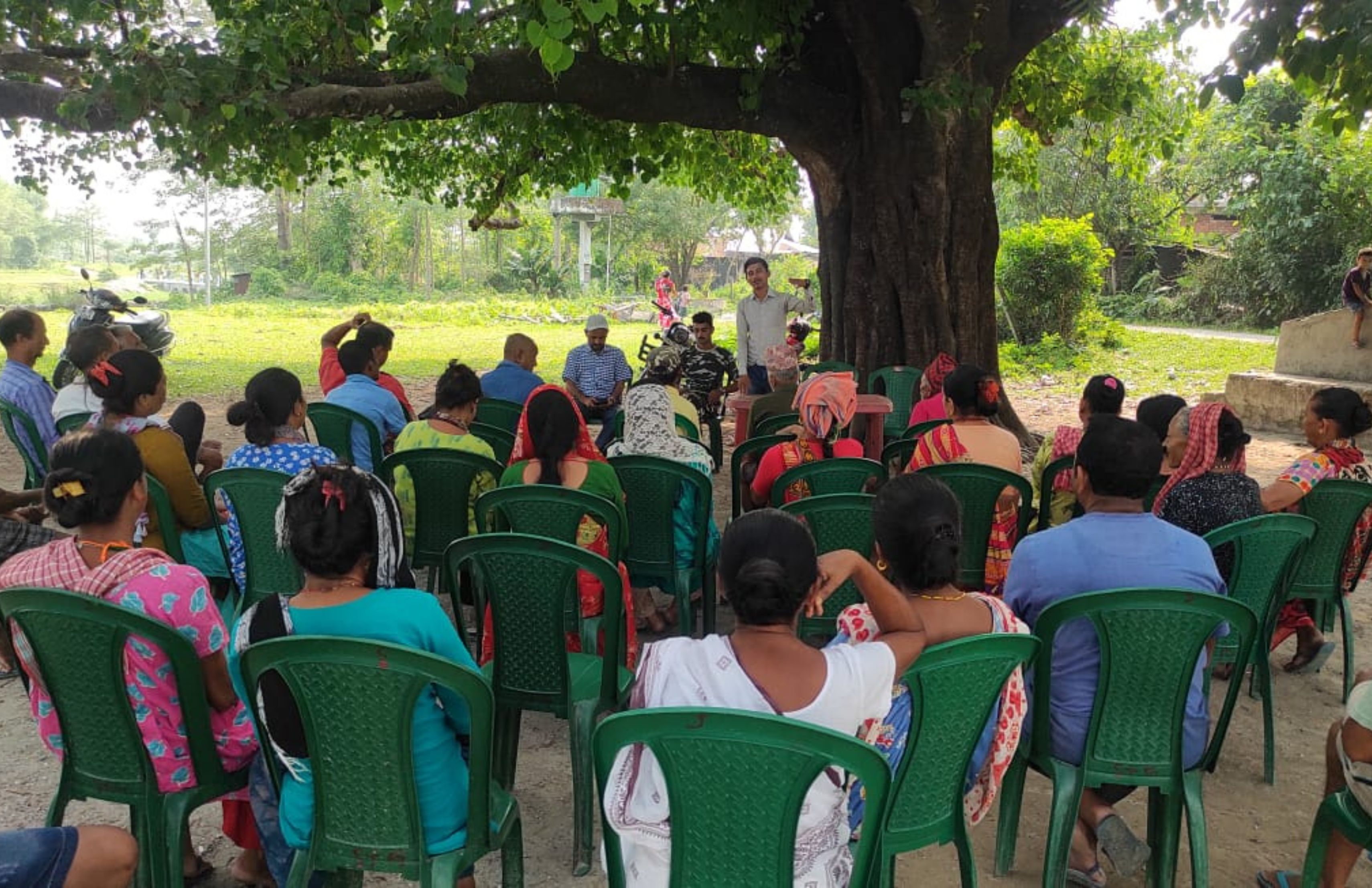
Awareness talks about the solar fence by Amir, in collaboration with the state Forest Department. Photo: Priyanka Das.
Facing the Mirror
Once fully awake, I reminisced about a decade ago, in April 2016, when I was doing my BSc in Christ University, I had come to the Dooars for an internship with a PhD scholar studying ant-bird interactions. As the scholar had her field station in the defunct school in the forest village (currently used as the health centre), I was staying in Panijhora. I remembered how we had to fetch water from the well. Eventually, the village began getting tapped water twice a day. Recently, with the money received from the Eco Development Committee, the villagers themselves built a channel to obtain the water from Chapramari Wildlife Sanctuary, and today running water is available throughout the day. A plethora of developments have occurred in the village over a decade, but their reality of sharing space with wild animals remains unchanged.
Ten years ago most houses grew maize. On my very first night, a bull elephant had entered the village. That young girl who had never seen anything similar, ran to stand with the villagers beating tins, making noise and bursting crackers. I remember the rush of thoughts and emotions. Over the years, these experiences and realities have completely broken and rebuilt me. Ten years later, I am stunned at how immune I have grown that the previous night I felt no anxiety or urgency of action. Today I know how risk-laden elephant chasing is, and that it is not advisable to step out and make a crowd if one isn’t actively helping in driving the elephant out.
There was a time when I desperately wanted to do something for this village that had adopted me, nurtured me and taken care of a young girl with utmost care and love. I wanted the solar fence to be successful as my gratitude for each and every village resident. When an elephant broke the fence in last year’s paddy season and attacked Kancha (Tamang) Kaka, who died, absolute helplessness ripped every inch of my heart. Kancha Kaka was a huge force behind the success of the fence, he was one of the two villagers who maintained the fence every day, clearing the undergrowth, fixing portions and taking care of all repairs. I met Kaki (Kancha Kaka’s wife) soon after my return to north Bengal, and her incessant tears held a critical mirror to conservation interventions. Kaki said that the misfortune was written in Kaka’s bhagya (destiny) and hers too, and did not blame the elephant. I struggled to hold my tears back as she kept her head on my shoulder; I had no words to console her. I felt guilty and hopeless.
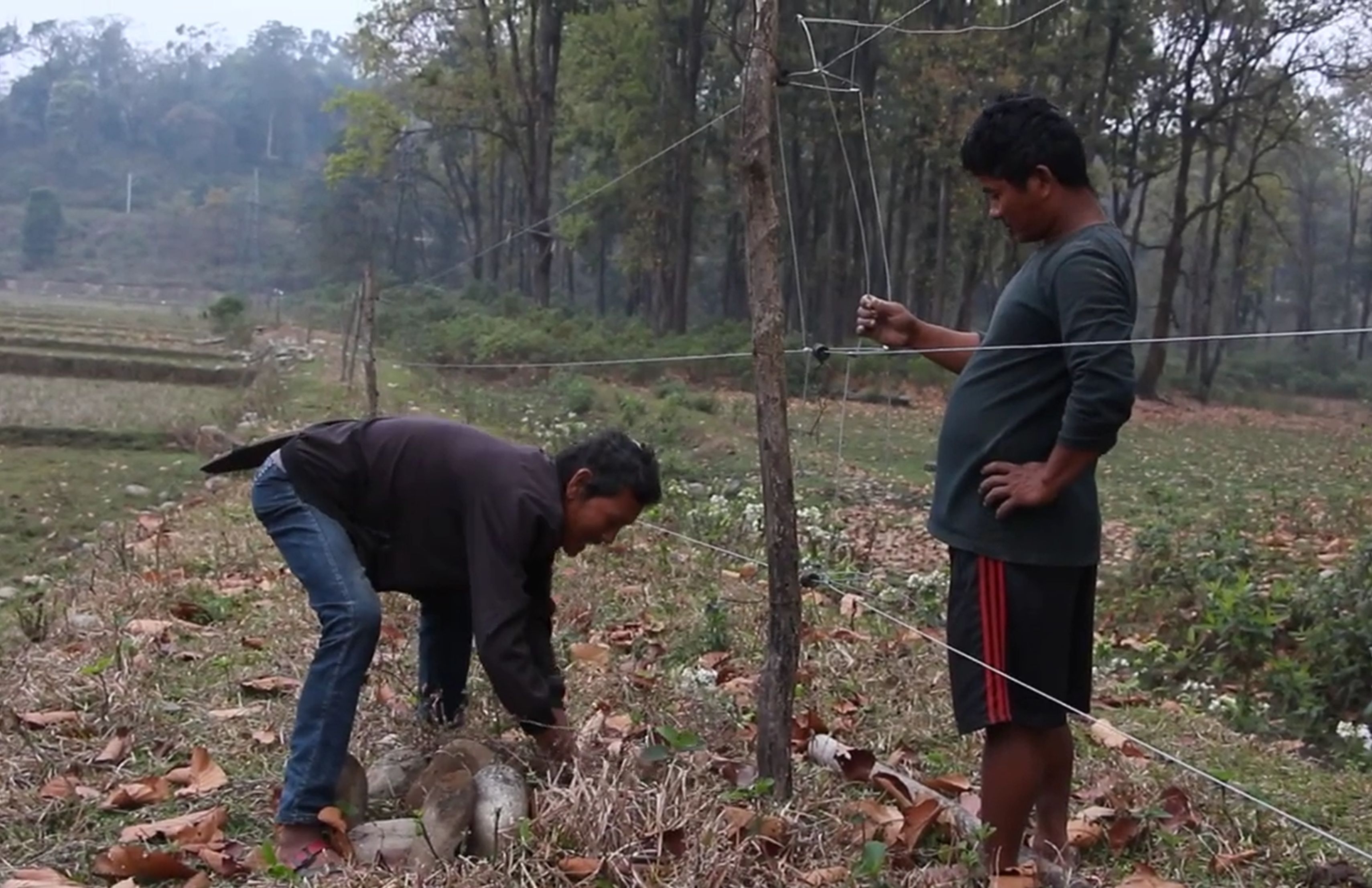
Kancha Tamang fixing the solar fence in Panijhora. Photo: Green Hub India.
Kaki shared that he hardly went to the tong (watch towers to guard crops), but chose to go that day but decided to leave while it was still dark. Normally, the villagers sleep in the tong and return home in the morning. They did see the elephant but it was far away in the forest but in no time, it broke the fence and began chasing them! Although Ramesh Daju (a villager accompanying Kaka in the tong) could outrun the elephant, Kaka, who had one injured leg, could not, and was attacked just when he was about to enter his home. Kaki kept repeating that this accident was written in his destiny, but did not once mention anything negative about the elephant or curse the animal. If this acceptance of reality is not coexistence, then what is?
The fence is still functioning; the villagers are contributing money every month, and there are two new people designated to maintain it, probably because the villagers perceive the fence to be effective against wild pigs and chital, which cause significant losses to paddy. However, the peace that the residents of Panijhora felt since the erection of the solar fence in October 2021, is missing. The children fear going to each other’s house or playing on the road after nightfall, people are hyper vigilant, and there is a reluctance in putting effort into agriculture. It must be noted, that Panijhora is also a village where incidents of human casualty are extremely rare, despite the high frequency of elephant visits, owing to the mindfulness of the residents.
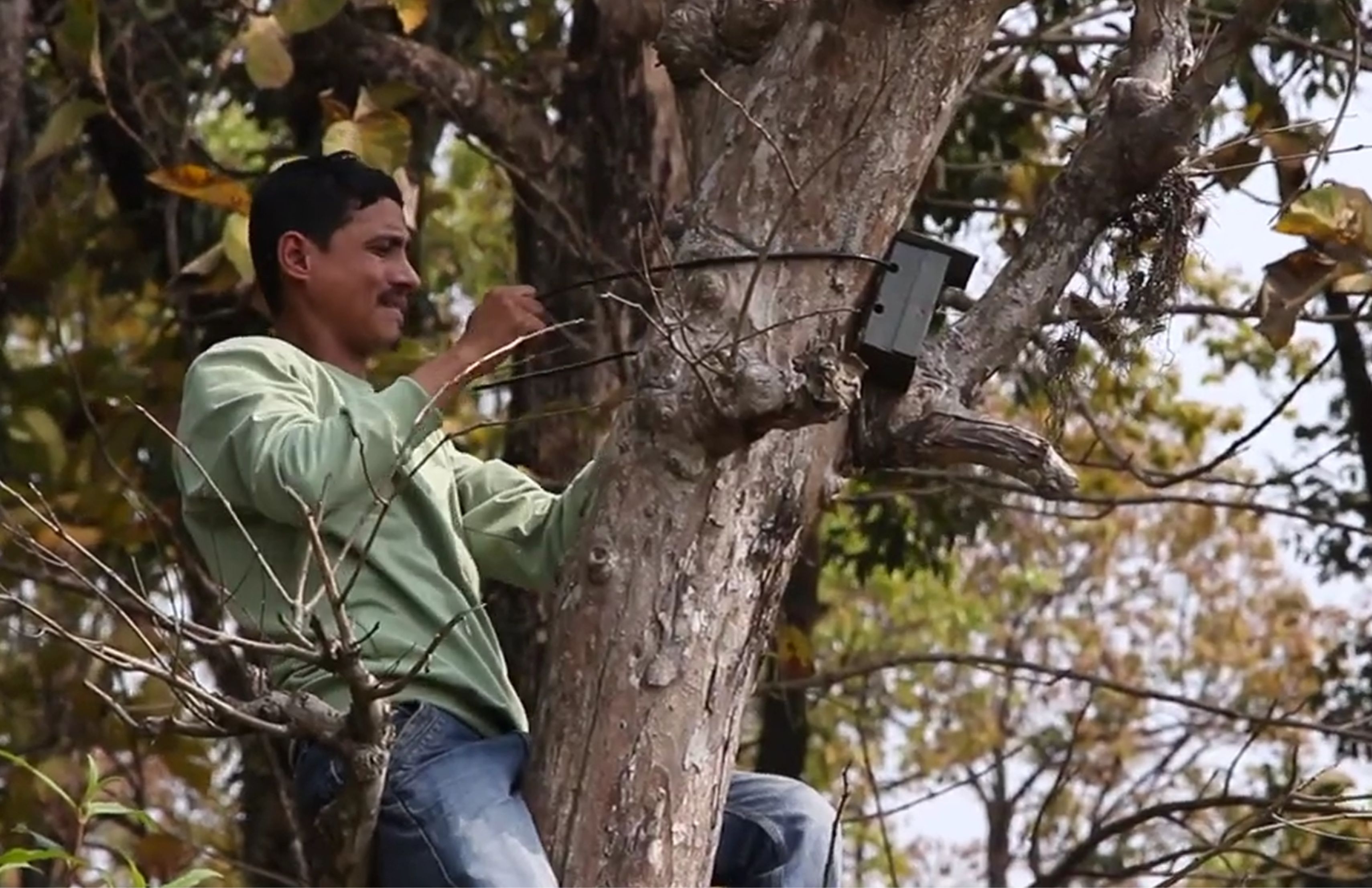
Amir Kumar Chhetri installing camera trap to monitor the efficacy of the fence. Photo: Green Hub India.
On the Fence
Call it an accident, a misfortune, or human-elephant negative interaction or conflict, Kancha Kaka’s death has forced me to reflect deeply on conservation interventions. As conservation scientists or practitioners, we must be extremely careful and honest while reporting on the effectiveness of any project, even in site specific context. Initially, the efficacy of the fence was constantly monitored and the design was modified accordingly. Although the fence was initially effective in stopping the elephants, the breaching incident that killed Kancha Kaka clearly shows that the solar fence is completely ineffective when it comes to deterring the elephants. Our data from the initial years or the breaching incidents reported by the villagers’ points to the same truth. Therefore, we must collectively take responsibility, probably far greater than success, in reporting limitations or failures.
It is natural, especially while dealing with highly intelligent and adaptive animals such as elephants, that the true effectiveness of any conservation intervention will only be understood at a later stage. The participatory approach indeed makes the solar fence stand the test of time, but it fails to stop elephants from undertaking their high-risk-high-gain strategy of feeding on palatable crops such as paddy or maize.
Should I consider the solar fence a success for the years of psychological security it provided to the villagers, along with some protection to their crop yield and being an inspiration for other villages? Or should the present reality make me declare it ineffective in mitigating human-elephant negative interaction? I am on the fence.