Eastern Vidarbha: A Tryst With Destiny
First published in Sanctuary Asia,
Vol. 45
No. 12,
December 2025
By Rushikesh Chavan
In the heart of Maharashtra, where dry teak forests meet shimmering wetlands, a quiet revolution is taking shape. It’s not powered by factories or glass towers, but by bamboo shoots, native grasses, and the resilience of rural communities. Eastern Vidarbha, long seen as a ‘lagging’ region, is being reimagined as the cradle of a regenerative economy, where nature is not exploited but partnered with.
The Green Frontier
Maharashtra has set its sights on a bold future – a trillion-dollar economy by 2030, and five trillion by 2047. To reach these lofty targets, the state must grow fast, but also wisely. That wisdom, planners now believe, may come from the forests and farmlands of Eastern Vidarbha: the six districts of Wardha, Nagpur, Chandrapur, Gadchiroli, Gondia and Bhandara.
For decades, this part of the state has been a study in contrasts: rich in biodiversity, poor in income. Agriculture here is largely rain-fed and uncertain. The average farming household earns around Rs. 8,500 a month – barely enough to survive, let alone thrive. Migration to cities is common, and local economies are fragile.
Yet, beneath this surface lies extraordinary potential, with an abundance of forests, water systems, and grasslands that provide life-sustaining ecosystem services. Can these natural assets become the foundation for a new kind of prosperity?
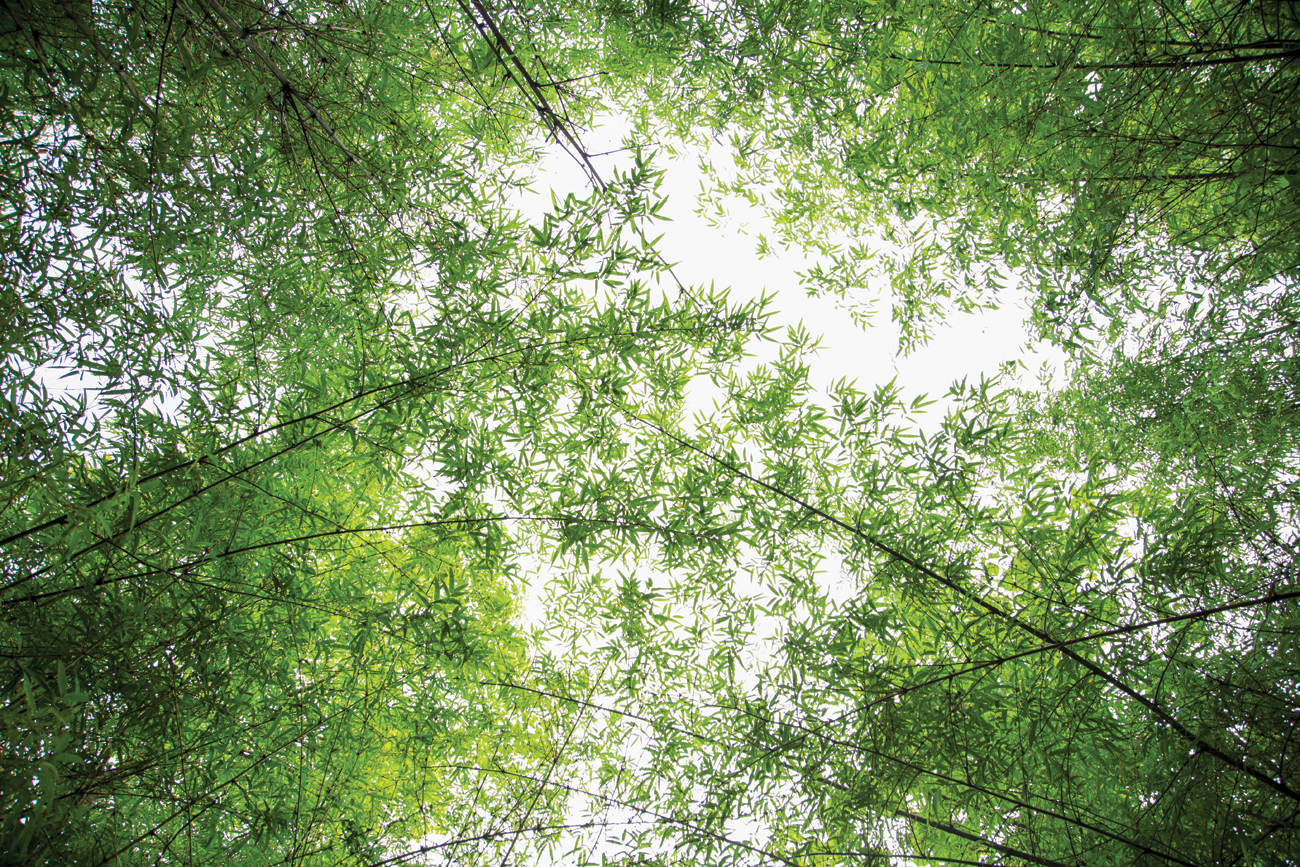
Bamboo once air-seeded in the forests of Vidarbha reduced floral diversity; today, the same bamboo, when planted in agricultural fields, can enhance landscape connectivity and support economic growth. Photo: Saurabh Sawant.
Beyond Industrial Imitation
We studied this challenge deeply at The Habitats Trust. Our development blueprint for Eastern Vidarbha rejects the old formula of transplanting industries into rural landscapes. Instead, it proposes a two-pronged strategy that marries human well-being with ecological restoration.
Building Foundations: Public Goods and Human Dignity: Access to reliable electricity, schools, healthcare and internet connectivity forms the first pillar. Economic mobility begins with quality of life, not simply jobs, but opportunities.
The Nature Asset Company: Turning Ecology into Enterprise: The region’s second and more transformative step is the creation of a Nature Asset Company (NAC) – a for-profit yet planet-positive enterprise designed to regenerate and monetise Eastern Vidarbha’s natural wealth.
Under this model, forests, grasslands and farmlands are treated as living assets. Their services, from carbon sequestration to water retention, from biodiversity conservation to cultural tourism, are recognised, restored and rewarded. The NAC will coordinate local cooperatives, attract investment, and link ecological stewardship with sustainable incomes.
The Business Of Regeneration
The NAC’s work will unfold across several green value chains –
Agroforestry with Bamboo: Often called ‘green gold’, bamboo grows quickly, enriches soil, and provides farmers with reliable income when managed at scale.
Fuel and Fodder: Native grasses can be transformed into biofuels and high-quality livestock feed, reducing pressure on forests.
Forest Foods: Local produce such as mahua, chironji and wild fruits will be processed and marketed, giving new life to traditional food systems.
Ecotourism: Community-based tourism will celebrate the region’s wild heritage – from tiger corridors to tribal traditions – while ensuring benefits stay local.
Carbon and Biodiversity Credits: As global markets for climate and conservation services mature, the NAC will position the region to benefit from them.
Nature’s Blueprint
Eastern Vidarbha is a landscape of immense ecological complexity. Its southern tropical dry and moist deciduous forests shelter nearly 2,000 plant species. Ancient geological formations, over three billion years old, shape everything from soil chemistry to water flow. Yet, many of these ecosystems have been degraded by decades of extraction such as teak logging, unsustainable bamboo harvests, and unplanned agriculture.
Restoration, then, is both an ecological and an economic opportunity. Scientists have mapped more than 3,900 villages near forested areas, wildlife corridors, and savanna mosaics, where regeneration could begin. The plan is phased and deliberate: starting within 10 km. of existing Protected Areas, then expanding outward.
Every planting decision will be guided by ecology; for instance, grasses where savannas belong, and trees where woodlands once stood. The aim is to revive the living fabric of the land.
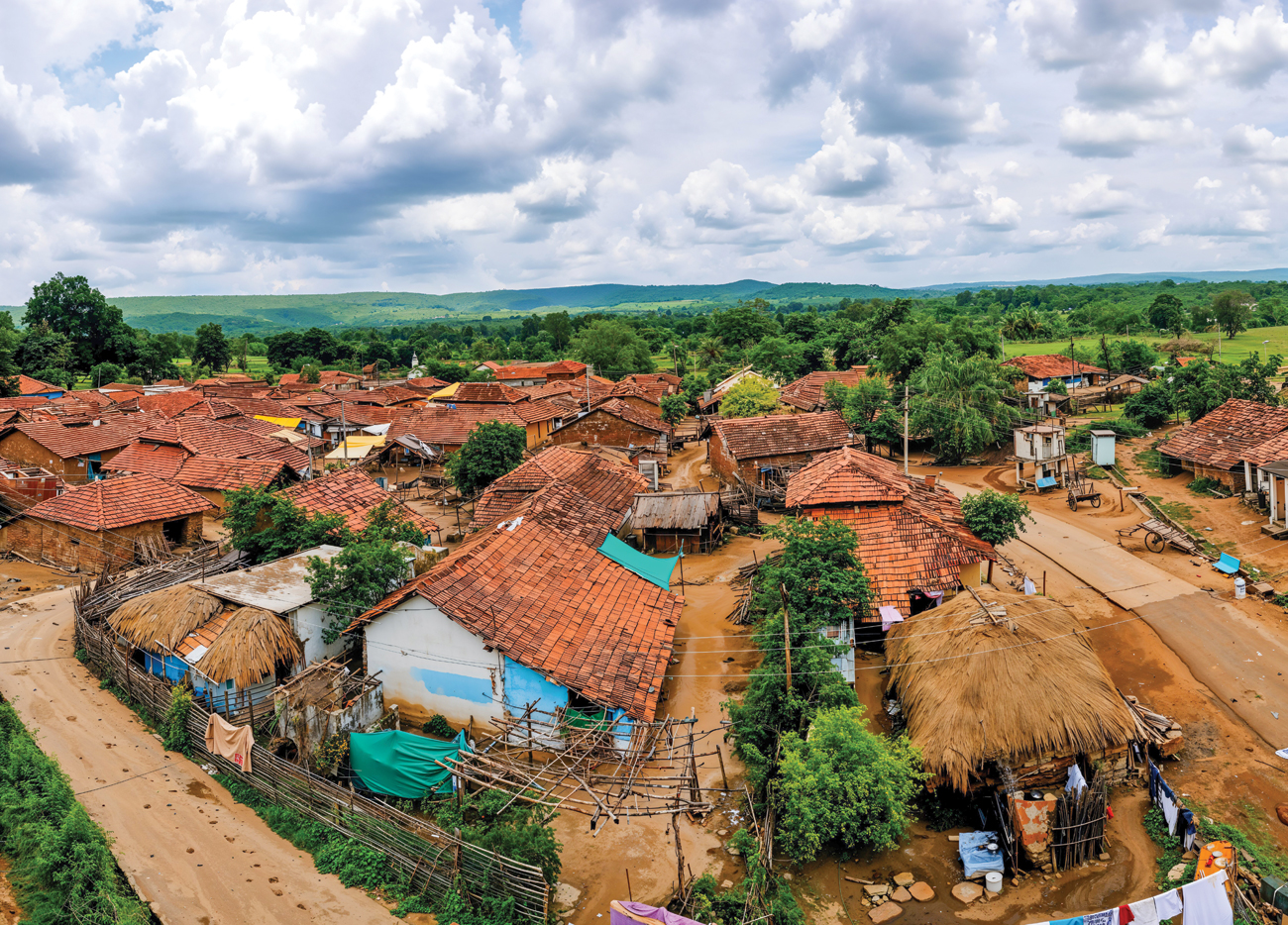
A mosaic of villages, farms, and forests such as this makes up much of Vidarbha’s landscape, reflecting both the region’s economic reality and its natural capital. Photo: Parthamesh Shirsat.
Shifting Minds, Not Just Markets
Change at this scale is as much psychological as it is economic. I understand why farmers are cautious – trees take years to mature, while crops promise quicker, if uncertain, returns. To help ease this transition, the plan leans on subtle behavioural interventions, framed as Social Norm-based Empirically Discovered Local Nudges (SNEDLoN).
In practice, this means:
Leading by example: Highlighting and celebrating local ‘champion farmers’ who adopt agroforestry and prosper.
Communicating benefits: Speaking the language of the land – healthier soil, steadier incomes, and fewer failed crops.
Simplifying systems: Making subsidies, permits, and quality seedlings easy to access.
Setting smart defaults: Integrating agroforestry as the standard option in government agricultural schemes.
As confidence grows, adoption is expected to follow a natural cycle from large landholders willing to take early risks, to medium and small farmers reinforced by the ‘neighbourhood effect’, where success in one farm encourages others nearby to follow.
A Regenerative Future
In time, the Nature Asset Company could transform how rural India perceives wealth. It redefines prosperity not as the extraction of value from nature, but as the renewal of value through nature.
Projections suggest that after an initial three-year support phase, rural incomes in Eastern Vidarbha could grow at six to seven per cent annually in real terms. But the true impact lies beyond numbers, in restored landscapes, revived biodiversity, and communities that see the forest as their ally, not their adversary.
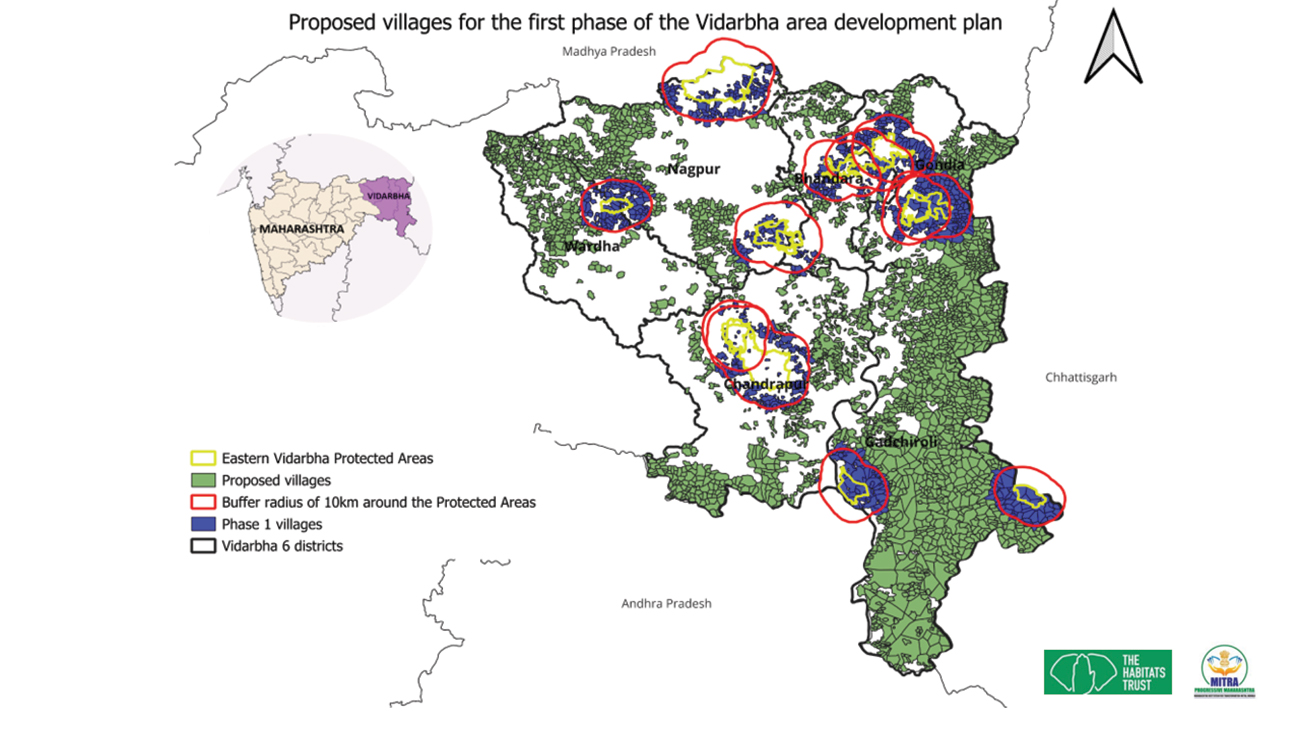
A map of the six districts of eastern Vidarbha showing priority villages located along Protected Areas and zones of green cover. Photo: Mitrahase.
The Heart Of A New Economy
To me, this is more than just a development plan, it's a declaration of our intent and our belief in a different future. We’re challenging the old, false choice between growth and conservation. I imagine an economy where rivers, trees, and people can all thrive together, each strengthening the other. If Maharashtra can nurture this vision, Eastern Vidarbha could stand as living proof that nature isn’t the price we pay for progress, it’s the very ground it grows from. From the forest floor upward, I believe a new kind of prosperity can rise: one rooted in healthy soil, resilient ecosystems, and steady, dignified incomes.
To make this possible, we have to simplify the way people interact with the system, reducing the friction farmers face when trying to access subsidies, permits, or high-quality seedlings. We also need to shift our defaults: imagine if agroforestry wasn’t an exception in government programmes but the norm.
I expect these practices will spread naturally. Large landowners will likely adopt them first, taking on the early risks. As the benefits become visible in their fields and bank accounts, medium and small farmers will follow, encouraged by the powerful ‘neighbourhood effect’ that drives real change in rural communities. And throughout this transformation, the Nature Asset Company will be anchored by existing clusters of related enterprises – furniture makers, food processors, and others – who can give farmers the market connections they need to truly prosper.
What We Expect
When I look at the development potential of Eastern Vidarbha, I see a region where economic growth and ecological stewardship don’t have to be opposing forces. Our plan proposes a new way forward – one that taps into the area’s remarkable natural capital regeneratively, rather than exploitatively. By establishing a Nature Asset Company, we aim to enhance the value and effectiveness of these ecological services so they can truly benefit the people who depend on them.
Rural incomes in the region are currently low and unpredictable, but with this approach, we expect them to rise steadily after an initial three-year period of financial support. In fact, farm incomes could grow by six to seven per cent annually in real terms. For me, this isn’t just about boosting numbers; it’s about creating stable, dignified livelihoods in a region that has lagged behind for too long. Most importantly, this strategy aligns with Maharashtra’s broader ambition of becoming a $5 trillion economy by 2047 – an ambition we believe can and should be achieved in a regenerative, equitable way.
Rushikesh Chavan is the Director of The Habitats Trust.