Defending India: An Ecological Perspective
First published in Sanctuary Asia,
Vol. 46
No. 8,
August 2026
By Shiv Kunal Verma
There are few places left on Earth where one can still watch the planet manufacturing life in real time. Along India’s northeastern frontier, where watershed succeeds watershed, river succeeds river, and one ecosystem seamlessly yields to another, the Earth continues to function much as it always has, governed by water, forests, gravity, and time. Here, the hand of man is present but not dominant. An occasional Indian or Chinese post clings to life amidst an overwhelming wilderness, but it is nature that remains the principle architect, shaping every valley, every river and, once we descend below the tree line, every forest according to rhythms established long before our species arrived.
Stand here for a while, if only in your imagination, and look carefully. Streams tumble from impossible heights before gathering strength and eventually becoming mighty rivers. Glaciated lakes, each a different colour and hue, lie scattered across the landscape like fragments of another world. Forests stretch for miles upon miles, and human settlements become sparse interruptions in an otherwise uninterrupted canvas. Nature does not whisper here. It speaks loudly, and sometimes even bellows, reminding us that this is how the Earth should have been and, in many ways, how parts of it must remain if these vast catchment areas are to continue sustaining life far beyond the horizon.
_C-1300_1786000487.jpg)
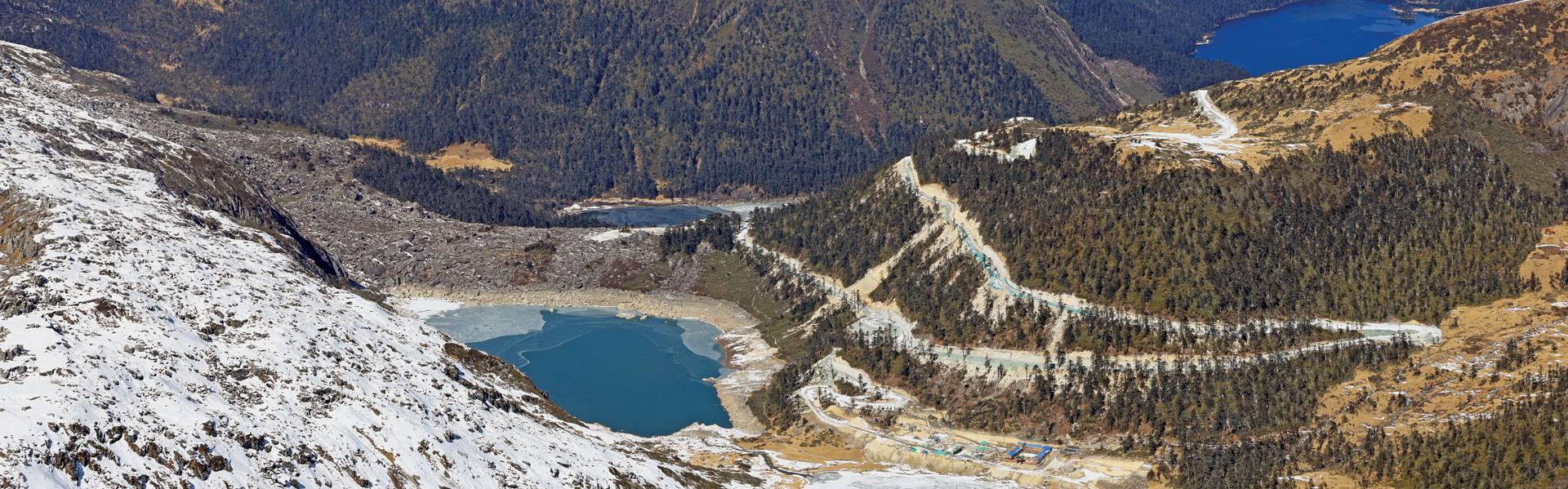
The Gorichen Glacier, descending from the 6,705 m. massif of Sa Nga Phu, lies strikingly bare at the height of winter. The unusual absence of seasonal snow prompted glaciologists to question whether this reflects an exceptionally dry season, a sign of long-term climate change, or a combination of both. Photo: Shiv Kunal Verma.
The McMahon Line
Perhaps I should explain why this article occasionally meanders, for the frontier does that to you. One moment, you are looking at a glacier and the next, you are thinking about the coastal regions of Bengal and Bangladesh, the continental shelves that surround the Indian peninsula, or of a child who may never physically see these mountains and yet whose future will be shaped by them. That is because nothing here exists in isolation. The rivers born in these mountains eventually nourish the plains of Assam, contribute to one of the largest delta systems on the planet, and ultimately influence life thousands of kilometres away in the oceans that surround the Indian subcontinent. The northeastern frontier, in that sense, is not remote at all. It is intimately connected to every one of us.
The McMahon Line itself has acquired an almost mythical status over the decades, often reduced in public discourse to a contested line drawn upon a map. Yet that is perhaps the least interesting thing about it. Running broadly along the great watershed that separates the Tibetan plateau from the river systems that descend into India, it is geography in its purest expression. Politics may have given it a name, but the mountains had already established the logic. Caravans lumbered across the few mountain passes, maintaining tenuous links between the roof of the world and the valleys below, carrying not just trade, but cultural and religious ideas that would eventually shape entire societies.
Others before us had recognised this magic. Frank Kingdon Ward, Captain Bailey and Captain Morshead had themselves ventured into these immense landscapes, often returning with more questions than answers. They understood that the frontier rarely reveals itself fully to any one generation, and that every journey merely adds another brushstroke to a much larger canvas.
My own relationship with these mountains began almost accidentally in 1961 and, over the decades, work and circumstance repeatedly drew me back to this extraordinary corner of India. Looking back, I now realise that those journeys were never the story itself. They were merely preparing me to see the frontier differently.
Perhaps that is the greatest gift that flying bestows upon us. Mountains cease to become destinations, and instead reveal themselves as systems. Rivers are no longer blue lines on maps but living arteries connecting one world to another. Distances collapse, relationships emerge, and geography itself begins to tell a story.
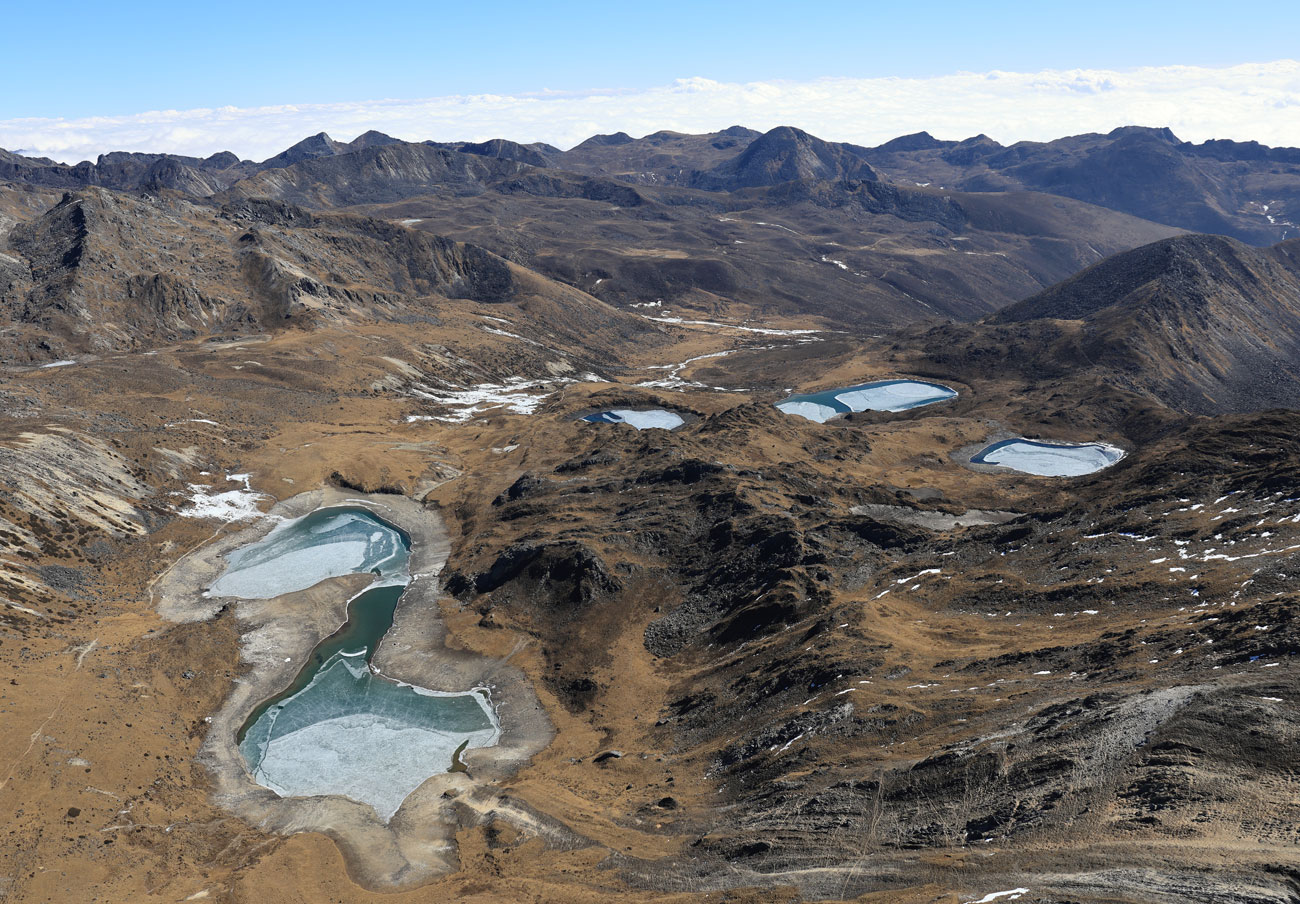
Bailey’s trail skirts Se La before climbing towards Tse La along the watershed separating the Nyamjang Chu from the Kameng basin. Beyond, the divide fades into clouds beneath Gorichen, Kangto and Nyegi Kangsang, where countless streams begin the Kameng’s journey to Assam. Photo: Shiv Kunal Verma.
Uncovering The Protagonist
Between 2008 and 2011, while producing the Northeast Trilogy, I was once again given generous helicopter support by the Indian Army. Yet government directives of the day understandably required us to maintain a respectful distance from much of the actual watershed. We complied, but from my perch in the sky I had already seen enough to know that another story remained untold. Beyond those ridgelines lay something extraordinary and, for the next 15 years, that unfinished chapter quietly refused to leave me alone.
Fate, however, occasionally rewards persistence. Lieutenant General K.T. Parnaik, who had been the Corps Commander at Tezpur during the making of the Northeast Trilogy, eventually became Governor of Arunachal Pradesh, and discussions began on producing three large format books on Western, Central and Eastern Arunachal Pradesh. Once that project gathered momentum, I approached the Chief of Defence Staff, General Anil Chauhan, an officer deeply invested in India’s geographical frontiers, and requested helicopter support so that the story could finally be told in its entirety.
What unfolded during February and March 2026 was nothing short of extraordinary. Over 50 hours of flying time, using both the nimble Cheetah and HAL’s Advanced Light Helicopter, we traversed the frontier from the Indo-Bhutan-Tibet trijunction in the west to the Indo-Myanmar-Tibet trijunction in the east. Yet this is not a story about helicopters. The machines merely provided a seat from which to watch the Earth at work.
Almost imperceptibly, the sorties revealed that the mountains are not the protagonists at all. The rivers are. The mountains merely provide the paper upon which water writes its story.
The Nyamjang Chu river first revealed itself at Khinzemane before being joined by the Nam Ka Chu at the base of the Thagla Ridge, forever etched into India’s military consciousness. The Mago Chu becomes the Tawang Chu before eventually surrendering itself to larger systems further downstream and ultimately becoming part of the Manas basin. Then comes the immense drainage system of the Kameng, known as the Bhairali once it enters Assam, before the Upper and Lower catchments of the Subansiri are assembled by rivers such as the Kurung and Kamey. Further east, the Yargyap Chu and the Siyom gather the melting waters in the Menchuka and Bokar regions before the Siyom, still a haven for golden mahseer, eventually surrenders its identity to the Siang.
It is astonishing to think that until 1935, no one knew with certainty that the Siang was in fact the upper reaches of the Brahmaputra, for the great Yarlung Tsangpo seemed to vanish somewhere near the great bend around Namcha Barwa. For centuries, even Hindu mythology had bestowed the honour of being the principal source upon the Lohit further to the east. Such was the mystery that enveloped these mountains, and perhaps still does. We have become so accustomed to believing that everything has already been discovered that we sometimes forget how recently some of these great geographical quandaries were resolved.
_C-1300_1786000773.jpg)
The vast Dibang basin and its tributaries descend from Andra La and Yonggyap La before surrendering themselves to the Dibang river. The Dri arrives from Aguia La and below stretch the immense forests of the Dibang Wildlife Sanctuary, home to the Mishmi takin Budorcas taxicolor taxicolor. Photo: Friedrichsfelde.
The Wild Green Earth
Then the drama intensifies as human settlements all but disappear. Take the Army out of the equation and a place like Mipi, which dominates maps of the region, is barely a settlement with half a dozen families. As I photograph as much of the terrain as I can, the vast Dibang basin spreads beneath us, its tributaries descending from Andra La and Yonggyap La before surrendering themselves to the Dibang river. The Dri arrives from Aguia La, and below us stretch the immense forests of the Dibang Wildlife Sanctuary, home to the Mishmi takin Budorcas taxicolor taxicolor. Waterfalls seem to descend from every conceivable direction and even beauty, one begins to feel, has to have its limits.
Then comes the Lohit itself, entering India at Kibithu before flowing past Walong and Hayuliang and beginning yet another chapter at Parshuram Kund as it debouches into Upper Assam. Beyond, the geography changes once more. The mountains lower themselves, moisture deepens, and the great forested ridges of the Naga Patkai begin their long sweep southwards. In the Northeast Trilogy, I had once taken the Noa Dehing to be the dividing line between the Assam Himalaya and the Patkai mountains, but that was more a matter of convenience than geography. Almost as if protesting our intrusion, a dozen hornbills explode from the canopy below us. Namdapha has always had this effect. It reminds us that while we may think we are observing nature, nature itself is busy observing us. Forty years ago, with Bittu Sahgal expecting me to return with footage of hoolock gibbons and clouded leopards for Sanctuary Films, in leech-infested terrain where I could barely see my hand ahead of me, I had seen the underbelly of these forests. Today, from the air, I was seeing their magnificent crown.
There is another transition that gradually reveals itself from the air. Above the tree line, one encounters a harsher world of rock, ice and sky where life clings on in remarkable ways. Yet as one descends, almost imperceptibly at first, colour returns. A lone shrub becomes a thicket, a thicket becomes a forest, and suddenly an entirely different world explodes into existence.
This is the Wild Green Earth. Not wilderness in the conventional sense, but the Earth functioning largely as it always has, governed by water, altitude, sunlight and time. Perhaps that is what we are really trying to preserve. Not a landscape frozen in time, but a process that has allowed life to continuously reinvent itself. For these forests are not static entities. They are living systems, forever advancing, retreating, adapting and evolving, reminding us that resilience, rather than fragility, may be nature’s greatest gift.
There was, however, another dimension to this journey, perhaps the most sobering of all. Unlike many others, I was not seeing these landscapes for the first time. I was revisiting them. Over three decades, whether in 1991, 2000, 2011 or now in 2026, I have repeatedly returned to these mountains at roughly the same time of the year. The geography remained unchanged, but the mountains themselves had altered in a manner that was impossible to ignore.
Change Is Here
In the past, these frontiers were almost invariably draped in snow. This year, what was terrifyingly stark was the extent to which some of the highest ranges had shed that familiar mantle. Kangto, Gorichen, and even mountains deep inside the Pemako region of Tibet displayed remarkably little snow. Further east, Dapha Bum stood almost entirely devoid of snow and ice. The Himalaya, whose very name translates as the abode of the snows, increasingly appeared in shades of black, brown and grey.
Perhaps this is where Alan Paton enters the story. I studied him in school and recalled his writing almost 80 years ago in Cry, the Beloved Country, wherein he observed how rich green hills eventually break down owing to human and cattle interference, changing colour as they lose their ability to sustain life. From standing unshod upon rich matted grass to suffering lacerations in the feet as the hills themselves begin washing away in streams of red earth, one cannot help but think of those words while flying above these mountains.
Yet one must also exercise caution. Change itself is a fundamental component of evolution and these mountains, among the youngest on Earth, have always been in a state of becoming. It would be simplistic and arrogant to attribute every transformation solely to climate change. What concerns us is not change itself, but the pace and scale at which some of these changes now appear to be unfolding, and the possibility that humanity is increasingly becoming one of the variables influencing the equation.
Their changing appearance reminded me of a traffic light transitioning from green to red. Perhaps we presently inhabit that brief and uncertain moment when the traffic signal hesitates at amber before an altogether different reality reveals itself. The message itself is neither fatalistic nor apocalyptic. Nature has always possessed a remarkable ability to reinvent itself. Our task is not to control that process, but to ensure that we do not become the force that interrupts it.
There is another thought that remained with me long after the rotors had fallen silent. Both the Indus and the Brahmaputra originate in the vicinity of Lake Mansarovar. One sets off westwards as the Yarlung Tsangpo begins its long journey east. For hundreds of kilometres both remain relatively placid, gathering themselves gradually as countless streams join them along the way. Then something remarkable happens. The Indus encounters the great Nanga Parbat massif while the Tsangpo finds itself at the base of Namcha Barwa. Both mountains rise to 7,620 m., two markers at either end of the great Himalaya. Both rivers then perform an almost identical manoeuvre. They swing around these colossal bastions in great loops before abruptly changing direction and cutting southwards into the Indian subcontinent. One cannot help but marvel at such asymmetry. What hand can create such elegant imbalance and yet produce such extraordinary harmony? Perhaps that is the lesson these mountains have been trying to teach us all along. Nature does not seek symmetry. It seeks balance.
Perhaps that is why this frontier cannot let go. It is not asking to be conquered, photographed or even admired. It is asking to be understood. For in these mountains, rivers and forests, the Earth is not offering us a warning so much as a lesson. Evolution is not a finished process. It is still at work. The great challenge before us is not to preserve these landscapes in amber, but to ensure that we do not overwhelm the systems that have perfected themselves over millions of years. If we can do that, perhaps the rivers will continue to write their stories, the forests will continue to reinvent themselves, and the mountains, however altered their appearance may become, will continue to remind us that balance, and not symmetry, is nature’s greatest achievement.
Shiv Kunal Verma, Founder and President of the Fortress India initiative, is a military historian and filmmaker, author of 1962: The War That Wasn’t and the Northeast Trilogy, and among the definitive chroniclers of the Kargil War and the Indian Armed Forces. His camera and pen have mapped India’s frontiers and the men who hold them like few others of his generation.
Fortress India
Why I Chose to Become Its Patron
By General (Dr.) V.K. Singh, PVSM, AVSM, YSM (Retd.)
Fortress India is a national movement to reconnect Indians – especially the young – with the land, history, ecology, and values that define us. It brings together four verticals into one continuum of awareness. Together, they strengthen the idea of India – not only as a place on the map, but as a living, evolving civilisation.
The greatest challenge confronting India today may not be environmental degradation, institutional fatigue or even the pressures of rapid development. It may simply be that too many systems, which were once connected, have gradually stopped talking to one another and, in the process, we have become accustomed to treating interconnected challenges as independent problems requiring independent solutions.
Yet, nations do not function that way and neither does nature. Rivers cannot be separated from mountains, mountains cannot be separated from forests, forests cannot be separated from water security, and water security cannot be separated from human prosperity. Equally, education cannot be separated from citizenship, institutions cannot be separated from society, and national security itself cannot be separated from the landscapes that ultimately sustain it. Somewhere along the way, however, these relationships have weakened, and perhaps the first task before us is not to search for immediate solutions but to reconnect systems that were never meant to drift apart.
This understanding lies at the heart of Fortress India, an initiative that was born from a simple but increasingly urgent realisation that no government, institution, military organisation, environmental group or corporate entity, however capable, can by itself address the interconnected challenges that confront India today. Society itself must become a stakeholder and the conversation itself must widen to include every citizen who has a stake in India’s future.
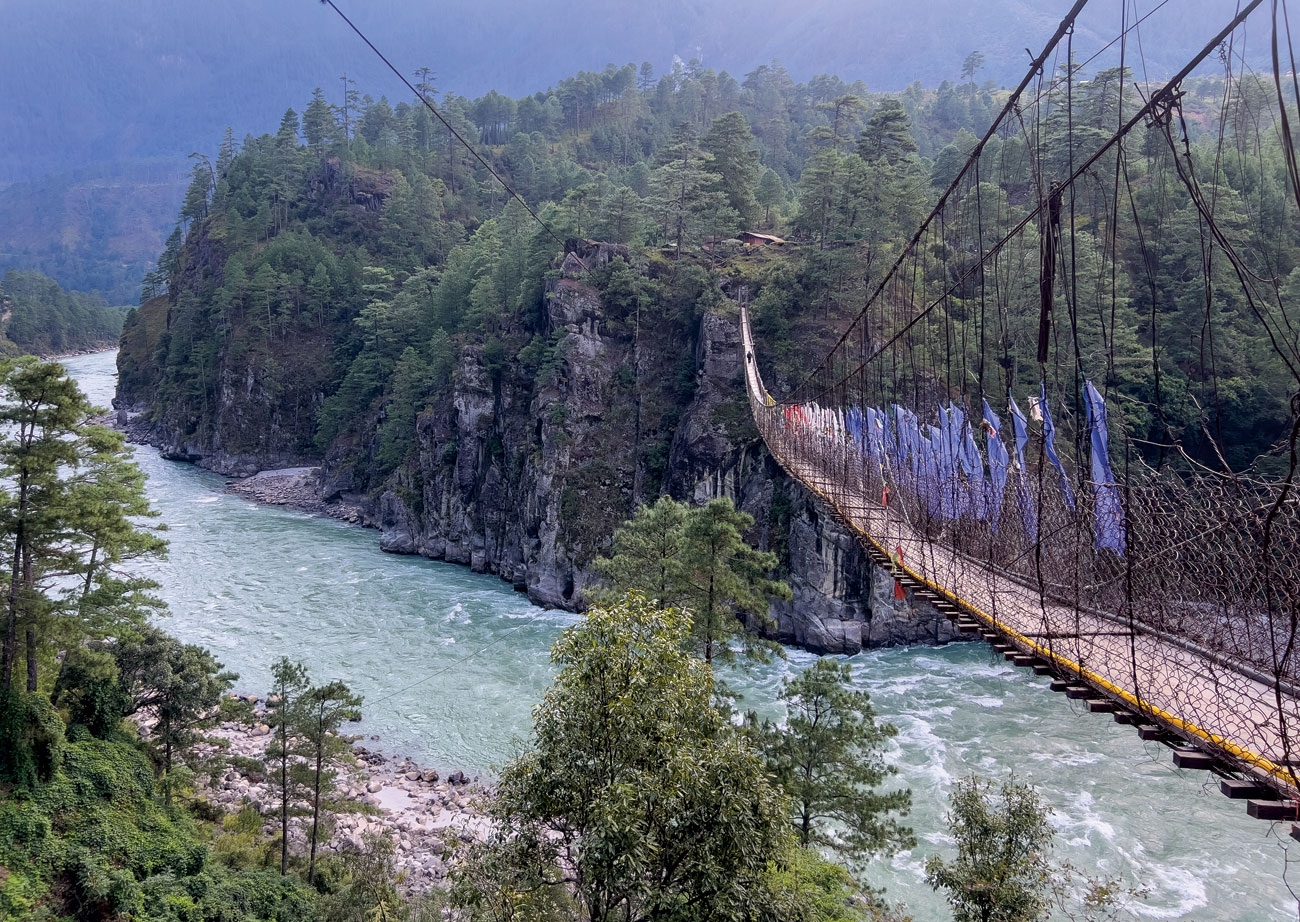
The rivers that descend from the Himalaya do far more than carve valleys. Every bridge across such waters is also a reminder that human journeys have always depended upon landscapes functioning as living systems. Photo: Shiv Kunal Verma.
Building Connections
Fortress India is unusually precise because it does not begin with solutions. It begins with connections. It seeks to reconnect geography with education, education with citizenship, citizenship with stewardship, stewardship with innovation, and innovation with institutional integrity, thereby creating an ecosystem within which ideas can continuously evolve, pilots can be created, and successful models can eventually be replicated elsewhere. Its ambition, therefore, is neither to become another institution nor to create another silo. Its ambition is to restore circulation between systems that have gradually drifted apart.
This is not a statement of pessimism, nor is it an invitation to despair, because India stands at one of the most exciting moments in her long civilisational journey. Infrastructure continues to expand, technological capabilities are multiplying and a new generation has opportunities that previous generations could scarcely have imagined. Yet, every generation must periodically pause and ask itself whether it is simultaneously strengthening the systems upon which such growth ultimately depends or inadvertently weakening them in the process. Rivers that have nurtured civilisations for centuries are struggling under the burden of human activity, mountains that once appeared eternal display visible signs of stress, wetlands disappear quietly and weather patterns become increasingly erratic, reminding us that these are not separate stories but chapters of the same story.
Fortress India was therefore never conceived as a movement that sought to solve India’s problems. It was conceived as a mechanism that could continuously generate ideas, create pilots and inspire replication, because a nation of India’s complexity cannot possibly be served by rigid blueprints and predetermined outcomes. The challenges confronting Uttarakhand will not be the same as those confronting Uttar Pradesh, and the solutions appropriate for a river basin may not necessarily apply to a fragile Himalayan ecosystem. Consequently, Fortress India has deliberately chosen to remain unfinished, because there is wisdom in recognising that the challenges before us are themselves evolving, and therefore any response must evolve alongside them.
Among the last great primary forests of the eastern Himalaya, the Dibang Wildlife Sanctuary protects an ecosystem that has evolved largely undisturbed for millennia. This immense wilderness is drained by the Dri River, which rises at Aguia La on the McMahon Line before beginning its long journey through one of India’s wildest landscapes. Photo: Shiv Kunal Verma.
How It All Began
My own association with Fortress India began through Shiv Kunal Verma, with whom I have worked closely over many years. We worked on the seminal Northeast Trilogy, and then as the co-author of my autobiography that was published 13 years ago. The continued association has allowed me to understand not only the breadth of his experiences but also the manner in which his mind functions, for it is a mind that persistently refuses to conform and is forever searching for ways in which India can continuously reinvent itself without losing sight of the systems that sustain it.
Anyone who has read his autobiography, Industani, will immediately recognise this trait, because there is a thread that runs through his work, namely that nation building is not a finite project but an endless process of observation, experimentation and adaptation. What makes Kunal unusual is that throughout his life he has inhabited worlds that most people occupy separately. His early years with Tiger Tops in Ladakh, his association with Sanctuary Asia and the filming of Project Tiger for Sanctuary Films created a canvas that would continue to expand over decades, while subsequent stints with India Today and the Associated Press widened that perspective even further, allowing him to observe India not as a collection of isolated geographies but as a living and interconnected civilisation.
Few people have seen and experienced the country in the manner that he has. Over time, these journeys would take him from forests to frontiers, from wildlife conservation to military history, and from remote Himalayan valleys to some of the country’s most strategically important landscapes. Whether travelling with the Army, the Navy or the Air Force, the underlying instinct remained unchanged, namely to understand how systems interacted with one another, and how those interactions could contribute towards strengthening the nation itself.
Long before environmental stewardship became a mainstream concern, he had advocated the concept of Ecological Task Forces to General K. Sundarji, the long-term benefits of which are visible for all to see today. Years later, when discussions centred around the increasing ecological fragility of parts of the southern Himalaya and the enormous burden associated with maintaining roads in certain sectors, he suggested that entirely different transport solutions such as hovercrafts needed to be examined. One may or may not agree with every idea, but that is beside the point. The point is that the mind never stops searching.
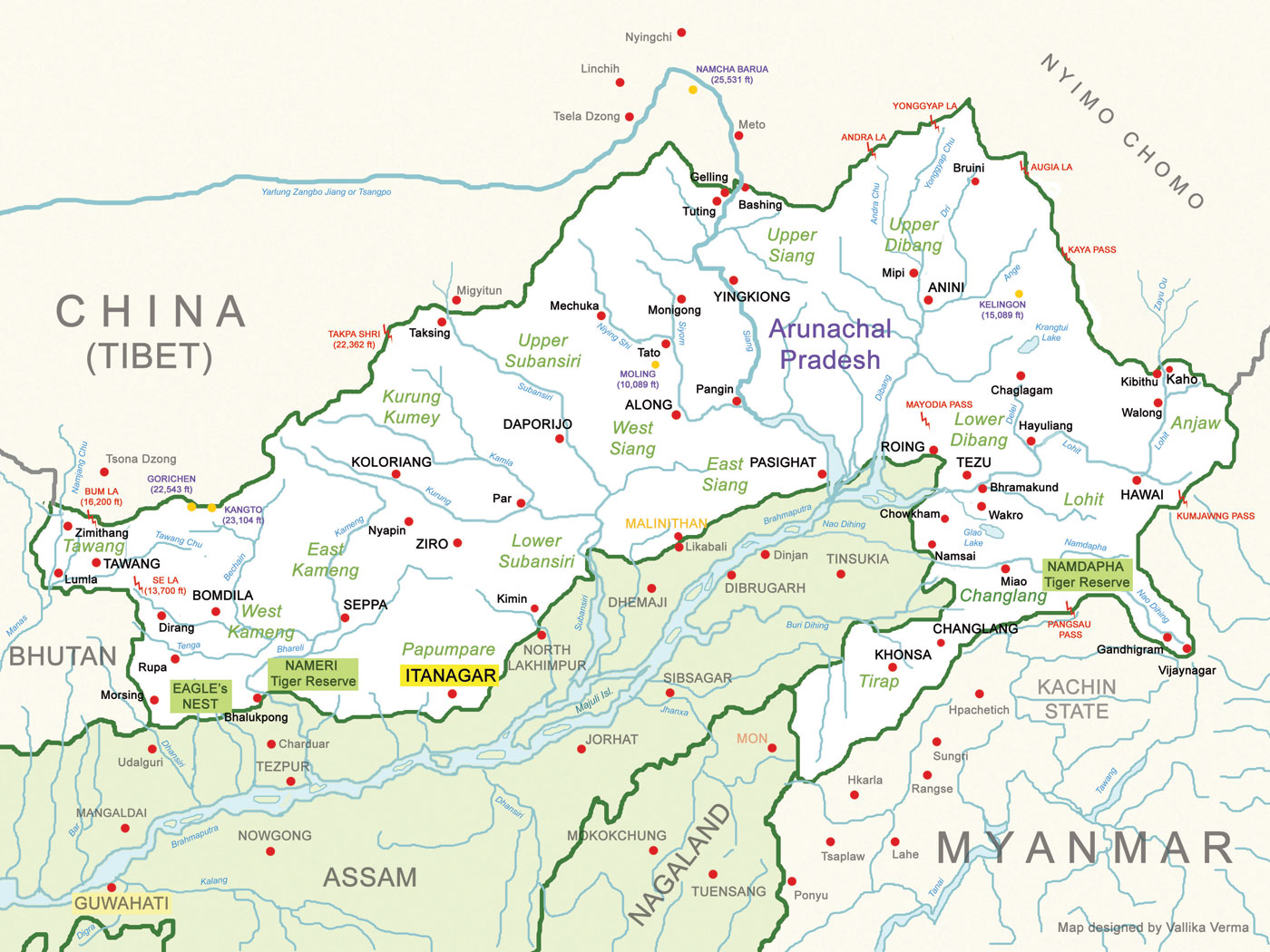
Photo Courtesy: Shiv Kunal Verma.
Finding Allies
This tendency to think unconventionally has remained remarkably consistent over time. I vividly recall the period following the change of government in 2014 when, having completed the transition from Army Chief to first-time Minister, I found myself inhabiting an entirely different environment. It was during this period that Kunal suggested the creation of Eco Task Forces in every district of India, manned by all-women teams of approximately 200 personnel and tasked with integrating water management, horticulture, sericulture and wildlife conservation within a single framework. The proposal never acquired the traction it perhaps deserved, but 12 years later, as I read the recce reports emerging from Fortress India, I find myself struck by the fact that his mind is still ticking along exactly the same lines. One cannot help but wonder how much progress we might already have achieved had such out of the box thinking found a way to become institutionalised. Fortress India may finally provide that vehicle.
Perhaps because he has always inhabited the space between the Armed Forces and the rest of India, Kunal has an instinctive tendency to gravitate towards the Army. The Army, in turn, recognises a force that is driven by the same principle that guides its own ethos, namely that the nation always comes first, and this relationship has already begun to produce tangible outcomes.
The reccees undertaken at Meerut, Dehradun and Lansdowne are excellent examples of what Fortress India is trying to achieve because they are not environmental reports in the conventional sense, nor are they beautification exercises disguised as sustainability projects. They are attempts to examine landscapes as integrated systems where hydrology, biodiversity, education, innovation and institutional stewardship interact with one another. The significance of these reports lies not in the answers they provide but in the methodology that underpins them, because once a landscape is examined through an integrated lens, entirely new possibilities begin to emerge. Waterbodies that appear degraded begin to reveal opportunities for restoration, forest fires cease to be merely fire management problems and instead become indicators of unmanaged or poorly managed biomass, while biodiversity enrichment becomes linked to education and education becomes linked to community ownership.
The Army itself may neither possess the resources nor the mandate to fully implement every idea that emerges from such exercises and that is perfectly acceptable, because implementation was never the sole objective. The real objective was to demonstrate that once an idea is properly articulated, it acquires a life of its own and begins to attract institutions, communities and individuals who can collectively carry it forward. If military landscapes between country borders, in ‘no-man’s-land’, can evolve into demonstrative biosphere reserves, there is no reason why entire cities cannot one day aspire to become urban biosphere reserves in their own right.
This will not be easy, for governance in India has over decades quite naturally created protective cocoons around itself, each institution operating according to its own rhythms, priorities and mandates. Yet the 21st century will increasingly demand that these cocoons become more permeable, because the challenges before us no longer respect administrative boundaries and therefore neither can the ideas that seek to address them.
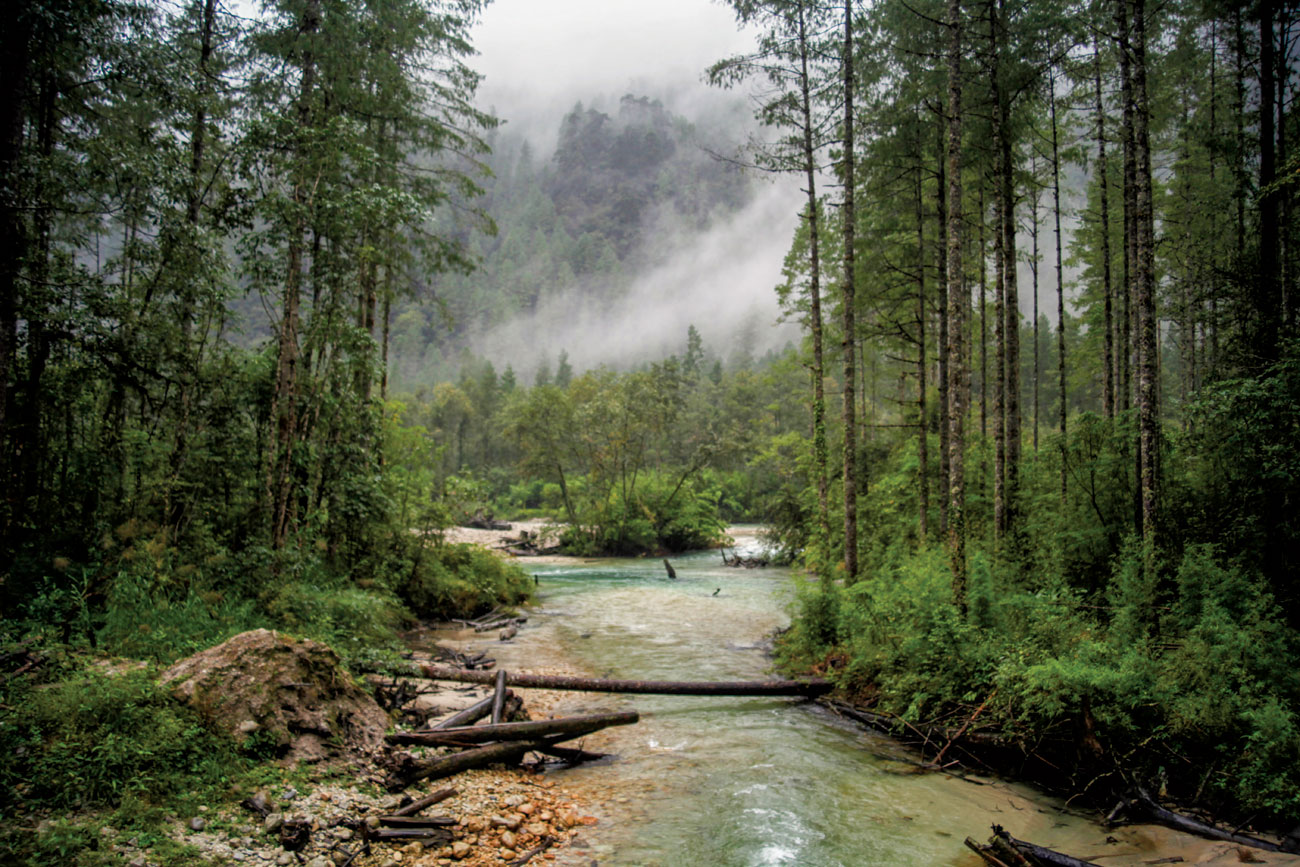
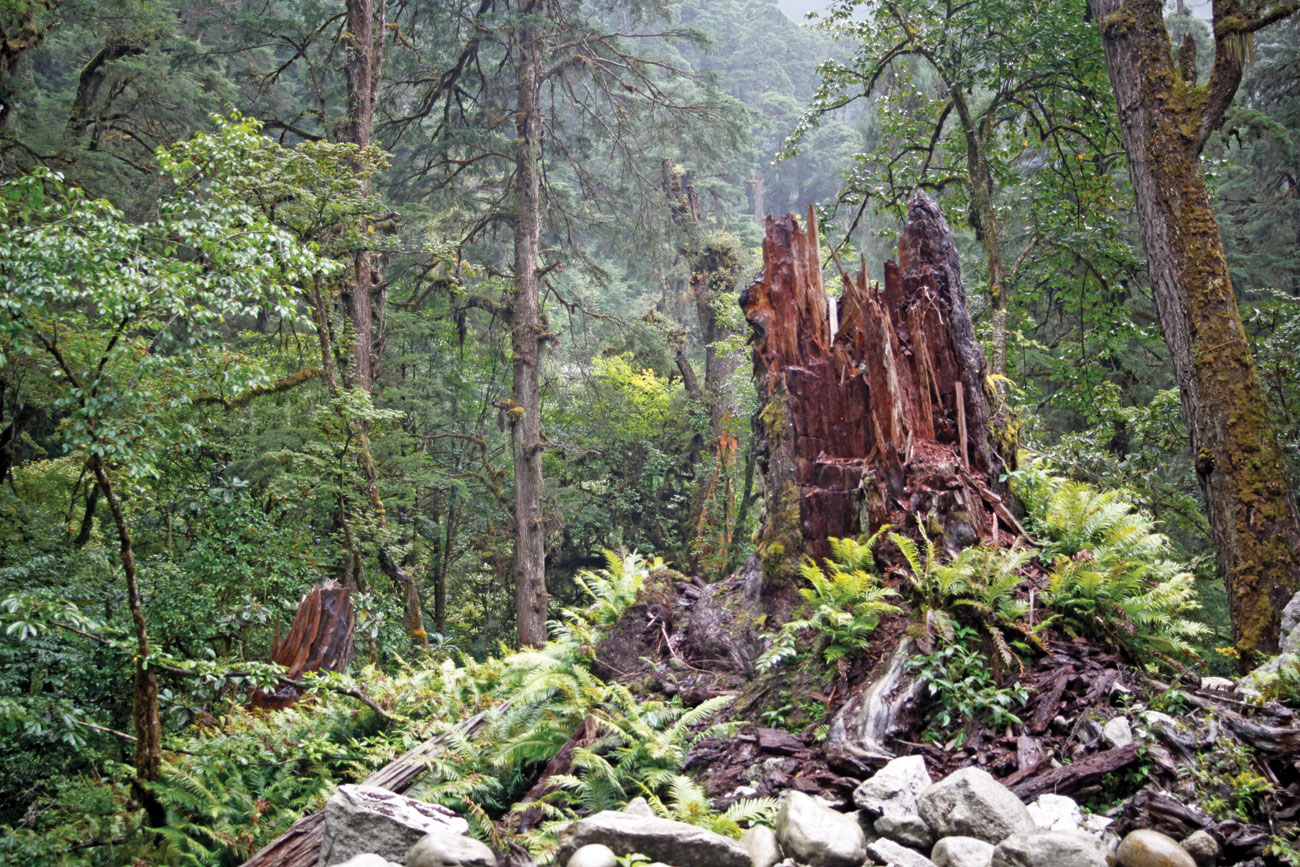
Healthy forests reveal themselves not only through the trees that dominate the skyline, but through the streams that flow clear beneath them. Every such watercourse carries the accumulated health of an entire catchment, reminding us that rivers begin long before they become visible on a map. Photo: Shiv Kunal Verma.
Changing Minds
Fortress India also recognises that every enduring initiative requires those who can connect, those who can educate and those who can innovate. This is why educational outreach under the guidance of Rajinder Pal Devgan occupies such an important place within the movement, because stewardship cannot be outsourced to specialists and knowledge must leave reports and enter classrooms. Students who understand the relationship between geography, institutions and national resilience will eventually cease to become passive recipients of information and instead begin to see themselves as future custodians of the landscapes they inhabit.
The books that are emerging from Fortress India are similarly intended not to replace existing curricula but to enrich them, because a generation that can visualise the Nam Ka Chu, understand the Gomti as a living ecosystem, and recognise the relationship between geography and national resilience will inevitably become a generation of stakeholders rather than spectators. Equally important is the work within Fortress India being undertaken by Prabhat Kumar and others, who increasingly train themselves to recognise opportunities where society sees only liabilities, because innovation often begins not with new technologies but with a willingness to ask different questions.
It is therefore encouraging that Sanctuary Asia has once again stepped forward, because there is a certain symmetry to the fact that Bittu Sahgal and Sanctuary should now become an important cog within the advisory council, given that many of the seeds that eventually grew into Fortress India were planted decades ago during those formative years spent observing India’s wildernesses and understanding that environmental stewardship could never be separated from nation building.
Others too are increasingly being drawn into Fortress India’s orbit and perhaps that is because people are beginning to recognise that this is not another movement competing for attention but a seminal idea whose success is imperative rather than merely desirable. Policymakers, bureaucrats, politicians, corporate leaders, teachers and citizens alike may all need to periodically step away from their immediate responsibilities and examine the larger proposition being placed before them, for each one of them is already an integral part of the system whose resilience we seek to strengthen.
Perhaps that is why I have chosen to become its patron, because every once in a while one encounters an idea that does not seek to replace existing systems but simply reconnect them, and in an age increasingly characterised by fragmentation that may prove to be one of the most important acts of nation building of all. Failure, therefore, cannot be an option, not because Fortress India is infallible, but because the challenges before us have already reached a scale where we can no longer afford to remain spectators.
Today, Kunal lives in Kullu, itself one of the world’s most fragile ecosystems, even as his work repeatedly takes him to the distant frontiers of Arunachal Pradesh and some of the remotest corners of the country. It is perhaps this extraordinary geographical canvas that gives Fortress India its authenticity, because these are not ideas being imagined from afar but ideas born from decades of observation and a lifetime spent traversing the country.
The invitation, therefore, is not to join another movement but to become part of a national conversation that has become impossible to postpone any longer, because every river, every mountain, every school, every institution and every citizen and future citizen already has a stake in the outcome. For whether we choose to acknowledge it or not, we are already participants in this story and the choices we make today will determine whether future generations inherit a nation that merely grew or one that learned how to endure.
The success of Fortress India will not be measured by the number of reports it produces, partnerships it creates or pilots it launches. It will be measured by something far more profound, namely whether it persuaded India to think as one again.
Governor of Mizoram and a former Chief of the Army Staff, General V.K. Singh has commanded forces across India’s most demanding terrains over a four-decade career. He now brings that rare fusion of battlefield judgement and civil-military statecraft to the cause of a secure, sustainable nation.
To Walk, To Fly and To Swim
By Rajinder Pal Devgan
One of the most exciting aspects of Fortress India is that it is constantly evolving. It is a process of observation, brainstorming and conversation, where seemingly unrelated thoughts are allowed to interact with one another until new possibilities begin to emerge. Having spent a lifetime in education, I have come to realise that this is exactly how learning ought to function. The challenge before us now is to package these ideas and carry them into classrooms in ways that excite young minds and encourage them to become participants rather than spectators, because unless students begin to see Fortress India as their own, it will remain an interesting concept rather than becoming a societal instinct. Geography, military history, rivers, mountains, biodiversity, institutional integrity and national resilience cannot remain subjects that live independently of one another. They have to become part of a larger story that children instinctively understand, because the greatest challenge before India today is not a shortage of intelligence but a shortage of belonging.
There is also an opportunity before us to build upon foundations that have already been laid. Sanctuary’s Kids for Tigers was one of the most successful educational initiatives India has ever seen because it transformed awareness into emotional ownership, and children suddenly began to understand that the tiger mattered. The time has now come to further expand that canvas. The tiger must remain a powerful symbol, but it can no longer walk alone. It must now be joined by the bee that pollinates our crops, the sparrow that once inhabited our homes, the fish that sustain our rivers, the wetlands that support life, and the scrublands and grasslands that are too often dismissed as wastelands. Children need to understand that nature is not restricted to sanctuaries and national parks, and that the spaces between them are equally important. For decades, we have taught children to save individual species. The time has now come to teach them to understand systems and appreciate that every creature, however small, participates in a larger web of life.
This is perhaps where Fortress India presents an extraordinary opportunity because it encourages us to move away from islands of conservation and begin thinking in terms of living landscapes where cities, schools, cantonments and communities become parts of one larger biosphere. The educational implications of this are profound because a child studying the Gomti should not merely see a river, but a living ecosystem, just as a child learning about the Nam Ka Chu should instinctively begin to understand the relationship between geography and national resilience.
Over the past few months, as ideas have been discussed, tested and refined, I have become increasingly convinced that we are not trying to create another subject that schools have to teach. We are attempting to create a different way of thinking.
The books now emerging from Fortress India are therefore not intended to replace existing curricula but to enrich them and provide teachers with a new language through which they can connect seemingly disparate subjects.
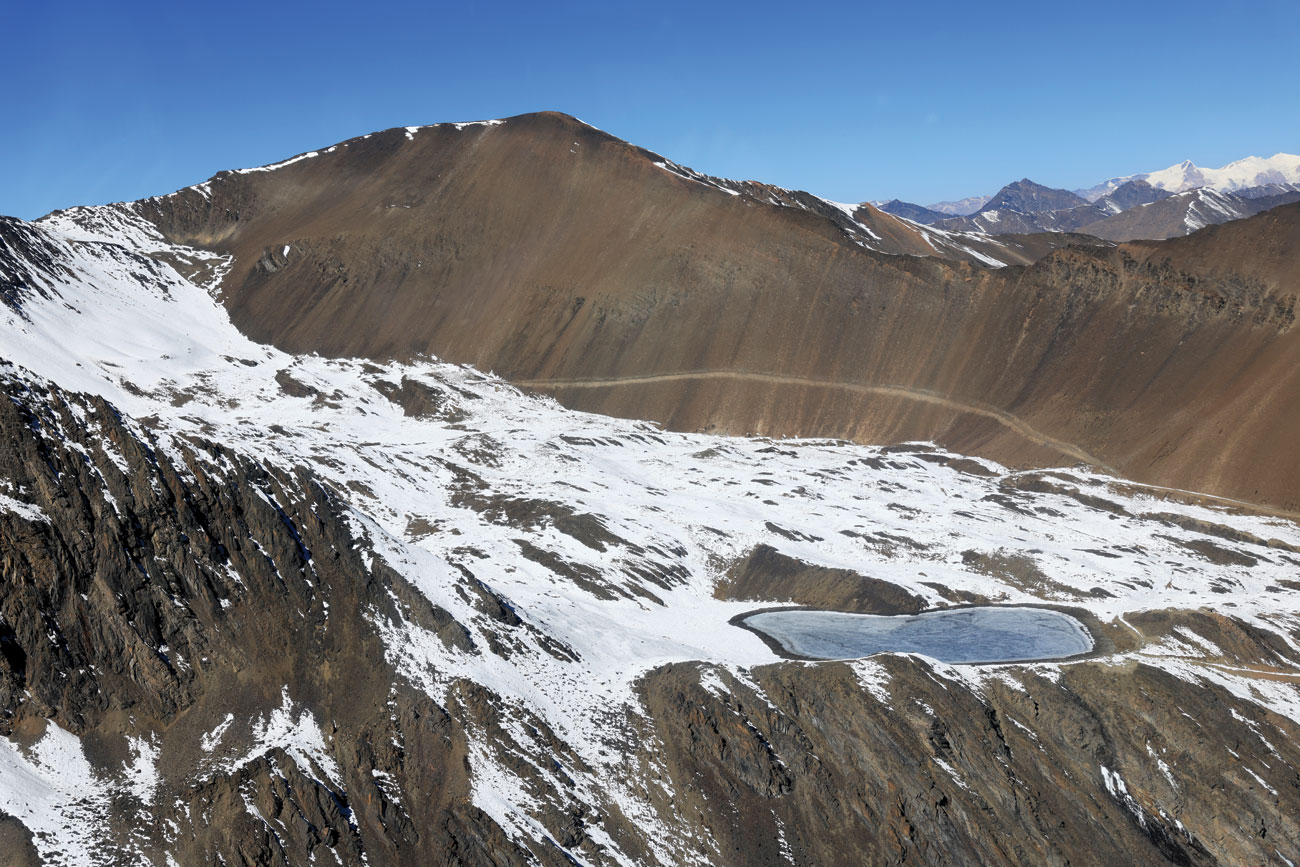
At 5,257.8 m., Tulung La was the gateway through which F. M. Bailey and H. T. Morshead re-entered India in 1913. Beyond the pass, the Mago Chu valley sweeps south across Tse La and Poshing La, descending towards the ancient strongholds of Thembang and Dirang Dzong. Photo: Shiv Kunal Verma.
The child entering school today will inherit a far more complex world than the one my generation inherited, yet this generation also possesses extraordinary opportunities to redefine the relationship between development and stewardship. Fortress India provides a framework within which this can happen because it recognises a simple truth: people protect what they know and they value what they understand. If we succeed in helping children develop a sense of belonging towards their rivers, mountains, communities and institutions, we will have achieved something far more important than awareness. We will have created ownership, because ultimately Fortress India will not succeed because adults embraced it. It will succeed when children begin to think that it always belonged to them, for the child who learns to walk with the tiger, fly with the sparrow and swim with the fish may one day become the citizen who instinctively knows how to care for a nation.
Rajinder Pal Devgan is a senior educationist who heads the educational initiatives of Fortress India, bringing decades of institution-building to the cause. His enduring commitment is to education that is both excellent and within reach of every Indian.
Every Colour is Gold!
By Prabhat Kumar
Fortress India did not emerge from a single idea or a single individual. It evolved through years of conversations between people who, at first glance, appear to inhabit entirely different worlds. Discussions with one of India’s foremost scientists, Dr. Satyanarayana Bheesette, financier Vallabh Bhansali, Air Chief Marshal R.K. Bhadauria, Admiral Karambir Singh and conservationist Bittu Sahgal, all of whom have helped shape Fortress India as members of its Advisory Board, have gradually reinforced a simple but powerful truth, namely that India’s future resilience will depend upon our ability to reconnect systems that have slowly drifted apart. As one of those involved in shaping Fortress India from the very beginning, I have become increasingly convinced that many of the challenges confronting India persist not because solutions are absent, but because we have become accustomed to examining interconnected problems in isolation when the solutions themselves often lie in their interdependence.
As a chemist and businessman, I have always been drawn towards practicality. I am less interested in identifying problems than in understanding why they persist and how they can be solved. Over time, this has led me to focus on what I call the three Es, namely Education, Environment and Energy, because every developmental decision we take eventually influences all three. Yet Fortress India has gradually introduced a fourth and perhaps the most important pillar of all, namely Institutional Integrity, because no amount of innovation or good intentions can produce lasting results unless institutions themselves remain robust, collaborative and willing to evolve alongside the challenges they confront. Having spent years understanding how systems actually function, I have also come to appreciate that many challenges persist not because solutions are absent, but because institutions, disciplines and individuals have become accustomed to operating within their own silos. While we audit accounts with extraordinary precision, we seldom devote the same rigour to auditing our natural resources, our water systems, and our energy footprints. To my mind, that imbalance is one of the great blind spots of our times, and correcting it may well become one of the defining tasks of this century.
There is an old saying that everything green is gold. The more I have engaged with Fortress India, the more I have come to appreciate the wisdom embedded in that simple phrase. Yet its meaning extends far beyond forests and biodiversity. It is really a way of looking at the world itself. Every system, every habitat, every institution, and every seemingly insignificant component has value because it ultimately supports another. The tendency to rank priorities and dismiss smaller systems as secondary may in fact be one of humanity’s greatest mistakes. Once we begin to understand these relationships, we also begin to recognise that every colour is gold. This philosophy has quietly informed many of the ideas that have emerged from Fortress India. The recent reccees undertaken at Dehradun, Meerut and Lansdowne reinforced this thinking because every landscape immediately began to reveal possibilities once it was examined as an integrated system. Hydrology connected with biodiversity, biodiversity connected with education, education connected with communities, and communities connected with institutions. The reports themselves are not the destination. They are proof that a process of thinking exists, which can be replicated almost anywhere in India.
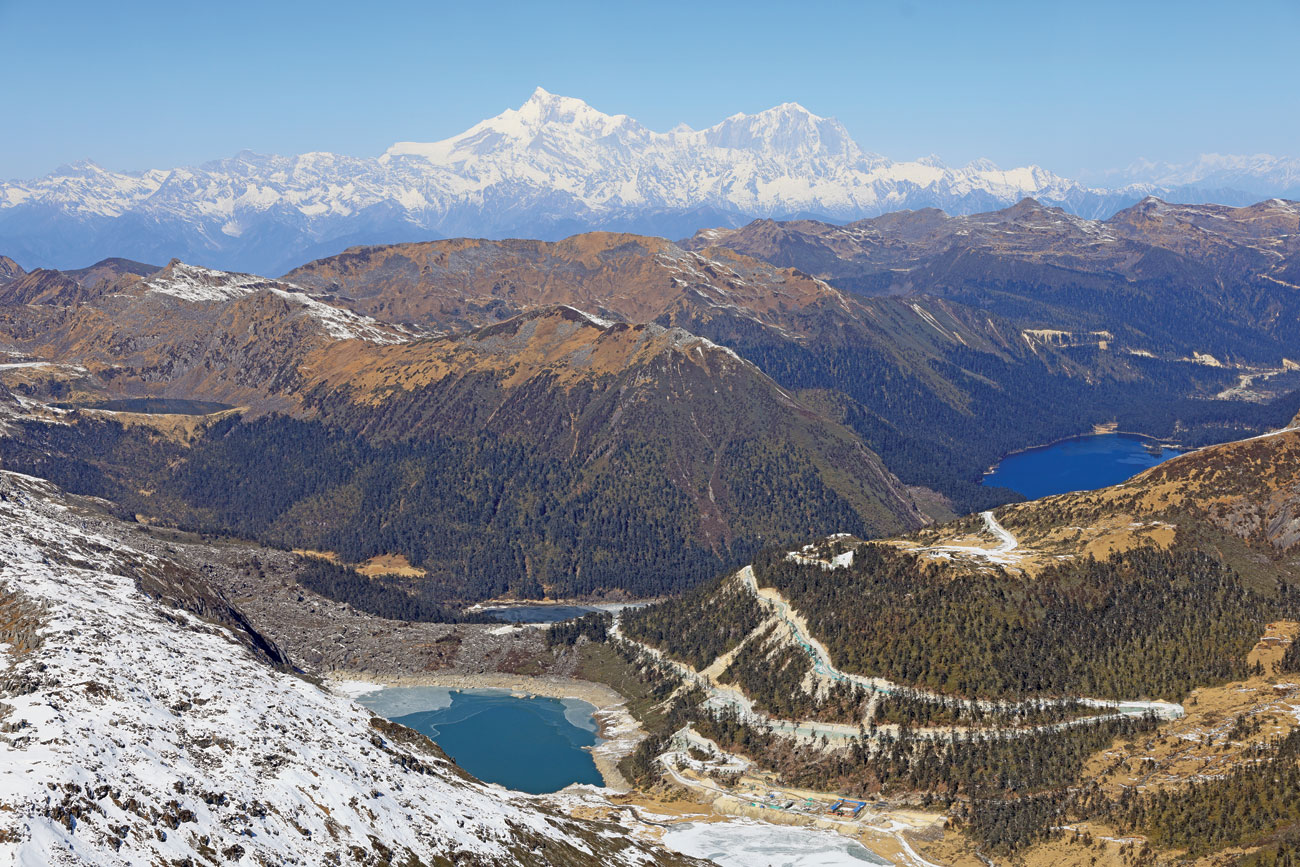
The Siang disappears into the forests below before the land climbs once again towards the great watershed surveyed by Bailey and Morshead in 1913, later adopted as the McMahon Line. On the distant ridge, blue roofed PLA posts punctuate an otherwise timeless landscape where strategic rivalry now shares the skyline with some of the Eastern Himalaya’s most fragile ecosystems. Photo: Shiv Kunal Verma.
I have always maintained that there is no problem without a solution. The challenge lies in asking the right questions and creating mechanisms through which solutions can continuously emerge, be tested and eventually refined. Forest fires, for example, may not simply be fire management problems but indicators of unmanaged biomass and climate change. Waste may not be a disposal challenge but a misplaced resource and overconsumption. A degraded water body may not represent inevitable decline but an opportunity for restoration. The moment we change the questions, the answers start revealing themselves. Fortress India fills me with optimism because it is not trying to build another institution. It is trying to build a culture of problem solving and, if we succeed in doing that, we will have achieved something far more important than solving individual problems. We will have created a society that instinctively knows how to solve them.
Prabhat Kumar is a chemist, educator, and entrepreneur whose work spans environmental chemistry, pollution studies, and sustainable resource use. He leads institutions across publishing, manufacturing, and education, working at the intersection of environment, energy, and education.
Finding The Pulse
By Sana Durrani
The greatest challenge before Fortress India may ultimately have very little to do with ideas. It may have everything to do with language. Standing inside schools and working closely with children, one quickly learns that there is no one-size-fits-all vocabulary. The language that resonates in a school nestled in the Himalaya may not resonate in a city. The stories that inspire one group of children may completely bypass another. This is not a weakness. It is India’s greatest strength and perhaps Fortress India’s greatest challenge. If this movement is to truly take root, it must first find the pulse of the generation it seeks to engage.
Children today are not short of information. They are inundated with it. Yet information by itself rarely changes behaviour. Give a child a blank sheet of paper and the chances are they may shred it to pieces. Give the child crayons as well and, more often than not, an artwork will emerge. The child has not changed. The invitation has. Perhaps that is the lesson Fortress India must constantly remind itself of. Our task is not to tell children what to think but to provide them with the colours through which they can begin to interpret the world for themselves. Once they begin to see themselves within the story, curiosity follows and curiosity, more often than not, eventually transforms itself into belonging.
The challenge before us will therefore be one of continuous translation. Fortress India is already translating its books into multiple languages, but translation is only the first step. The larger task is to translate relevance. How do we persuade a child living hundreds of kilometres away from the sea that India’s continental shelves matter? How do we encourage children to become curious about underwater landscapes that remain invisible to most adults? How do we persuade them that the decisions we take on land influence ecosystems they may never physically see? The answers will not lie in more information. They will lie in imagination.
This is precisely why the Wildlife Quartet excites me so much. The decision to devote an entire volume to India’s continental shelves and islands may at first appear unusual, but perhaps that is precisely why it is necessary. These extraordinary underwater landscapes rarely find a place in our conversations and are almost entirely absent from the imagination of children. Yet they regulate climate, support biodiversity and connect India to a much larger ecological story that stretches far beyond our shorelines. Every child should know what a continental shelf is, but more importantly, every child should be encouraged to let their imagination run wild once they discover it. We often underestimate children by trying to simplify the world for them when, in reality, they are perfectly capable of embracing complexity if we simply learn to tell better stories.
This is also where Fortress India departs from conventional publishing. The books being produced are not intended to become encyclopaedias that simply occupy shelves. They are windows. Their purpose is not merely to transfer information but to stimulate curiosity and create pathways through which children can begin to explore the world around them. Fortress India therefore sees the books not as the destination but as the starting point of a much larger journey. The challenge before us is not only to assemble the material but also to create platforms through which these books can be used constructively inside schools and communities. Conversations, projects, interactions, field visits and imaginative exercises will ultimately prove just as important as the books themselves, because children rarely remember facts in isolation. They remember experiences.
For decades, Sanctuary’s extraordinary Kids for Tigers initiative has taught children to care. The task before us now is to build upon that magnificent foundation and widen the circle of curiosity. The landscapes that sustain us are far larger than the boundaries of our national parks and sanctuaries and every child deserves an opportunity to discover them in ways that feel personal and meaningful. The children entering classrooms today will inherit challenges that previous generations never confronted at this scale, but they will also inherit unprecedented opportunities to redefine the relationship between development, stewardship and citizenship. Our responsibility is not to hand them finished answers but to provide them with the colours, the windows and the platforms from which they can begin their own journeys of discovery. For while we may have the tunes in our heads, the instruments are theirs. The music that eventually emerges may be very different from what we imagined, and that is precisely how it should be.
A chartered Financial Analyst and educator from Bhopal, Sana Durrani has spent over a decade teaching Economics and Business at leading schools, and now heads that discipline at Shrewsbury International School India. As a founding-member of Fortress India, she anchors the initiative’s strategy where financial rigour meets national purpose.