Creative Wilds
First published in Sanctuary Cub,
Vol. 46
No. 7,
July 2026
As wildlife has been disappearing from our planet, it’s also disappearing from our art. We’ve stopped noticing nature – the art festival that we can attend for free! By Sahir Doshi.
Mumbai’s art district, Colaba, is always bustling with creativity. But there’s a cooler secret art scene just a few minutes away, on the seashore! Here, brightly coloured sea slugs lay eggs in rangoli-like designs. Tubeworms fashion outfits out of shells and debris. Barnacles use their long legs to beat musical rhythms in the water. It’s a whole art festival that you can attend for free!
When I first met Mumbai’s marine life, I was inspired to write raps about these cool creatures. But people were surprised to hear a rap about marine life. I can’t blame them because, really, there isn’t a lot of music about wildlife nowadays. A study of popular songs, books, and movies found that mentions of nature have almost entirely vanished since the 1950s.
In the old days, nature was the most common source of artistic inspiration, from the animal tales of the Panchatantra to the floral patterns of ancient buildings. What has changed since? Some blame it on cities. When humans moved from villages to big cities with fewer wild places, nature stopped being a big part of their daily life.
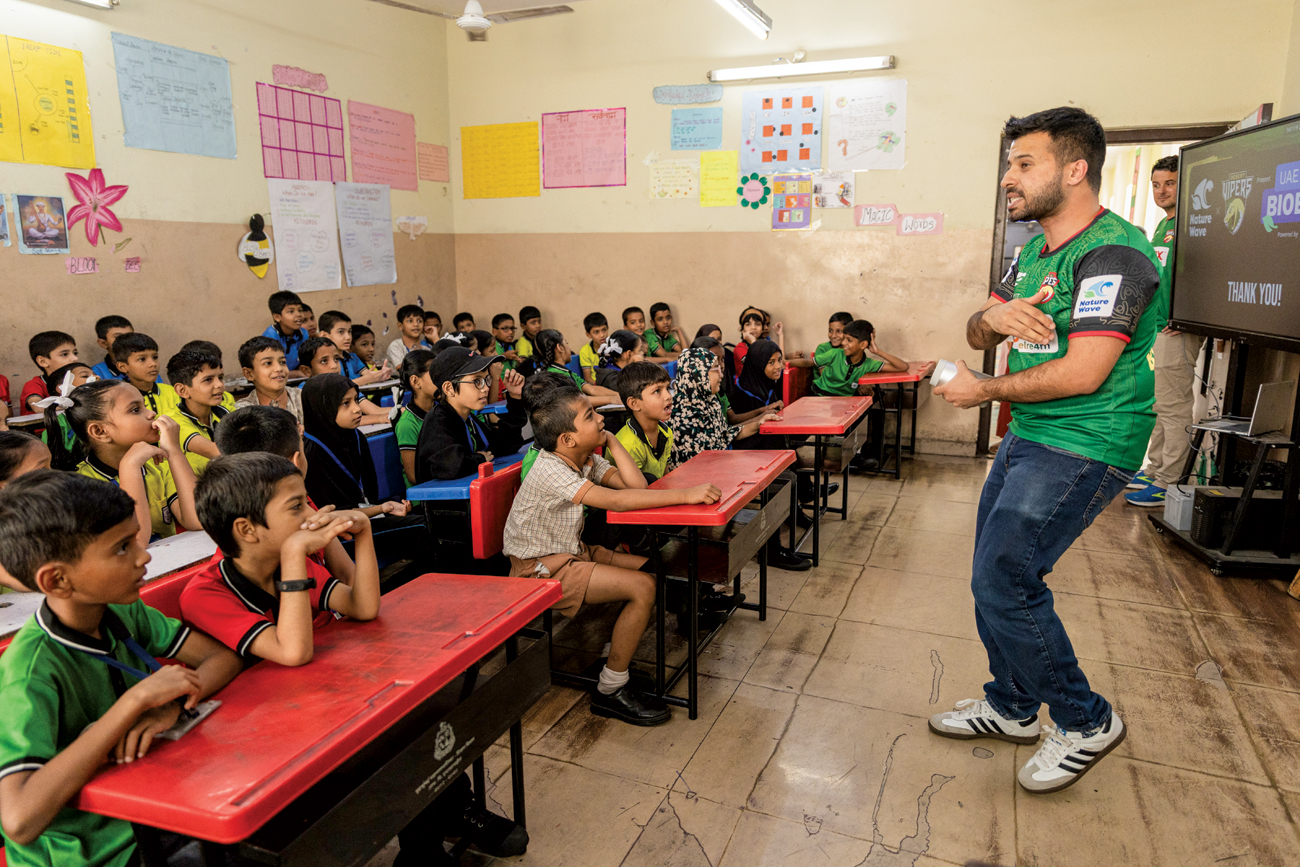
Sahir rapping about nature to a bunch of enthusiastic school kids. Photo: Sarang Naik.
Reflection Of Life
Art reflects what we see around us. In cities, that’s cars, roads, offices and malls. Stories set in Mumbai’s concrete jungle won’t have lions and tigers, will they? Maybe not... but they could have leopards! Mumbai has the world’s highest density of leopards. It’s also home to flamingoes, mangroves, bullfrogs, and banyan trees. Nature isn’t totally gone from our cities. All that the human artists in Colaba have to do is walk along the shore at low tide, and they can find tonnes of inspiration.
When we stop noticing nature, we risk forgetting that it exists. If we forget that it exists, how will we protect it?
Look Around You
That’s why I started rapping about corals, a few years ago, while exploring a stretch of Colaba’s shore. My illustrator friend began sketching the local crabs. Another painted a striking watercolour of seabirds against the city skyline. In our efforts to make art, we actually managed to notice more about the world around us. You can do the same thing, through music, painting, poetry, or storytelling. And, hopefully, your art will help others notice nature too.
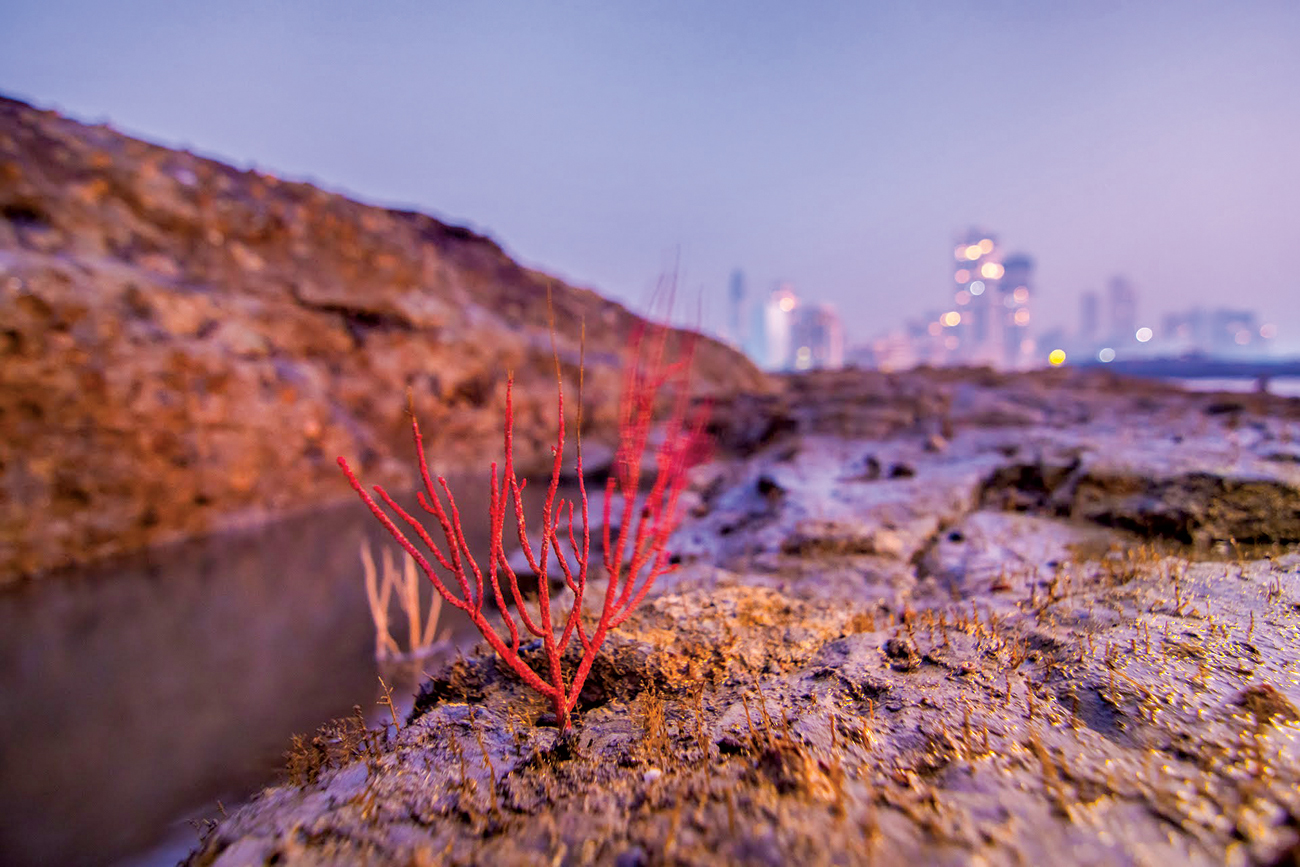
Nature’s masterpiece – a sea fan coral against the backdrop of Mumbai city. Photo: Sarang Naik/Sanctuary Photolibrary.
Here are three ideas for your creative journey:
1. Create a rap, poem, or comic on a wild city neighbour.
2. Spend 15 minutes observing a tree, bird, or insect and sketch what you notice.
3. Start a ‘Hidden Nature Hunt’ and photograph wild plants and animals around you.
Sahir Doshi is a wildlife content creator, nature educator, rapper, and a past Kids for Tigers ambassador. He explores Mumbai city shorelines in search of cool finds.