Corpse-flower Charisma
First published in Sanctuary Asia,
Vol. 46
No. 8,
August 2026
By Soham Kacker
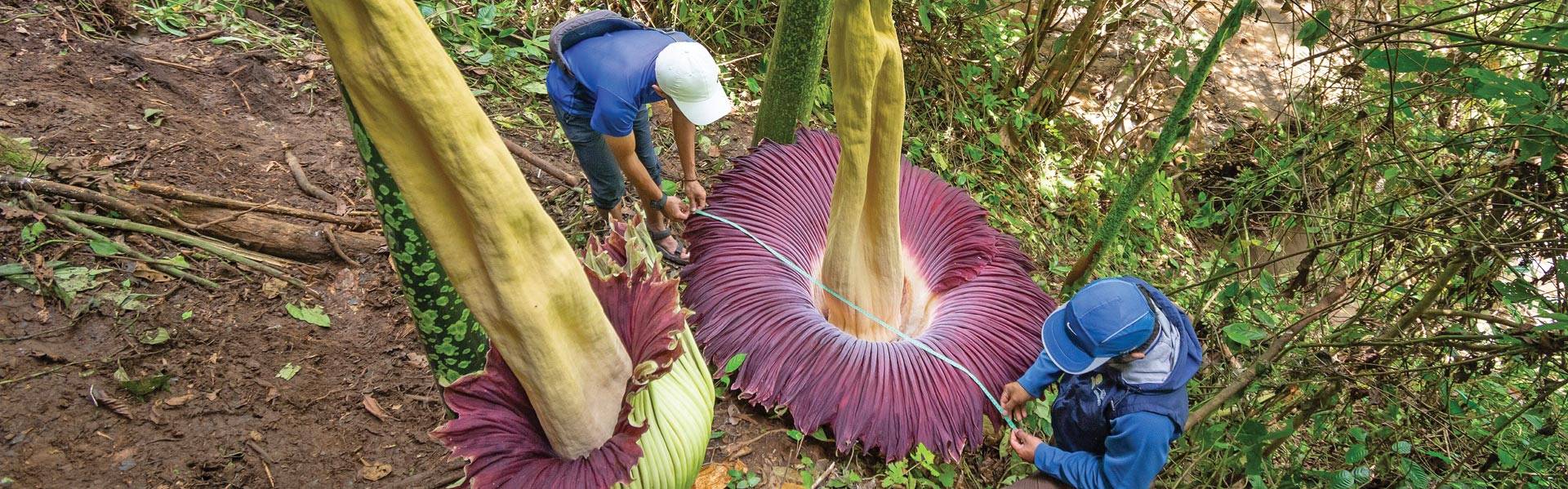
In 2016, hundreds of visitors flocked to the Gurukula Botanical Sanctuary in Wayanad, Kerala, to witness a rare botanical phenomenon unfolding for the first time in India – the blooming of the Indonesian corpse flower. Also known as the titan arum Amorphophallus titanum, it is the largest unbranched inflorescence in the world, and produces a strong odour of rotting flesh to attract its primary pollinators: carrion beetles and flies that lay eggs in putrid meat. The titan arum’s charisma is undeniable – an imposing size, uncanny texture and appearance, and a grotesquely curious mode of reproduction. These charismatic traits lend it the ability to draw a crowd – at Gurukula, as at botanical gardens around the world, most recently at the Huntington Botanical Garden in California, where twin blooms in July attracted thousands of visitors to see the behemoth blooms. While species’ charisma is a crucial tool for conservationists and educators to get people interested in the natural world, could charismatic species overshadow the varied and complex realities of ecological systems?
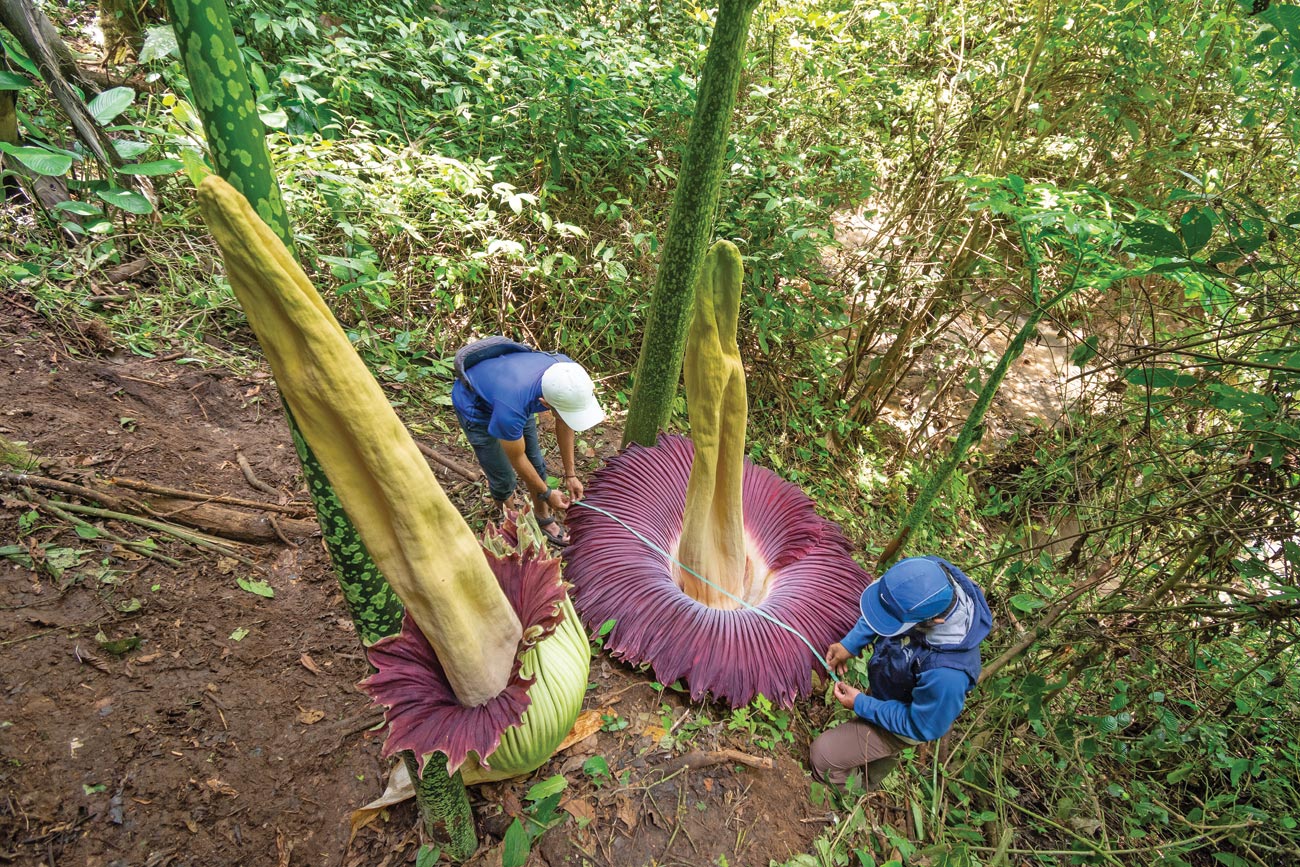
The corpse flower, or Amorphophallus titanum, is one of the largest flowers in the world, famous for its foul odour mimicking a rotting carcass, which attracts pollinating insects such as flies and carrion beetles. Photo: Mul Azmi/CC-BY-SA-4.0.
Take the case of the titan arum. The visitors to the bloom at Gurukula may not have known that India has its own titans, which have been living in close proximity with people for generations. In fact, you’ve probably eaten one! At the beginning of the monsoon, many species in the genus Amorphophallus produce fascinating, often foetid flowers. In Maharashtra, the unopened flowers of the dragon stalk yam A. commutatus are known and relished as shevalachi bhaji. Across North India, the large, waxy inflorescence of A. paeoniifolius arises from an underground tuber better known as zaminkand, a beloved seasonal staple. In fact, these well-known species share the same reproductive biology as the titan arum, only on a smaller scale.
Most species of Amorphophallus bloom briefly, with the inflorescences lasting for just two or three days. During this transient period, they have to maximise the ability of their large, energetically-expensive flowers to attract pollinators. This is where many species have a trick up their sleeve – at peak bloom, they activate a special mode of rapid respiration, which consumes stored carbohydrates to release heat. Flowers can heat up to over 150C above ambient temperature, volatilising sulphur-based compounds in the flowers, which give them their characteristic smell. The ability to produce heat (or thermogenesis) is rare in the plant kingdom – and certain arum flowers have evolved this trait in order to attract pollinators in the dense tropical forests of South and Southeast Asia. The structure of the flowers holds more evolutionary intrigue. Inside each bloom, a complex series of timed structural changes traps pollinators in two separate chambers – one containing male flowers and the other female – to prevent self-pollination. All this evolutionary ingenuity from a monsoon vegetable!
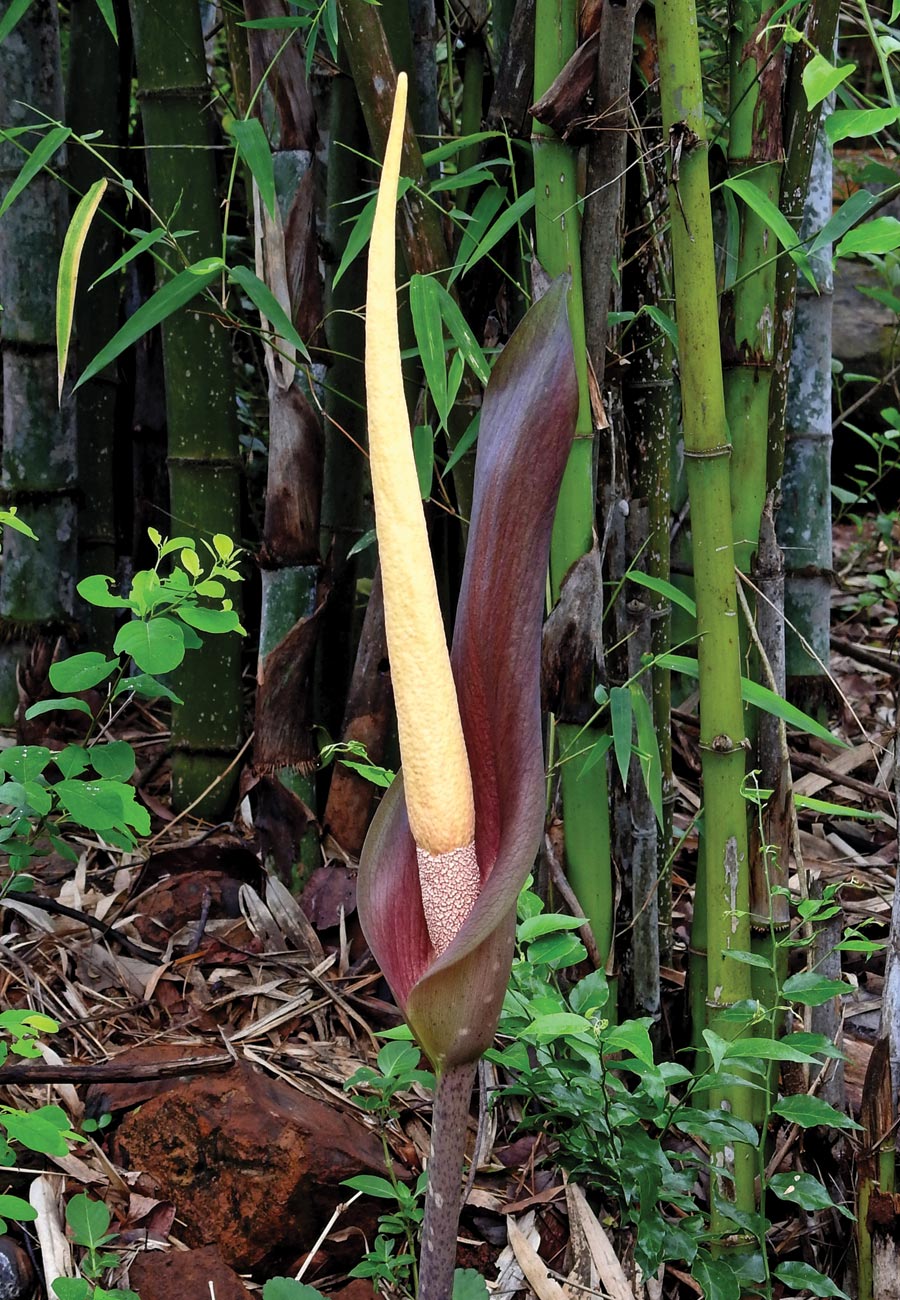
At the beginning of the monsoon, many species in the genus Amorphophallus, such as the dragon stalk yam A. commutatus, produce fascinating, often foetid flowers. Photo: Dr. Raju Kasambe/CC-By-SA_4.0.
This is exactly where relying too heavily on charisma can sometimes fail conservation. The corpse flowers have a knack for attracting pollinators as well as people – but museums and botanical gardens, where this charisma is usually on display, must be conscious of how it is perceived. A narrative that reduces charismatic species to objects or symbols may leave out the many common species that are equally interesting – both aesthetically and ecologically.
Not to mention, charismatic species may not always be those that need the most protection. In 2001, a species of Amorphophallus – A. mysorensis – presumed to be extinct, was rediscovered in Karnataka after disappearing for 60 years. Though a compelling and important story, it went largely undiscussed when the titan arum bloomed in Kerala in 2016. Such stories illustrate how the narratives around charismatic species must direct public focus and popular attention to complex and multifaceted conservation problems, in addition to single, magnificent flowers.
Soham Kacker is a plant ecologist and horticulturist from New Delhi. His research looks at plant conservation and ethnobotanical landscapes in the Indian Himalaya and beyond.