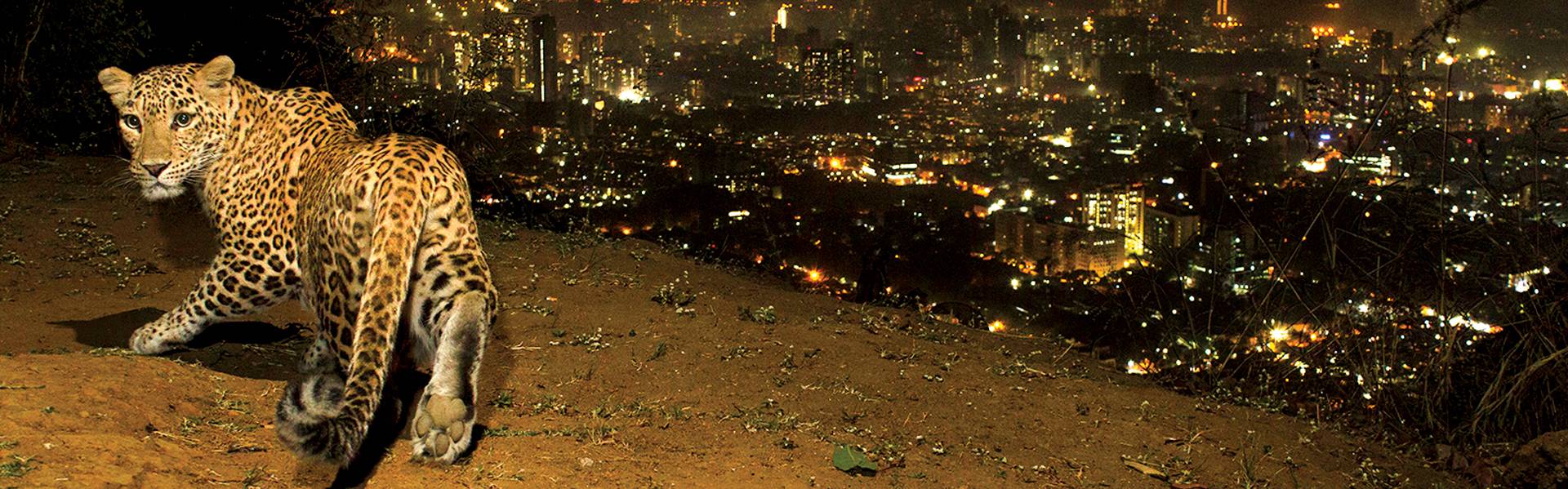
Close Quarters
First published in Sanctuary Cub,
Vol. 46
No. 5,
May 2026
Where does one expect to see an apex predator? In a forest, far from human settlements? The city of Mumbai proves otherwise. Here is the story of my close encounter. By Sahir Doshi.
In the wild, even if you can’t see an animal, the animal can almost always see you. I learned this one morning in the middle of Mumbai, where I was two minutes away from a leopard and didn’t even know it!
I was at the Bombay Natural History Society’s Conservation Education Centre (BNHS CEC), an urban forest reserve in Goregaon, Mumbai, with a surprising number of wild leopards. Their signs were everywhere. Claw marks on the trees, pugmarks on the trail, even piles of leopard poop. Still, I never expected to find one. Even tourists on safari in national parks rarely see these spotted cats. What were my chances in a city?
But that night, a BNHS scientist sent me two photos taken by a motion-sensing camera trap in the forest. Photo 1 showed me strolling down the trail at 9:12 a.m. Photo 2 showed a leopard, at the exact same spot, at 9:10 a.m.
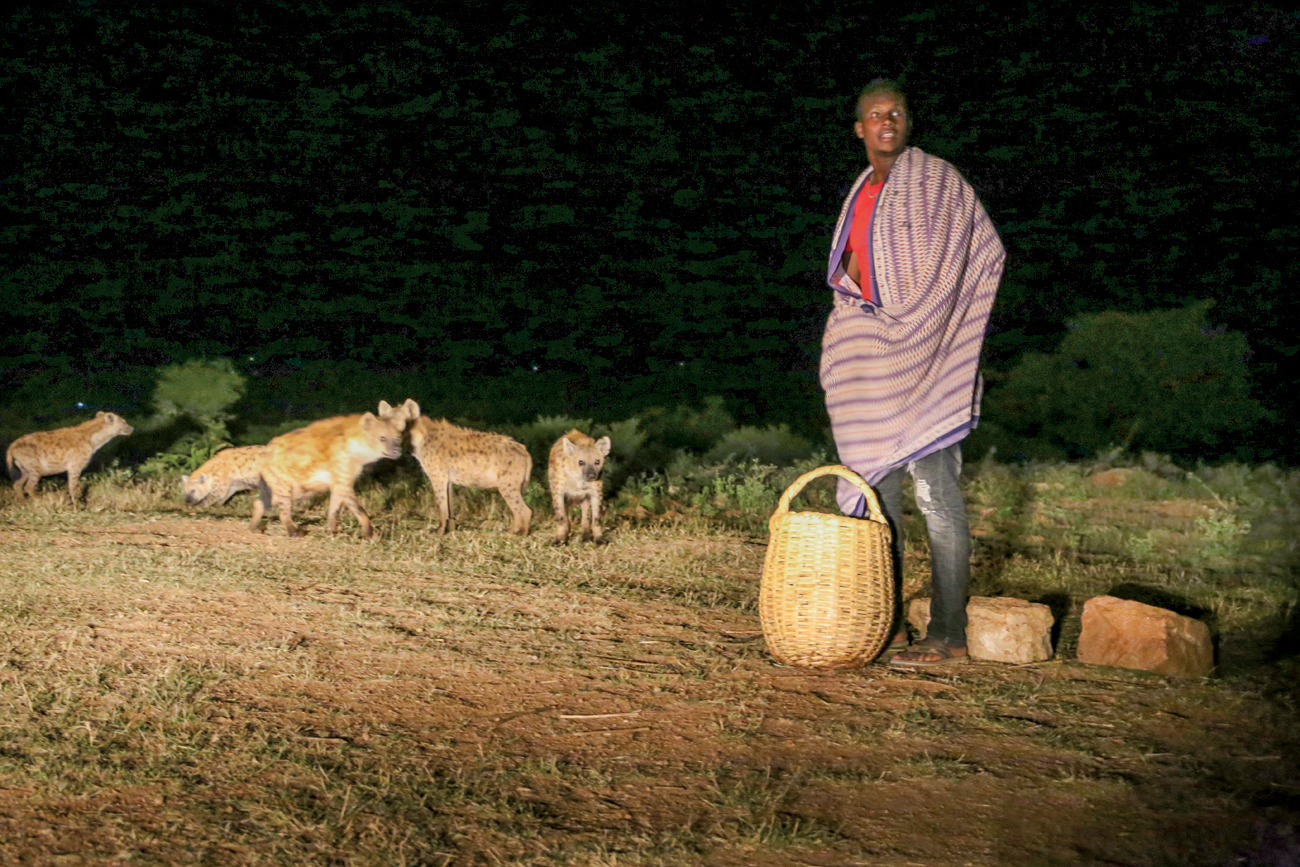
Spotted hyenas hang out in Harar, Ethiopia. Photo: Sailko/CC-By-3.0.
Living With Leopards
I had no clue that I’d been tailing a leopard. But the leopard definitely knew. She might’ve even slipped into the bushes and watched me pass. Leopards are apex predators with sharp senses and excellent camouflage to help them hunt. I’m sure she wasn’t hunting me, though, or I’d also be leopard poop by now!
Mumbai’s leopards don’t look at us as food. They eat deer, monkeys, and sometimes stray dogs or pigs. If possible, they avoid contact with humans. They hunt at night, when we’re asleep. Unless we destroy or disturb their habitat, they stick to forested areas. Most humans, in turn, treat them with respect. In local Warli culture, the guardian god Waghoba is depicted as a leopard. In cities across the world, humans have learned to live alongside apex predators. Polar bears roam the streets of Churchill, Canada. Hyenas hang out in the alleys of Harar, Ethiopia. Almost every town in India has its own local leopards, and some even have wolves, bears, or crocodiles.
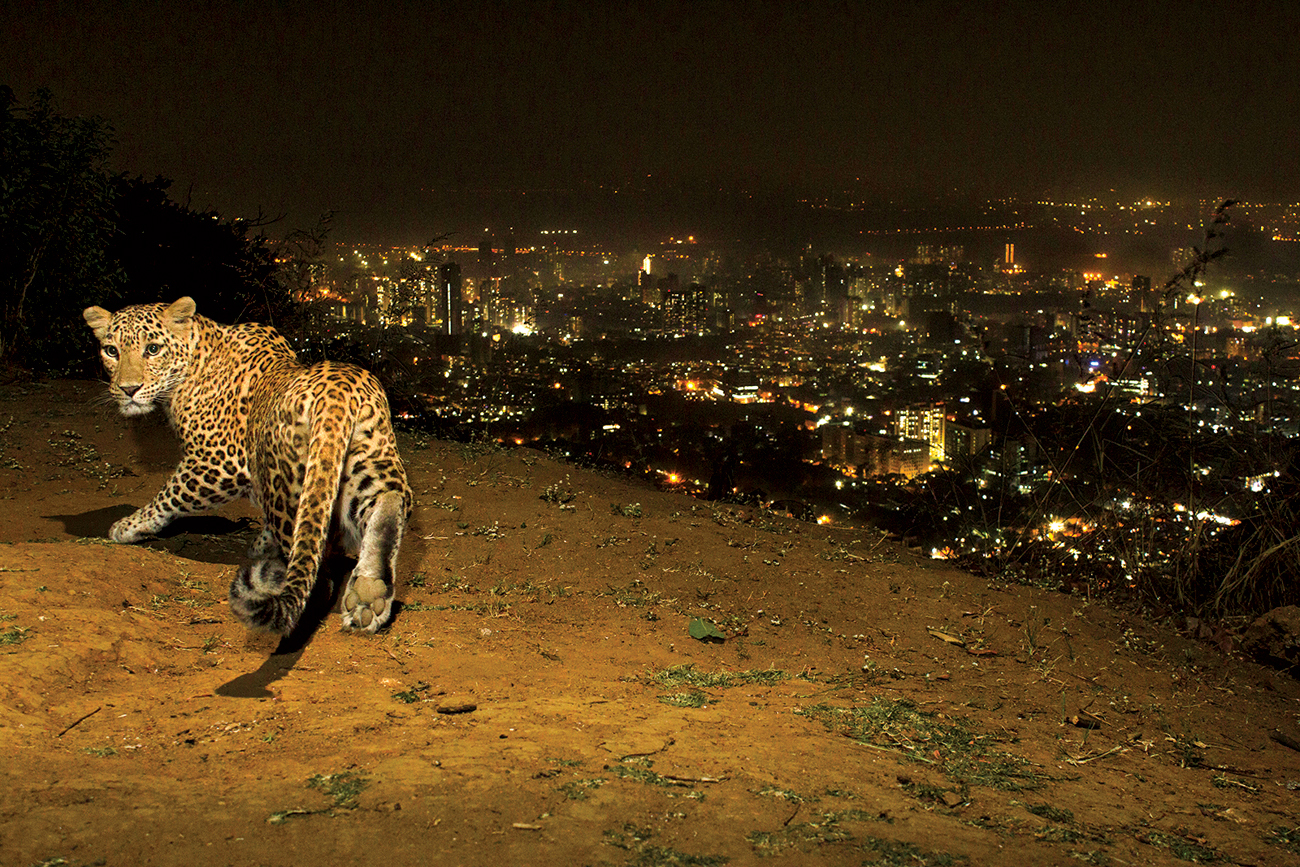
A leopard watches over Mumbai city, which is home to millions of human and non-human animals on land and in the seas. Photo: Nayan Khanolkar.
Predator Or Protector?
Just because they are ‘apex’ predators, it doesn’t mean they’re trying to hurt us. In fact, their presence often helps us. Leopards control deer population. This stops the deer from overeating the plants that give us shade, clean our air, and channel rain into lakes and rivers. In a way, apex predators are the reason we have water to drink.
Mumbai was once home to another apex predator… the tiger! Years of hunting and habitat loss drove the city’s tigers to extinction. Humans are, in a sense, the apex predators amongst apex predators, capable of killing all the others. But we can also choose to coexist, just like a leopard once chose with a human who was just two minutes away.
Sahir Doshi is a wildlife content creator, nature educator, rapper, and a past Kids for Tigers ambassador who explores Mumbai’s shorelines.