Apex Scavenger
First published in Sanctuary Cub,
Vol. 46
No. 5,
May 2026
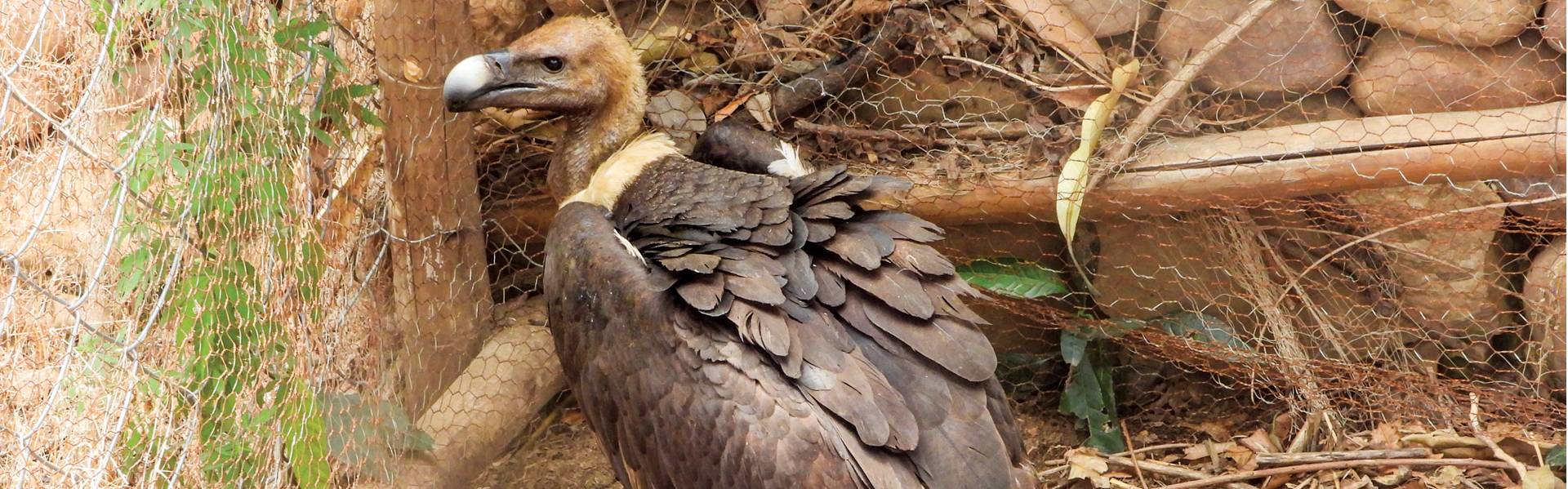
Watching the vulture, an apex species, in a delicate state was a reminder of the challenges it faces. Its recovery involved restoring its ability to reclaim the skies. By Dr. Malyasri Bhattacharya.
The vulture, a top scavenger of our skies, is often seen circling effortlessly above the vast expanse of Pong Dam on the Beas river in Himachal Pradesh’s Kangra district.
My field associate Manoj Kumar (who is part of The Habitats Trust and ZSL edge) and I regularly conduct vulture surveys at sites around Pong Dam, documenting numbers and noting behavioural patterns as they feed on cattle carcasses. These routine visits can be revealing.
During one such survey, amid the feeding birds, one individual stood out. It remained grounded near the Pong Dam Bird Sanctuary, unable to fly. Its movements were unusually laboured and uneasy.
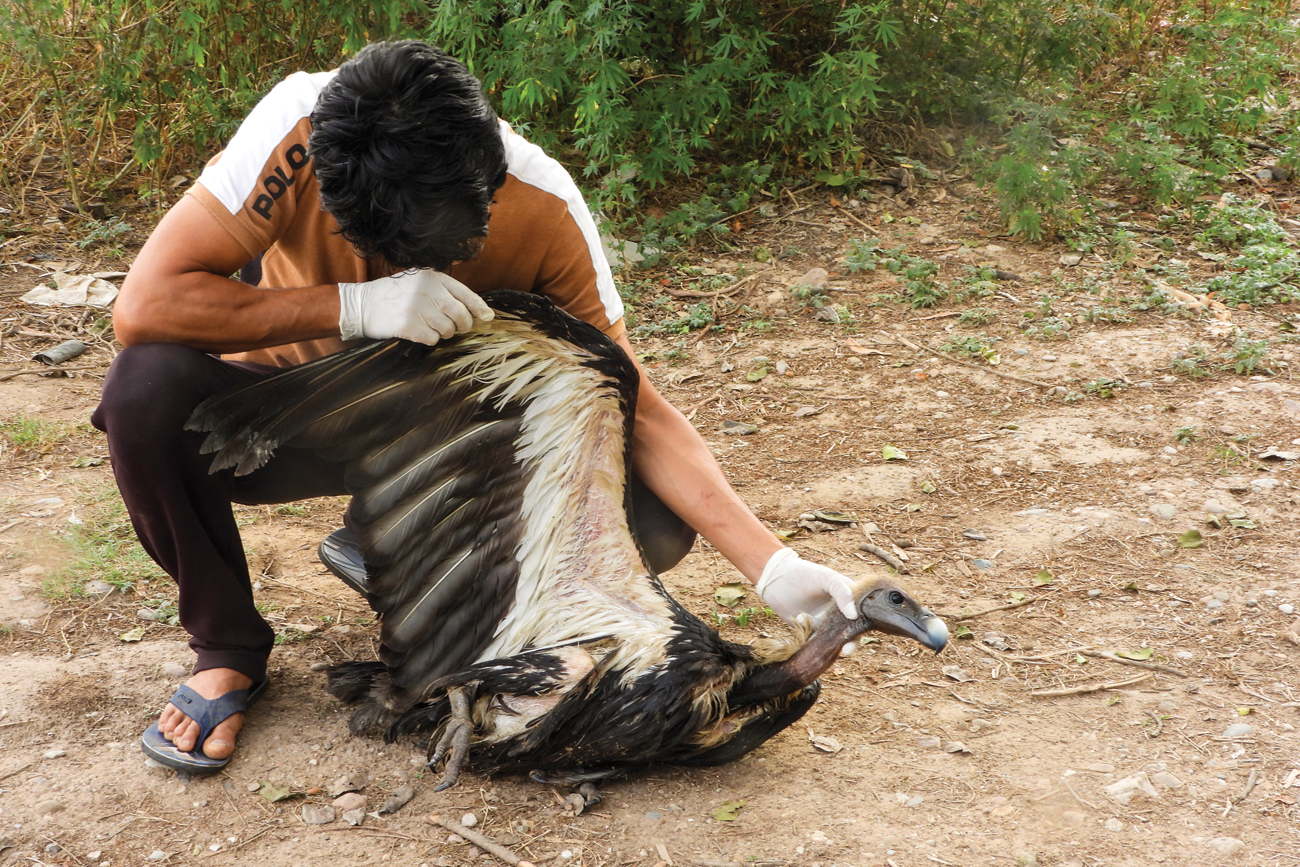
Health check before the release of the rescued vulture in the wild. Photo Courtesy: Dr. Malyasri Bhattacharya.
A Critical Intervention
We carefully rescued the injured vulture. It appeared vulnerable and exhausted. We transported it safely and housed it in a secure, closed enclosure to minimise stress and allow for closer observation. We monitored the bird closely, but it was clear that professional medical attention was needed. The bird was infested with maggots, so we first cleaned it thoroughly, washing the bird.
We took the vulture to a veterinary practitioner near Nagrota Surian. The bird’s hind leg had a visible injury; it had probably fallen owing to electrocution. The wound was cleaned thoroughly, and a small but effective bandage was applied.
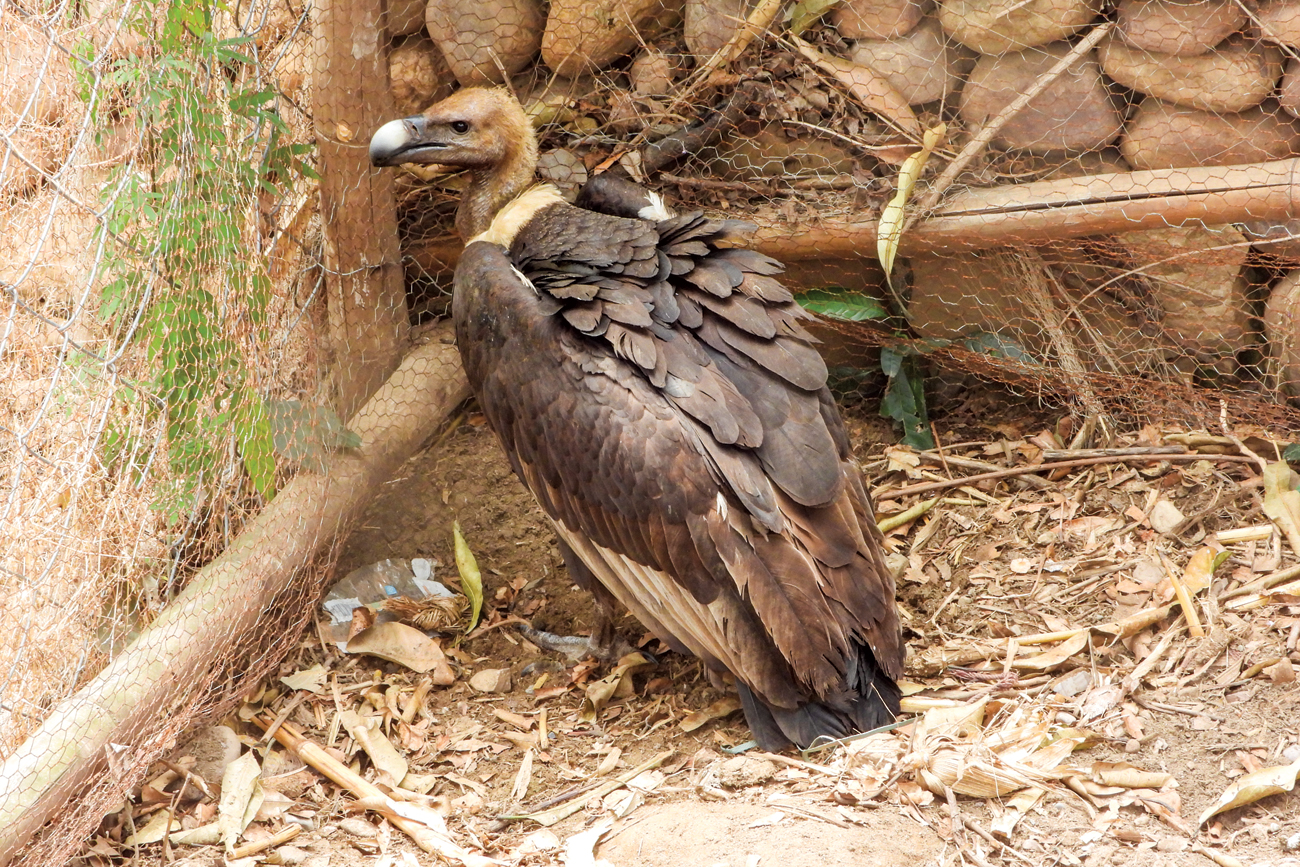
The rescued vulture was housed in a safe enclosure for recovery. Photo Courtesy: Dr. Malyasri Bhattacharya.
Road To Recovery
Post-treatment, the vulture was brought back to our enclosure. We ensured minimal disturbance, providing a safe space for recovery while continuing regular checks. Gradually, it improved. It regained strength, its posture became steadier, and its alertness returned slowly.
In the 1990s, the veterinary drug Diclofenac caused over 97 per cent of South Asia’s vultures to die, and though it has been banned, they are slowly recovering with help from conservation efforts. Watching an apex species in a delicate state was a reminder of their unseen challenges. Recovery was not just about healing a wound, but about restoring its ability to reclaim the skies.
Return To The Wild
Once the vulture had sufficient strength and confidence, the time came for release near the carcass dumping site where we had found the bird 17 days ago. We monitored it for a few days. Moments like these reaffirm why every survey, observation and timely intervention matters. Survival is not just about strength, but also about the support it receives when it is vulnerable.
Dr. Malyasri Bhattacharya completed her Ph.D. on White-rumped Vultures at the WII and is now leading a conservation project in Kangra. She has worked on their conservation since 2019 in Himachal Pradesh.